The stick in your hand at Sensō-ji in Asakusa gives you an address: one particular drawer in the bank of wooden drawers in front of you. The fortune itself is on a piece of paper inside. If the people beside you seem to find theirs instantly, the trick is simpler than it looks. You only have to match a short group of characters.
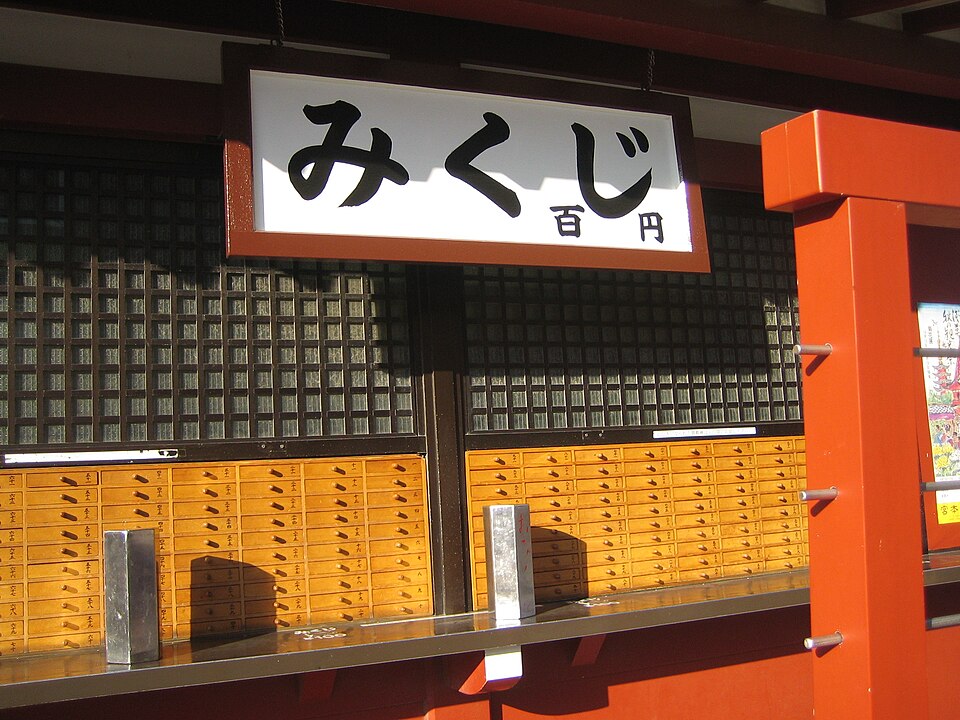
One stick, one drawer, one slip
At the omikuji counter, make the indicated offering and gently shake the container so that one stick comes through the opening. Keep its number in mind. Look across the drawer fronts for the same characters in the same order, take one paper from that drawer and close it. Return the stick to the container as directed at the counter so the next person can draw it.
You can do this without pronouncing the number. If you are visiting with someone, one person can remember the characters while the other scans the fronts. A quick sketch on your phone also works. There is no reason to open several drawers to hunt for a paper that looks right; the drawer label does the work.
Twelve and twenty are different drawers
Here are four practice numbers, given as examples. 十二 is twelve: ten followed by two. 二十 is twenty: two tens. 二十三 is twenty-three, while 三十二 is thirty-two. If you see 第 before the number, think “number…”; 番 can follow it. On a vertical label, start at the top. The position of 十 is often the fastest way to tell two similar groups apart.
Now unfold the slip. A heading such as 吉 or 凶 is the fortune category. The number you used a moment ago simply identified which slip to take. Someone who draws a larger number has no better chance of a happier message on that account.
Read more than the headline
Look below the heading for the short entries on individual concerns. A line about a journey and a line about something lost can give quite different advice on the same slip. English text can help you trace which part corresponds to which concern. If you choose to tie your fortune at the temple, use the designated rack. Keeping it to read again later is also a way to carry a small, specific memory of Asakusa home.
Read next
- Kanazawa’s Tsujiura: How to Read Three Fortunes Hidden in New Year Sweets
- Omikuji in Japan: How to Read, Keep or Tie a Paper Fortune
- 繁體中文版 · 淺草寺抽籤怎麼拿對籤紙?從籤棒號碼、木抽屜讀到觀音籤的吉凶


Comments