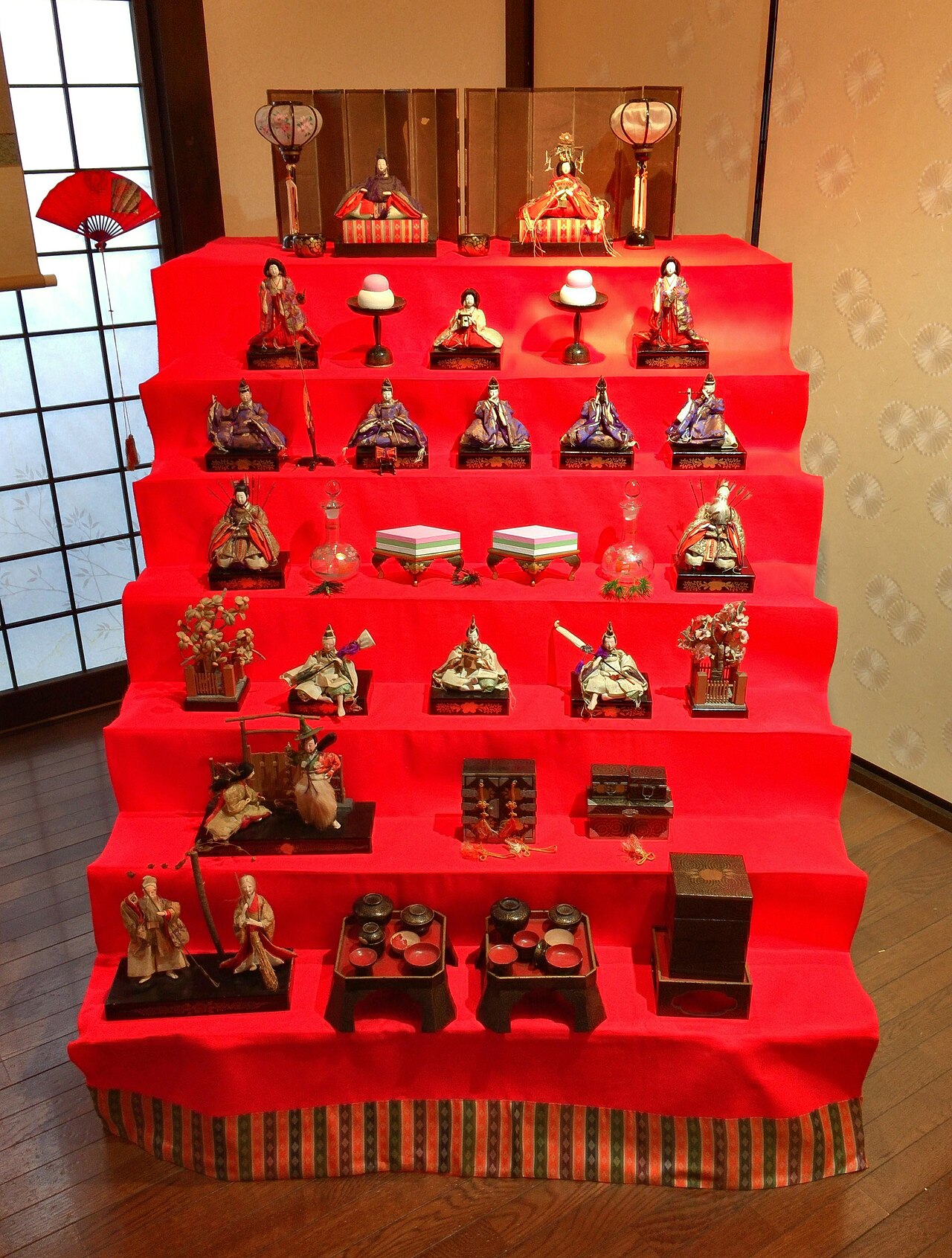
Look first at the top of a Hinamatsuri display. A seated pair in formal court dress sets the scene. Now let your eyes travel down to the smallest objects: a chest, a stand, perhaps even a tiny kitchen. What first looks like a collection of dolls begins to read as a whole household arranged in miniature.
The pair at the top and the people around them
Hinamatsuri, the Doll Festival, falls on March 3. Families may display just the principal pair or a larger arrangement on stepped shelves. The elaborate sets evoke the old imperial court. Court ladies and musicians can occupy the levels below the pair. A full set gives different figures different work to do.
Start by looking at hands. A fan held by a seated figure, an instrument held by a musician and a small object carried by an attendant tell you more than the colour of a robe alone. It is an enjoyable way to look with children even if nobody knows the names of the ranks.
Follow the furniture to Kyoto or Edo
The Kyoto National Museum compares historical displays from Kyoto and Tokyo. Its examples from Kyoto include miniature kitchen equipment and hearths. It notes tall arrangements and plentiful chests or shelves in the Tokyo tradition. These are clues to the history of a particular set, not a checklist every family follows today.
With that in mind, give an ordinary-looking lower shelf another minute. A miniature chest had to be sized to match the imagined people above it. A cooking implement quietly adds an unseen worker to the scene. Before you leave, choose the smallest object you can identify and see which figure it might have belonged to.
Read next · Kyoto’s Golden and Silver Pavilions: Which One Is Actually Covered in Metal?
Sources and visitor information
Lead image · Asanagi · Wikimedia Commons · CC0 1.0



Comments