Why Japanese Bathrooms Separate Washing from Soaking
The small room with a shower beside the tub tells a larger story about family routines, relaxation and a home designed around more than one kind of water.
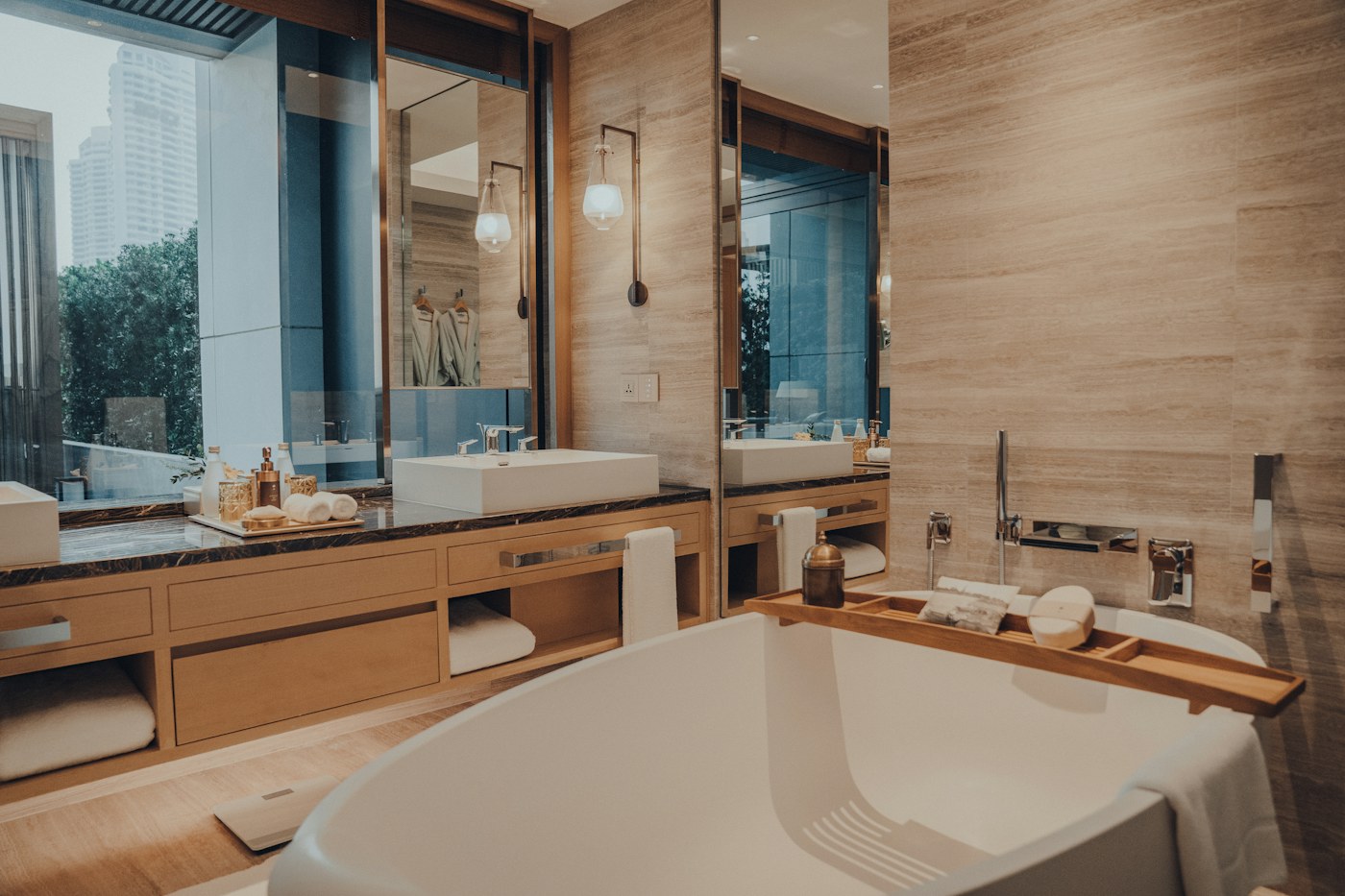
Step into a bathroom in many Japanese homes, and something may feel different. There is a bathtub—but the shower is not necessarily mounted over it in the way a visitor expects. Water can be used outside the tub, in a dedicated washing area. The toilet may be in another room altogether.
This arrangement is not just a clever solution to a compact floor plan. It reflects a distinction between two activities that other bathrooms often combine: washing the body and soaking in water.
Look closely and the plan of the room starts to explain a rhythm of everyday life.
First wash; then soak
In a common Japanese domestic bathroom layout, the bathtub is intended primarily for soaking. A separate, waterproof washing area has a shower or hand shower and a floor drain. A person washes or rinses outside the tub before entering the bathwater.
That sequence matters partly because bathwater may be used by more than one member of the household. Keeping soap, shampoo and body dirt out of the tub makes it possible to share the soaking water more comfortably. Families’ routines vary, of course, and the water is not necessarily shared in every home.
The point is not that one method of bathing is morally better than another. The room simply assigns the jobs of washing and resting to different places.
What does ‘ofuro’ mean?
Ofuro (お風呂) is a familiar Japanese word for the bath or bathing. It can describe the tub, the bathing facility or the activity of taking a bath, depending on context. It is often more useful to think of it as part of a domestic routine than as one particular object.
At the end of a day, soaking may be associated with warmth, relaxation and a moment of separation from work or school. Yet this is not a rule that describes every individual. Some people prefer a quick shower, and busy schedules do not always allow time for a leisurely bath.
An earlier LAYERS OF JAPAN article explores the appeal of soaking. Here, the question is more architectural: how does the home make that ritual possible?
The bathroom is not necessarily the toilet
In many houses and apartments, the toilet has its own small room. A sink or changing space may sit just outside the bathing area, forming a compact sequence: undress, wash, soak, dry and dress.
The separation can make family use more flexible: someone may use the toilet without interrupting another person’s bath. But it is important not to turn this into a universal claim. Smaller apartments and many hotels have a unit bath in which the tub, washbasin and toilet can share one compact room.
Even within Japan, homes have different ages, budgets and layouts. A traveller who sees a combined hotel bathroom has not discovered that the separate-washing-area description was false; they have encountered another common solution to a different spatial problem.
The washing area changes the meaning of the floor
A wet-room floor is designed to receive water and guide it toward a drain. That makes it possible to shower next to the bath without assuming that the tub must catch all the splashes.
Small details now become important: where bottles are stored, how the floor drains, whether a seat or washbowl is used, and how the area dries after use. A bathroom that seems simple in a photograph can contain a surprisingly considered arrangement of everyday actions.
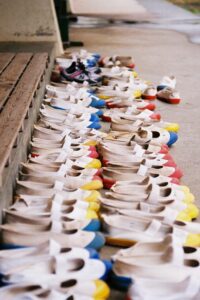
That logic has a parallel elsewhere in the home. At the genkan, shoes are removed before entering the interior. In the bathroom, washing is done before entering the soaking water. Both spaces make an everyday transition visible through the design of a room.
Modern controls, traditional distinction
Some modern baths have controls for filling the tub or keeping water warm, and some include reheating functions. The equipment varies by model and building, so a visitor should follow the instructions rather than assume that every system works the same way.
Technology may make the routine easier, but it has not erased the central spatial idea: the tub is a place to enter after cleaning the body, not necessarily the place where all the washing happens.
How to use a Japanese-style bath as a visitor
In a private bathroom with a separate washing area, look for the shower, floor drain and instructions. Wash and rinse before soaking. Keep shampoo and other products out of the tub, especially if the water is intended for others. Follow any property-specific guidance about draining or reheating water.
In a public sento or hot-spring onsen, shared bathing etiquette adds other considerations, such as washing thoroughly before entering, keeping towels out of the bath and observing facility rules. Public facilities are not identical to a family bathroom, and individual rules can vary. The Japan National Tourism Organization publishes a useful bathing guide.
In a combined hotel bathroom, use the shower curtain and fixtures as the property directs. There is no reason to flood an ordinary hotel floor in an effort to reproduce a home wet room.
The room reveals the routine
A Japanese bathroom can be remarkably modest: a tub, a shower, a drain and a place to put one’s clothes. Yet these elements make a distinction that is easy to miss in photographs. One space cleans the body; another holds warm water for rest.
To understand that distinction is to see the bath not as an exotic accessory but as part of the design of an ordinary day.
Keep exploring
- Why Do Japanese People Love Soaking in a Bath?
- Why Do Japanese People Take Off Their Shoes? The Meaning of the Genkan
- Tatami: The Floor That Shapes a Japanese Room
Further reading & sources
- Japan Guide: Japanese Bathrooms
- Japan National Tourism Organization: Enjoy Bath Culture in Japan
- Japan National Tourism Organization: Bathing Manners and Tips
Schools, local policies and travel facilities may have different rules; consult their current official guidance. All photographs are illustrative.

Comments