Rural Japan & City Dreams · Osaka
Osaka Castle: The Stories Behind the Tower, Walls and Moats
Green roofs and gold details draw the eye upward. Follow the stone walls, cross the moats and look beneath the ground to discover how much of Osaka’s story one castle can hold.
7 MIN READ · NOVEMBER 16, 2026
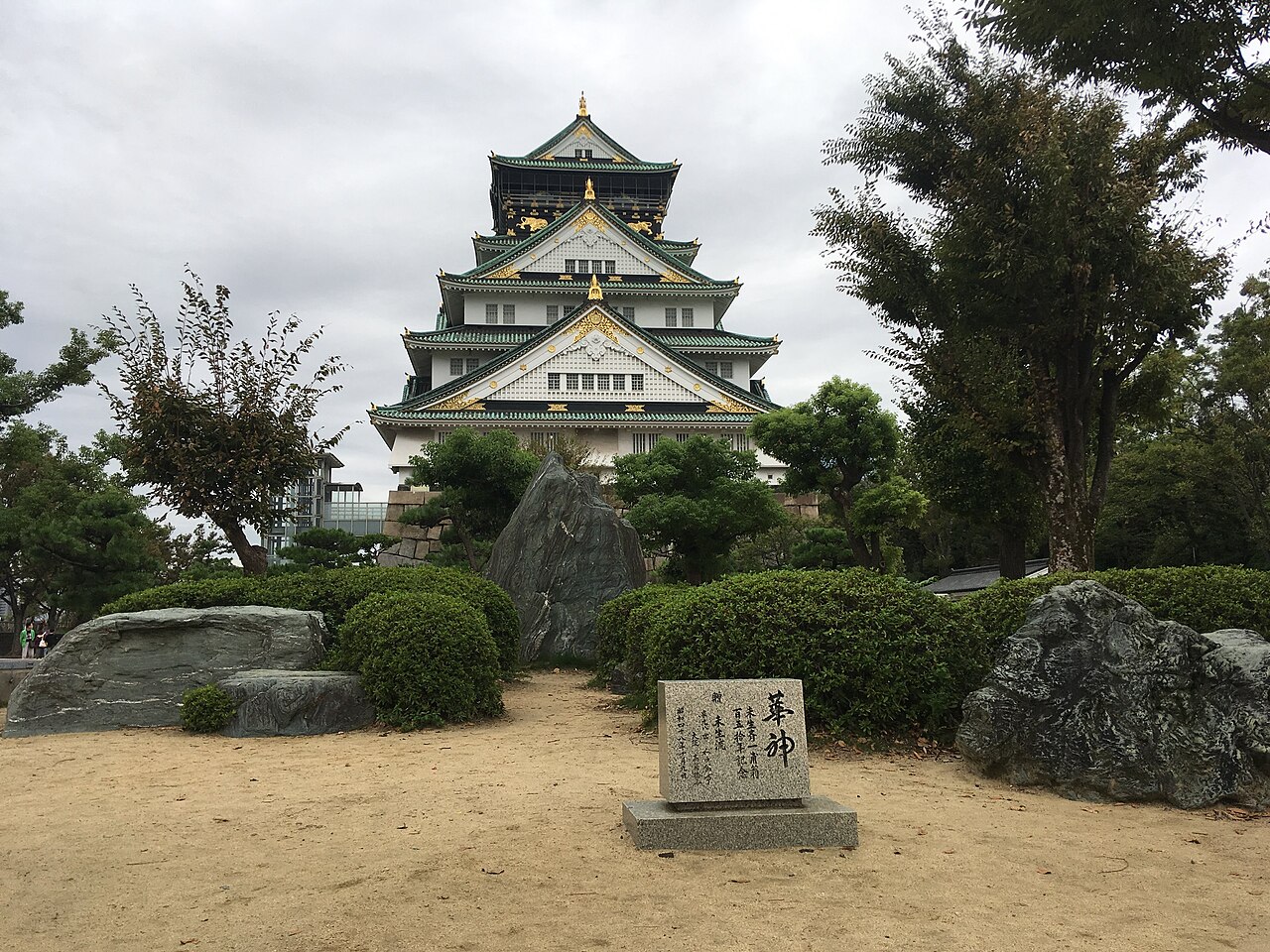
Christophe95, via Wikimedia Commons · CC BY-SA 4.0. Reduced-size reproduction; no further cropping or colour changes.
The first photograph of Osaka Castle often centres on its tower. A longer visit makes room for the stone beneath it: enormous walls, carefully fitted corners and water separating one part of the grounds from another.
These features belong to different chapters of the site’s history. The present tower was completed in 1931, while the moats, visible stone fortifications and surviving old gates come from the Tokugawa period or later. Earlier remains lie below ground.[1][3]
For a first visit, that is the most useful idea to bring with you. Osaka Castle—Osaka-jo in Japanese—is a place rebuilt, reinterpreted and used by successive generations. Its history becomes easier to follow when you look at the whole site.
One site, three main towers
Four dates give the story a manageable shape. They also explain why the tower in your photograph and the castle associated with Toyotomi Hideyoshi are separated by centuries.
| 1583 | Toyotomi Hideyoshi begins building Osaka Castle. Its first main tower is completed around 1585. |
|---|---|
| 1615 | The castle falls during the Summer Siege of Osaka, and the Toyotomi tower burns. |
| 1626–1665 | The Tokugawa rebuilding produces a new tower in 1626. It is lost to a lightning fire in 1665. |
| 1931 | Citizens’ donations help bring the present tower into being, using modern steel and reinforced-concrete construction. |
The tower you enter today has been a museum since that 1931 reconstruction. It was created to give the city a landmark and a place to encounter its past. That purpose is part of the building’s own history.[1]
Keep those chapters in mind as you move between an exhibition case, an old gate and a view from above. Each offers evidence of a different moment.
Give the walls and moats their own time
It is tempting to treat the walk through the grounds as the distance between a station and the main attraction. The fortifications make that walk worth noticing.
Pause where the route meets a moat. Look at the height of the walls, the way their corners meet, and how much ground separates the water from the tower. A wide photograph can help you see these relationships; a close look reveals the differences between individual stones.
The official park map highlights Gokurakubashi Bridge as a place to see the tower across the inner moat. Otemon Gate, the castle’s main gate, makes another rewarding point of arrival. Both help place the tower within the larger castle grounds.[9]
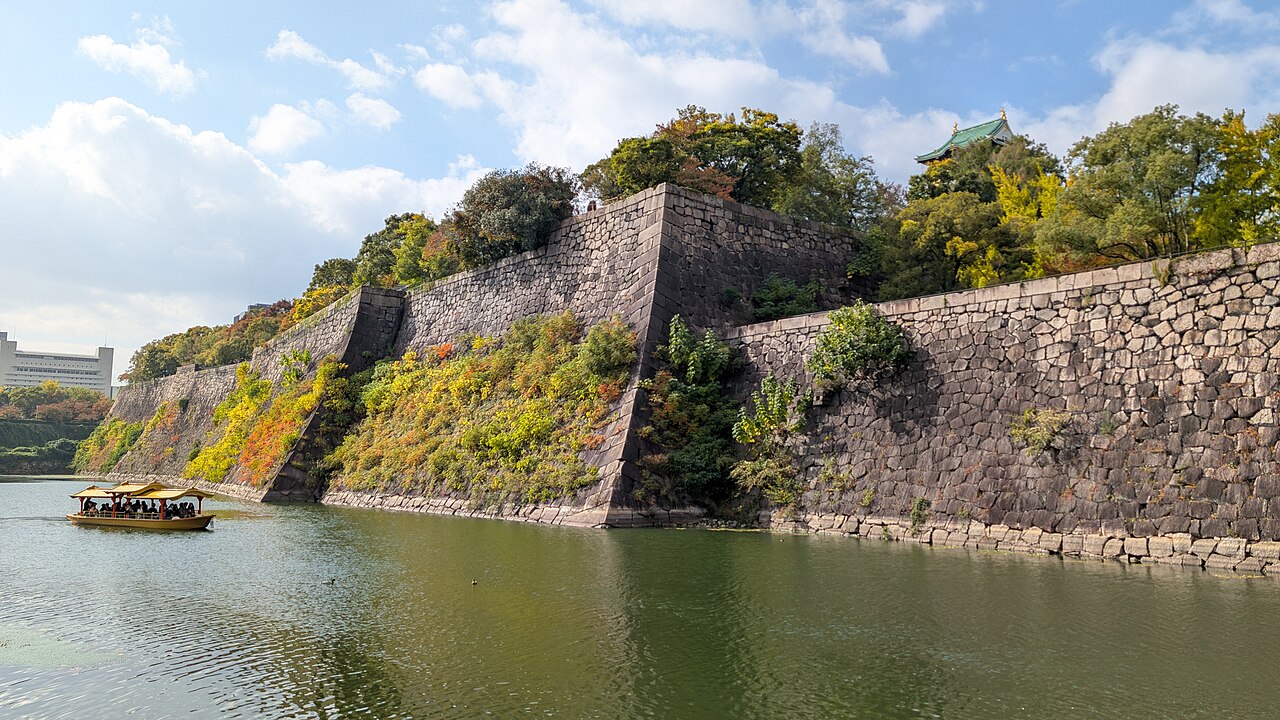
Joli Rumi, via Wikimedia Commons · CC BY-SA 4.0. Reduced-size reproduction; no further cropping or colour changes.
The earlier castle is beneath your feet
When the Tokugawa shogunate rebuilt Osaka Castle, it buried the Toyotomi remains beneath large quantities of earth. The walls seen above ground today therefore do not show the whole story.[3]
The Osaka Castle Toyotomi Stone Wall Museum, opened in 2025, lets visitors descend to view a section of the earlier stonework discovered during an excavation in 1984. These walls once protected a central private part of the Toyotomi castle.[3]
Look for the rough, largely unworked stones and the traces of heat left by the Summer Siege. The museum explains the construction, including smaller stones packed behind the wall to improve drainage.[3]
This changes the scale of the visit. A tower can be recognised from far away; an excavated wall asks you to come close and consider what survived. The museum’s explanation of the earth above it makes the passage from one ruling family to another physically visible.
Admission to the stone wall museum is included with the Osaka Castle Museum ticket.[3]
What will you find inside the main tower?
Plan for a museum visit, with historical displays on several floors. The collection includes materials connected with Hideyoshi, the age of the warlords and the castle’s history; objects are rotated through the exhibitions.[1]
The official floor guide describes castle models, historical objects, and displays explaining Hideyoshi’s life and the Siege of Osaka. The eighth-floor observation deck offers a view across the grounds and the surrounding city.[4]
That view is a useful final step after looking at the fortifications from below. Try finding the route you walked, then follow the lines of the moats. The layout becomes a little easier to understand when you can see its parts together.
If access is a concern, consult the museum’s barrier-free map before arriving. There are lifts, but routes include slopes, and upper-floor lift use is prioritised for visitors with mobility restrictions. Staff can explain the appropriate route.[10]
A first-visit route through the grounds
For a straightforward route, follow the park’s suggested walk from Tanimachi 4-chome Station through Otemon Gate, towards the main tower and stone wall museum, then out through Aoyamon Gate towards Osakajokoen Station. The complete route is approximately three kilometres.[9]
Both stations are useful, but they serve different sides of the grounds. Morinomiya is another option, with JR and Osaka Metro connections. Choose the approach that fits your journey, and include the walk through the park in your timing.[8]
We suggest allowing two to three hours for an unhurried walk and visits to both museums. This is a planning allowance, rather than an official visit duration; queues, exhibitions and the number of stops you make will affect it.
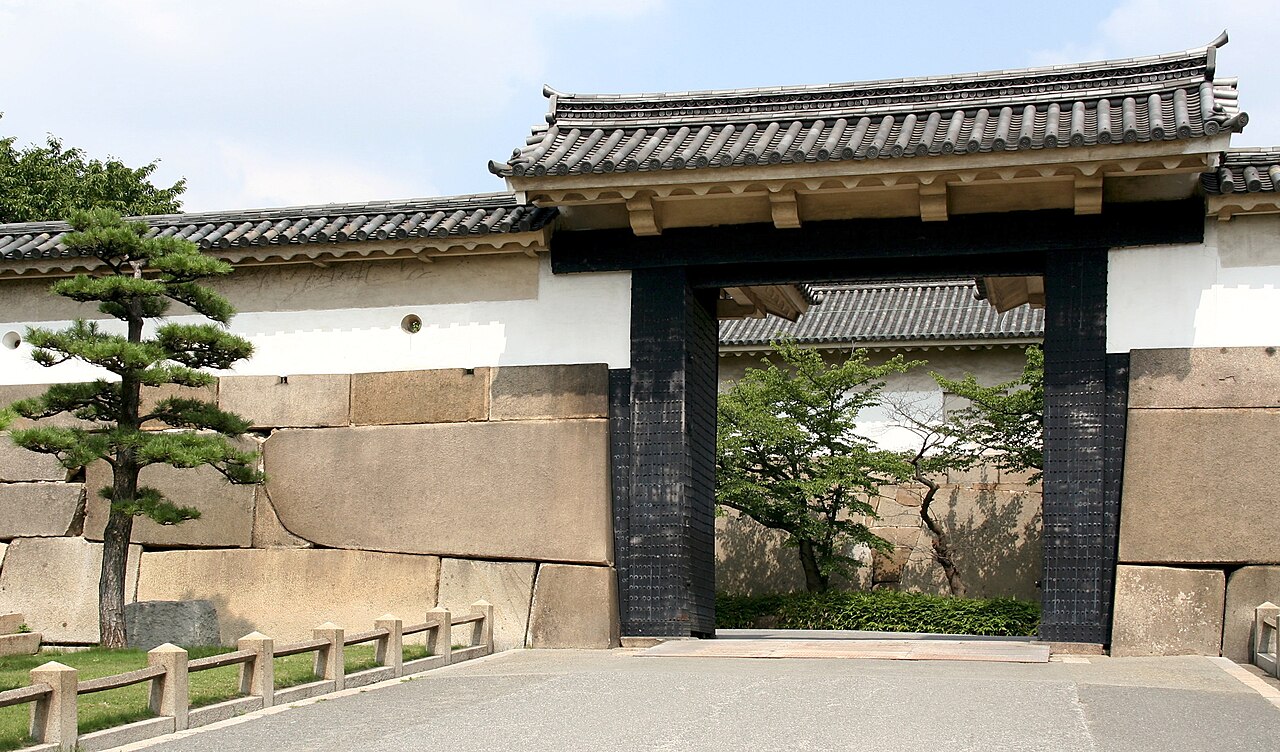
Markus Leupold-Löwenthal, via Wikimedia Commons · CC BY-SA 3.0. Reduced-size reproduction; no further cropping or colour changes.
The park and Nishinomaru Garden
Osaka Castle Park covers about 105.6 hectares. Alongside the historic buildings, it contains spaces for sport, concerts and seasonal flowers. The plum grove and cherry trees give the grounds another reason to draw local visitors through the year.[6]
Nishinomaru Garden, west of the tower, is a separate paid garden known for its open lawn and cherry blossoms. It can be a worthwhile addition if you would like more time outdoors. Check its own calendar: its hours and closing days differ from those of the tower, and special cherry-blossom events may have separate arrangements.[7]
You can also enjoy a walk through the general park without entering the paid facilities. Decide how much history, walking and garden time you want, then build the visit around that balance.[6]
Tickets and opening hours
The following main-tower information was checked against the official museum website on November 16, 2026.[5]
| Regular hours | 9:00 a.m.–6:00 p.m.; last admission at 5:30 p.m. |
|---|---|
| Annual closure | December 28–January 1. Check current notices for other changes. |
| Adult admission | ¥1,200, including entry to the Toyotomi Stone Wall Museum.[3] |
| Students | University and high-school students: ¥600 with the required identification. Overseas students are asked to present an ISIC. |
| Children | Visitors aged 15 and under: free with proof of age, such as a passport for overseas visitors. |
Use the ticket link on the official museum website for advance purchases. Arrive with time to spare: the museum may stop people joining the ticket queue before the stated last-entry time when necessary.[5]
Another side of Osaka
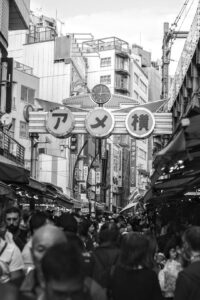
A castle visit adds a different chapter to a trip that also includes Dotonbori after dark. Give each place enough time to make its own impression.
At Osaka Castle, the most memorable detail may turn out to be below the famous roofs: a join between stones, a gate framing the path ahead, or a wall brought back into view after centuries underground. Looking at those details makes the familiar silhouette more interesting when you see it again.
Sources & further reading
Visitor information checked November 16, 2026. Consult current official notices before travelling. Historical photographs illustrate the locations; they do not show live crowd or seasonal conditions.
- Osaka Castle Museum: the castle and its museum
- Osaka City: history and construction of the main tower (October 16, 2026)
- Osaka Castle Museum: Toyotomi Stone Wall Museum
- Osaka Castle Park: official English guidebook (2025), museum floors
- Osaka Castle Museum: current visitor information and admission
- Osaka Convention & Tourism Bureau: Osaka Castle Park
- Osaka Castle Park: Nishinomaru Garden
- Osaka Castle Museum: transport access
- Osaka Castle Park: official walking highlights map
- Osaka Castle Museum: barrier-free access map
Photo licences apply to the credited images individually. Images are reduced-size reproductions, with no further cropping or colour changes.





Comments