Nara Park: The Wild Deer and Sacred Stories of Japan’s Ancient Capital
The deer may be the first thing you notice, but they are part of a much older story. Discover Nara’s temples, wooded shrine paths and the careful way people share this historic landscape with wildlife.
8 MIN READ
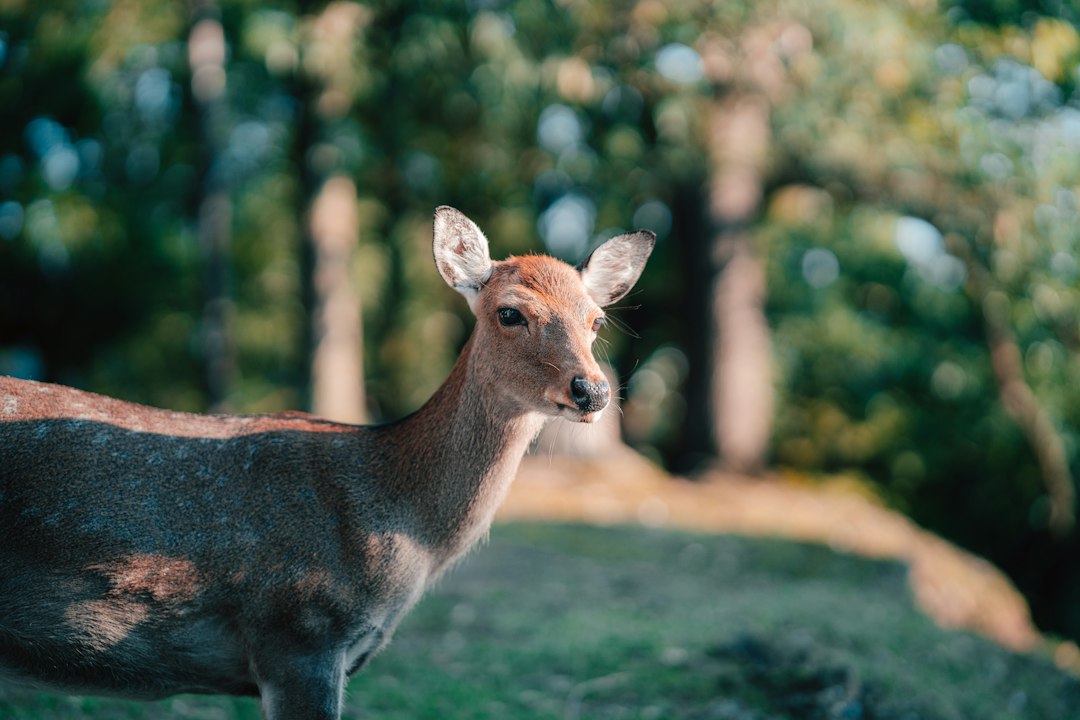
Photo: Spenser Sembrat / Unsplash.
In Nara, a deer may wander across your path before you reach a temple gate. Another grazes beneath the trees. People slow down, lift their cameras and suddenly discover that the animals are as much a part of the city as the old wooden buildings.
This is Nara Park, a landscape at the eastern edge of Nara’s historic centre where deer roam among temples, a major Shinto shrine, wooded paths and lawns. Their presence is charming, but it is not a petting-zoo experience. They are wild Japanese sika deer with centuries of cultural protection behind them.1
Why are the deer special in Nara?
The story leads to Kasuga Taisha, one of Nara’s most important Shinto shrines. According to religious tradition, a deity came to this area riding a white deer. Deer consequently came to be regarded as messengers of the gods, and their association with Kasuga Taisha became part of the city’s identity.2
That is a traditional sacred story, not a claim that a particular animal’s journey can be independently verified. What can be seen today is its lasting impact: the animals were protected over many generations, and Nara’s deer have become inseparable from the landscape surrounding the shrine.
Modern protection is legal as well as cultural. The Nara deer are designated as a national Natural Monument. Nara Prefecture explains that they are not domesticated or owned by an institution. They move and feed themselves as wild animals, even when they seem accustomed to people.3
This is the first important thing to understand before walking into the park: the deer are not there to perform for visitors. We are entering a shared space in which their everyday lives continue.
Do the deer really bow?
You may have seen videos of Nara deer lowering their heads in front of visitors. Some have learned to associate that movement with receiving food. It makes an appealing photograph, but a bow is not proof that a deer welcomes touch or understands a human greeting.4
Watch them from a little distance before deciding whether to offer a cracker. Some graze, some rest, and others approach when they think food is available. There is no need to make an animal bow for your camera, or to pursue one that walks away.
Shika senbei: the one exception to the feeding rule
Visitors can buy shika senbei, special deer crackers, at stalls around the park. They are a long-established part of the Nara experience. But the permitted snack comes with an important rule: do not feed the deer bread, sweets, vegetables, leftovers or any other food. Nara Prefecture treats feeding as prohibited, with deer crackers the specific exception.5
The deer obtain their normal food from the environment, including grass, leaves and acorns. Crackers are treats, not their complete diet. If you choose to feed them, offer the crackers promptly and calmly instead of teasing them with food, and avoid doing so beside a road.5
Be especially careful with bags, leaflets and food wrappers. Deer may swallow paper or plastic, which can seriously harm them. The official city guide also reminds visitors that there are no rubbish bins in the park, so take everything away with you.6
They are gentle-looking, not necessarily gentle
Deer can bite, kick, charge or strike with their antlers. Nara Prefecture warns that female deer may be especially protective after giving birth in spring, while male deer can be aggressive during the autumn mating season.5
Do not touch, chase or corner deer, and do not allow young children to approach them alone. Give an animal an easy way to move away. Watching quietly is a perfectly good way to enjoy the encounter, and often the kinder choice.
Todai-ji: the Great Buddha beyond the lawn
A visit to Nara Park becomes richer when you leave time for Todai-ji, the Buddhist temple whose Great Buddha Hall stands among the park’s monumental buildings. The enormous bronze statue represents Vairocana Buddha, a central figure in the Kegon Buddhist tradition.7
The Great Buddha was created through an imperial project in the eighth century. Emperor Shomu ordered its construction, and its consecration took place in 752. The work required extensive resources and the participation of many people, expressing a vision in which Buddhist practice would help bring peace and wellbeing across society.7
The great hall you enter is not the untouched eighth-century building. Earlier structures were destroyed by fire; the present hall was dedicated in 1709. Its immense timber construction still gives the Buddha a powerful setting, even though it was built narrower than its predecessors.8
As of November 2026, the temple’s official website lists admission to the Great Buddha Hall at ¥800 for adults and ¥400 for children aged 6–12. The hall opens from 8:00 a.m. to 5:00 p.m. in November–March, with longer hours in April–October. Check the official site when planning a visit.9
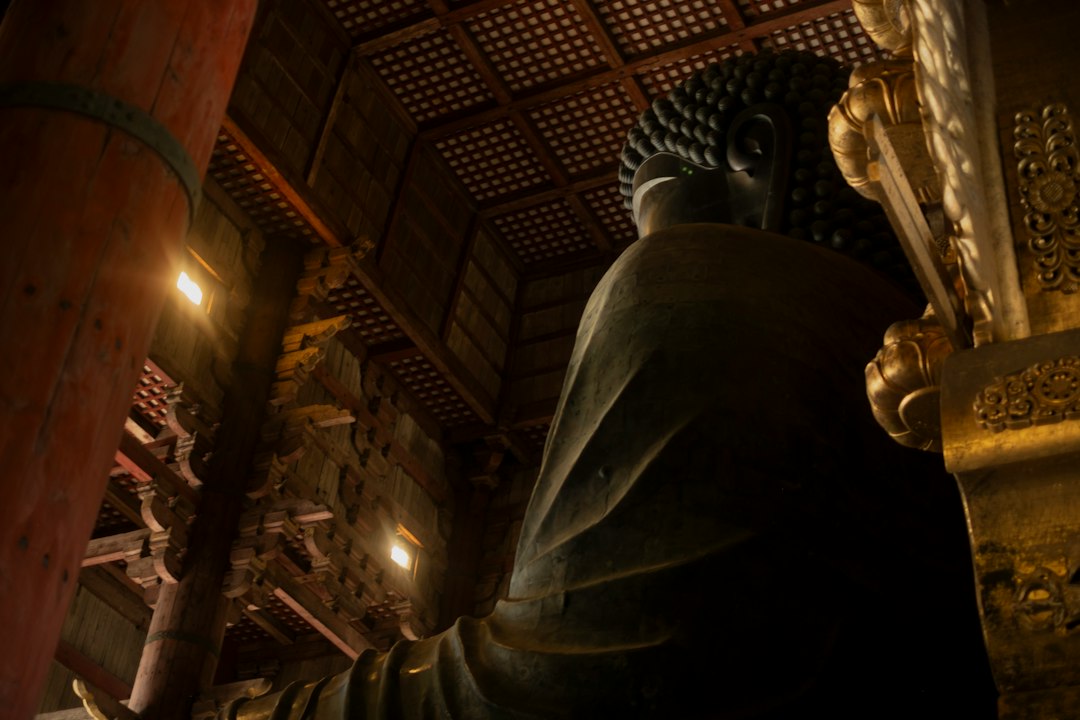
Photo: Peter Amende / Unsplash.
Kasuga Taisha: following the lanterns into the forest
At Kasuga Taisha Shrine, Nara’s other historical identity becomes visible. The approach runs through trees alongside rows of weathered stone lanterns. Deer may cross the path or rest in the shade. The shrine’s vermilion buildings and hanging bronze lanterns create a strong contrast with the surrounding green.10
The lanterns carry the memory of offerings from generations of worshippers. During special lantern festivals, thousands of them are illuminated. At ordinary times, their shapes and moss-covered surfaces tell a quieter story of continuity.10
The forest approach itself is worth the walk. If you want to enter the special inner sanctuary area, the shrine has separate admission rules, fees and possible closures for ceremonies. Check the official shrine guidance in advance.11
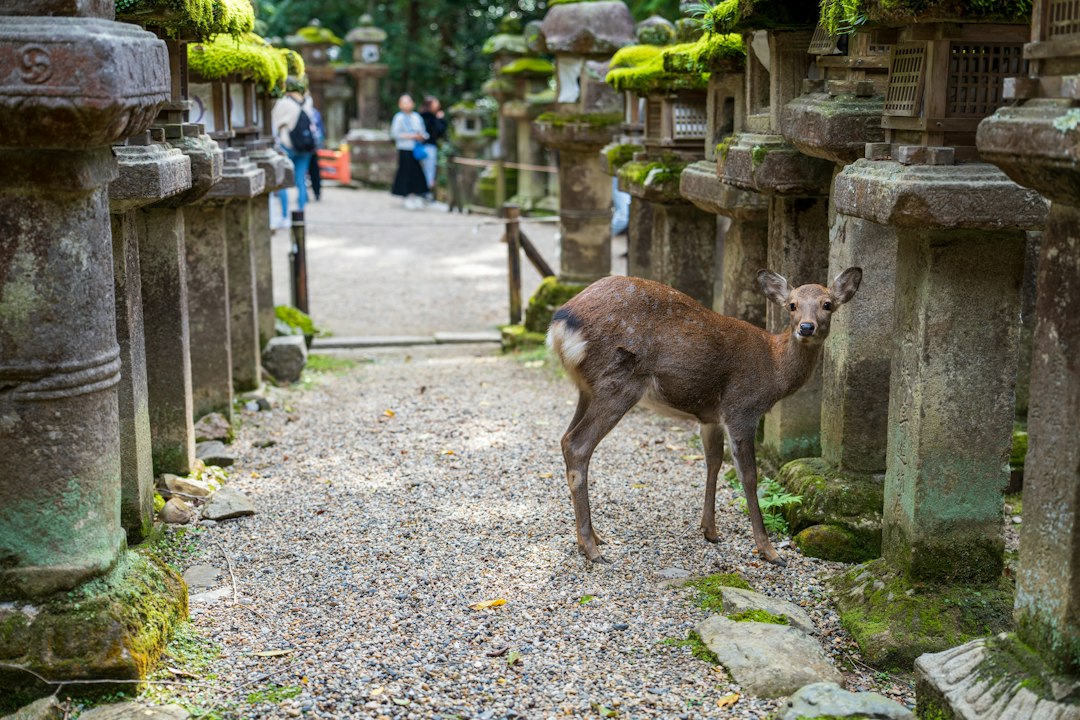
Photo: Alex Wicks / Unsplash.
A gentle route for a first visit
It is possible to fit Nara into a day trip from Kyoto or Osaka, but a good first visit benefits from a little unscheduled time. This walking route links the deer, the Buddhist temple and the Shinto shrine without turning them into a race.
- Begin near Kintetsu Nara Station. Walk towards the park, taking time to notice how ordinary streets give way to open lawns. Nara City’s visitor guide estimates about eight minutes on foot from the station to the park; the walk from JR Nara Station is longer.6
- Explore Nara Park respectfully. Watch the deer graze, keep food and rubbish secure, and choose whether to offer the permitted crackers.
- Visit Todai-ji. See the Great Buddha Hall and make time for the temple’s architecture and its long history.
- Walk the forest approach to Kasuga Taisha. The stone lanterns, trees and occasional deer create a very different atmosphere from the main park lawns.
- Return through the park. Leave time for a rest or a meal before heading back to the station.
Plan at least half a day for a comfortable walk and a visit inside the Great Buddha Hall; a fuller day offers more space for museums, other temples or a long lunch. Much of the park is open year-round and free to enter, while individual cultural sites charge admission and have their own schedules.6
Questions before visiting Nara Park
Is Nara Park free?
Yes. The public park is open all year and is free to enter. Todai-ji’s Great Buddha Hall and special areas within other cultural sites have separate admission fees.6
Can I pet the deer?
It is best not to. Nara Prefecture advises visitors to avoid unnecessary contact because the deer can react unpredictably. Calm observation from a respectful distance is safer for everyone.5
Can I feed the deer something I bring from home?
No. Only the officially permitted deer crackers, shika senbei, may be offered. Human snacks, vegetables and leftovers are not allowed.5
What should I do if a deer follows me?
Do not run, wave food or tease it. Keep calm and give the animal room. If you have finished feeding, show that you have no crackers left and move away gently.4
Are the deer kept in the park?
No. They are wild animals, not a captive collection. They move through Nara Park and its surroundings under legal and conservation protection.3
What the deer teach us about visiting Nara
A deer resting under a tree may look like the perfect photograph. But its presence also asks for something from us: patience, distance and an understanding that a famous visitor attraction is still someone else’s habitat.
In Nara, the line between nature and culture is unusually close. The deer, the enormous Buddha and the lantern-lined shrine path tell different stories, yet together they show how a city has shaped its relationship with living things over many centuries. That is the part of Nara worth taking home.
Sources and further reading
- Official Nara Travel Guide: Nara Park Area — the park, temple grounds and deer.
- Official Nara Travel Guide: Deer Conservation — sacred tradition and historical protection.
- Nara Prefecture: Deer of Nara Park — wild status and Natural Monument designation. Updated September 2026.
- Official Nara Travel Guide: Nara’s Sacred Deer — feeding behaviour and visitor guidance.
- Nara Prefecture: How to Treat the Deer in Nara Park — feeding rules and safety. Updated February 2026.
- Nara City Tourism Association: Nara Park — access, opening and litter guidance.
- Todai-ji Temple: History — eighth-century construction and consecration.
- Todai-ji Temple: Great Buddha Hall — architecture and rebuilding.
- Todai-ji Temple: Hours and Admission — rates and seasonal schedules, checked November 2026.
- Official Nara Travel Guide: Kasuga Taisha Shrine — forest approach, buildings and lantern traditions.
- Kasuga Taisha: Official Visitor Guidance — special entry conditions.
Park and temple rules may change. Check the official sites before travelling.


Comments