Rural Japan & City Dreams · Tokyo
Meiji Jingu in Tokyo: The Forest Beyond Harajuku
A forest, a place of worship, and a different rhythm of Tokyo. Walk beyond Harajuku to discover the stories that make Meiji Jingu worth slowing down for.
7 MIN READ · NOVEMBER 15, 2026
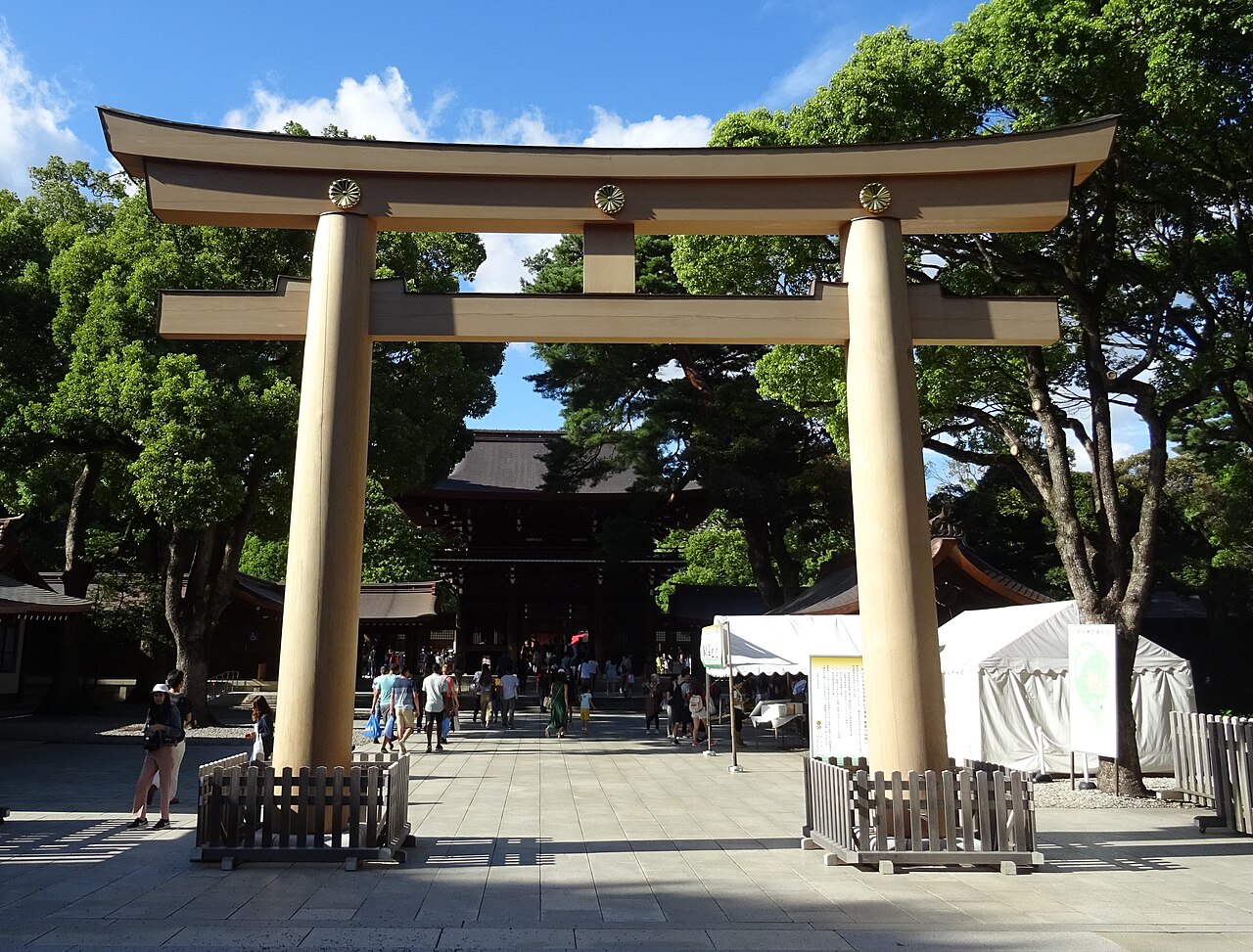
Christophe95, via Wikimedia Commons · CC BY-SA 4.0. Reduced-size reproduction; no cropping or colour changes.
A visit to Meiji Jingu begins before you reach the shrine. The walk through the trees is part of the experience: time to put away a shopping itinerary, look up, and let the next destination wait.
For travellers exploring Harajuku, Meiji Jingu (明治神宮), also called Meiji Shrine, is an easy place to add to a map. Giving it enough time is the more interesting decision. The grounds cover about 70 hectares, and the shrine buildings sit within that landscape rather than directly beside the station.[1][7]
This first-visit guide follows three things to notice: the forest, the offerings along the approach, and the everyday acts of respect that make this a living place of worship.
What is Meiji Jingu?
Meiji Jingu is a Shinto shrine dedicated to Emperor Meiji and Empress Shoken. Established in 1920, it commemorates the imperial couple associated with Japan’s transition into a modern nation. Knowing that date changes the way you look at the place: its atmosphere can feel much older than its history.[1]
There is no need to arrive with a detailed knowledge of religion or imperial history. Start with the fact that people come here to pray. For some visitors, this is a stop on a Tokyo holiday; for others, it holds a very personal meaning. Leaving room for both experiences is a good way to begin.
If you have already visited Senso-ji in Asakusa, Meiji Jingu offers another setting in which to pay attention to how a sacred place is used. Notice the approach, the pace of the people around you, and where photography gives way to prayer.
A forest planned for people who had not yet been born
The woodland may look like a surviving fragment of ancient Tokyo, but it was deliberately created. Trees were donated from across Japan, and about 110,000 volunteers helped plant the forest. The planners, led by forestry specialist Honda Seiroku, considered how it would develop over the following 100 to 200 years.[2]
The aim went beyond producing attractive greenery for opening day. It was to establish a forest capable of renewing itself. Within the woodland, fallen trees return to the soil, supporting the cycle that keeps the forest alive.[2]
That long view is a useful thing to carry along the path. Much of a holiday is organised around what can be seen today. Here, the setting asks you to imagine what someone hoped a future visitor would see. The shade overhead is part of the answer.
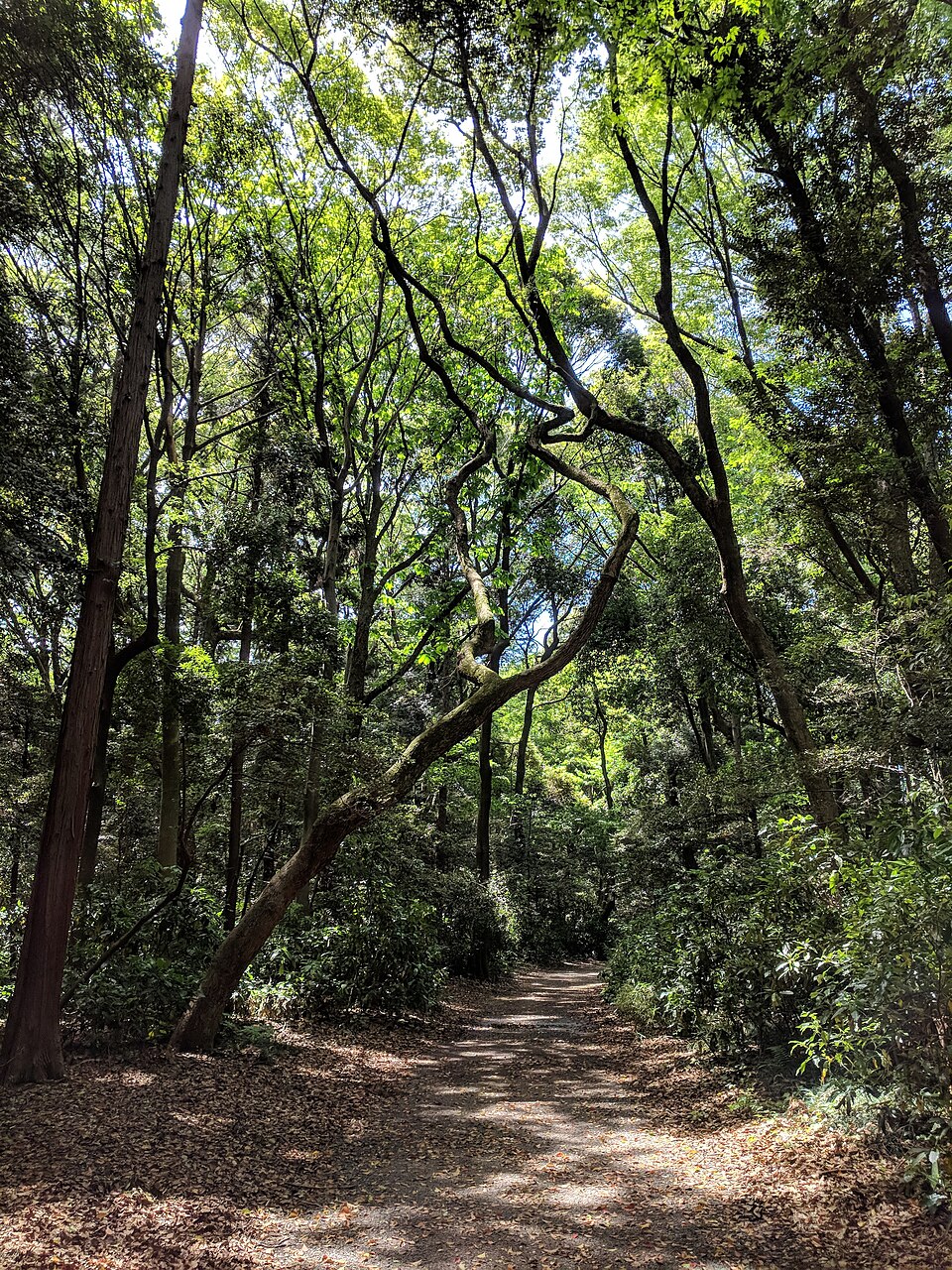
Grendelkhan, via Wikimedia Commons · CC BY-SA 4.0. Reduced-size reproduction; no cropping or colour changes.
Why are there sake barrels at a shrine?
The rows of straw-wrapped barrels are easy to notice. Bold lettering, small illustrations and repeated round forms make them a striking part of the approach. They also have a purpose beyond providing a photograph.
Brewers donate these decorative barrels in honour of the enshrined Emperor Meiji and Empress Shoken. The displayed barrels are empty; the sake itself is offered separately in bottles. In Shinto, sacred sake, called omiki, forms part of the relationship between people and the kami, or deities.[3]
There are wine barrels too. The Japan Tourism Agency explains the pairing of Japanese sake and Western wine as a reflection of the Meiji period’s combination of Japanese traditions and influences from abroad.[3]
With that context, the display becomes more than a collection of labels. It connects a religious offering, the work of producers and a particular moment in Japan’s history.
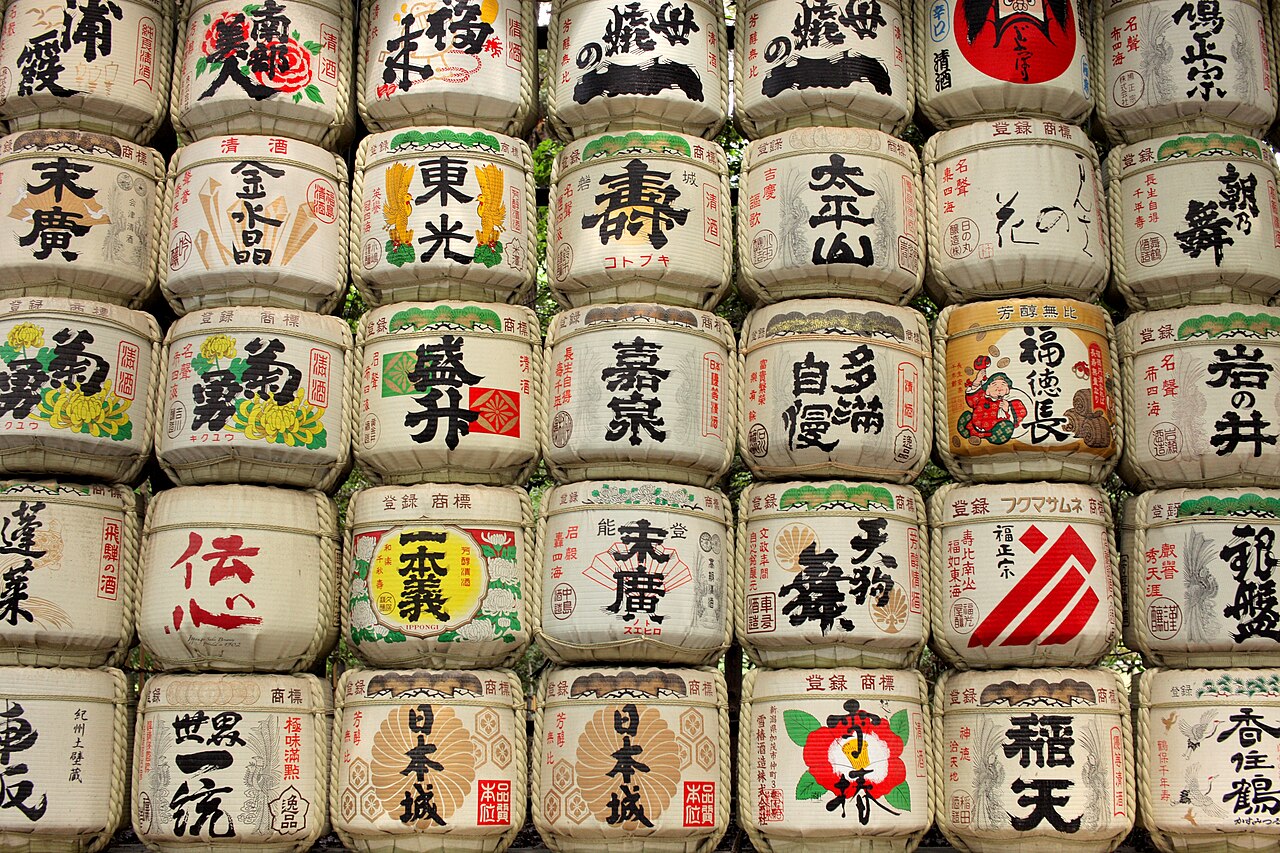
ElHeineken, via Wikimedia Commons · CC BY 4.0. Reduced-size reproduction; no cropping or colour changes.
How to visit respectfully
People who do not practise Shinto are welcome. You can observe quietly, or take part in the customary act of prayer if you wish.[5]
Before approaching the shrine, the purification area provides a place to cleanse your hands and rinse your mouth. Follow the instructions displayed there. At the place of prayer, the shrine’s guidance is to make an offering, bow twice, clap twice, pray with your hands together, and finish with one deep bow.[4]
Put the camera away at the main sanctuary where people pray. The shrine also asks visitors not to photograph the amulet office. Video and promotional photography require permission. Follow signs and staff directions rather than assuming that every part of the grounds has the same rules.[5][6]
Stay on the paths, leave plants and other natural material where they are, and avoid running or sports. Food and drinks belong in the designated areas. These small decisions help preserve the atmosphere for everyone.[6]
If you keep a goshuin book, Meiji Jingu offers a commemorative shrine seal. Follow the current signs for the counter; the reception location can change.[4]
Planning your first visit
| Where to begin | Harajuku Station is close to the shrine entrance. Allow at least another 10 minutes to walk from an entrance to the main shrine buildings.[7][10] |
|---|---|
| Time to allow | Around one hour for the shrine itself; around two hours if you also visit the Inner Garden and museum. Add time if you prefer an unhurried pace.[5] |
| Admission | Entry to the main shrine grounds is free. The Inner Garden and museum have separate charges.[5][8] |
| Opening hours | Hours change by month. In November, the published regular hours are 6:10 a.m.–4:10 p.m. Check the shrine’s current notices before travelling.[4] |
| Luggage | There is no suitcase storage inside the grounds. Arrange storage before your visit.[5] |
Make Meiji Jingu an earlier stop in your day if you are visiting in autumn or winter. A late afternoon arrival can leave less time than you expect before the gates close.
The Inner Garden or the museum?
The Inner Garden is an optional extension for visitors who would like more time with the landscape. Its seasonal attractions include irises in June and Japanese maples in late autumn. The official page currently lists a ¥500 maintenance contribution.[8]
The Meiji Jingu Museum, which opened in 2019, offers a different kind of context. Designed by Kengo Kuma, it displays objects used by or associated with Emperor Meiji and Empress Shoken. Check its own opening calendar and admission information; a museum visit needs separate planning from a walk through the shrine grounds.[9]
Choose the addition that interests you, rather than treating both as compulsory. An hour spent paying attention can be more memorable than a longer visit spent checking off locations.
Return to the neighbourhood at your own pace
Afterwards, Harajuku and Omotesando are natural places to continue with food, shops or a walk. Adjacent Yoyogi Park offers another green space, with its own identity beyond the shrine grounds.[10]
For a change of tempo later in the day, our guide to Shibuya Crossing explores another familiar image of Tokyo. You do not need to fit everything into the same outing. The point of a good route is to leave enough attention for the places along it.
What makes Meiji Jingu linger in the memory may be a gate, a small gesture at the shrine, or the light between branches. Allow the walk to matter, and the visit has already become more than a photograph.
Sources & further reading
Visitor information checked November 15, 2026. Hours, charges and access arrangements may change; check official notices for your date. Photographs are archival images, with dates and licences recorded in the accompanying article package.
- Meiji Jingu: About the shrine
- Meiji Jingu: The sacred forest
- Japan Tourism Agency: Consecrated Sake Barrels
- Meiji Jingu: Visiting, purification, prayer and monthly hours (Japanese)
- Meiji Jingu: Visitor questions and answers
- Meiji Jingu: Etiquette and photography rules
- Meiji Jingu: Access and walking time
- Meiji Jingu: Inner Garden
- Meiji Jingu: Museum
- GO TOKYO: Meiji Shrine travel guide
Photo licences apply to the credited images individually. Images are reproduced at reduced size without cropping or colour changes.




Comments