Miyajima’s Floating Torii: What the Tides Reveal at Itsukushima Shrine
A vermilion gate stands in the Seto Inland Sea, sometimes surrounded by water, sometimes approachable on foot. The changing tide reveals a deeper story about a sacred island and the architecture designed for it.
8 MIN READ
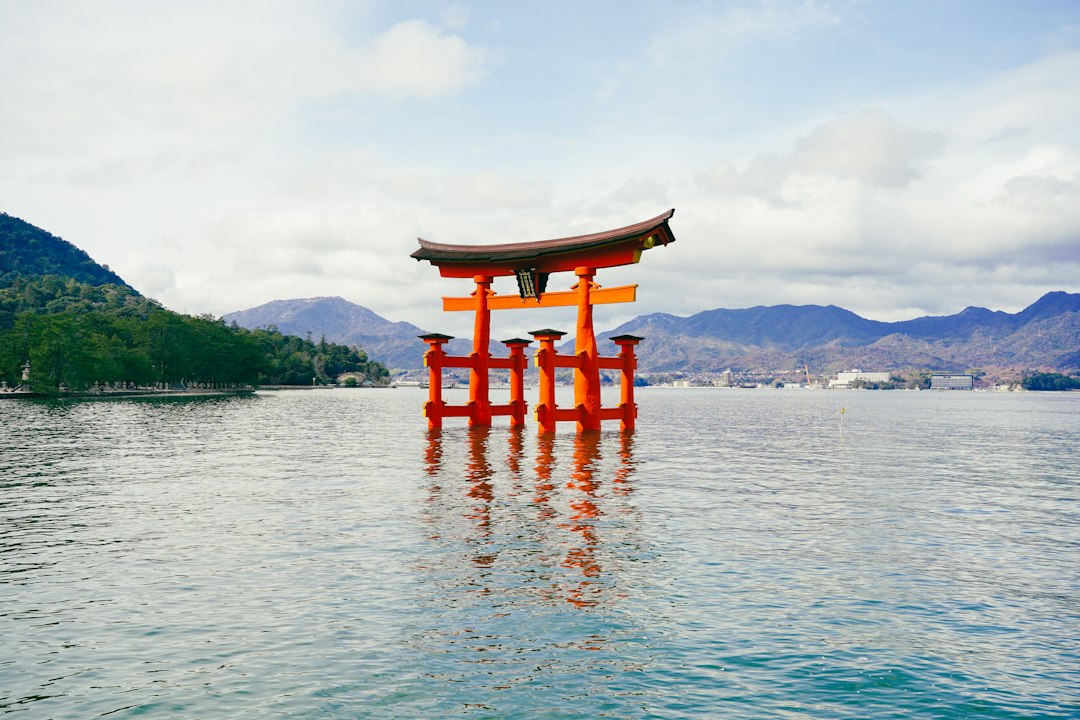
Photo: Zion C / Unsplash.
From the ferry, the first glimpse of Miyajima may be a red gate standing far beyond the shore. Water moves around its pillars and wooded slopes rise behind it. The gate looks as though it has been placed on the sea itself.
This is the Great Torii of Itsukushima Shrine, one of Japan’s most recognisable views. But a few hours later, you might return to the same place and find wet sand where there was water. The difference is not a trick of light: Miyajima’s tides can change the entire setting, from a shrine that appears to float to a landscape that invites you to look closely at how it is built.1
Why is the gate standing in the sea?
A torii marks a symbolic boundary between everyday space and sacred space at a Shinto shrine. Itsukushima’s Great Torii stands offshore because the sea was once an approach to the sacred island. Worshippers arriving by boat passed beneath the gate as they came towards the shrine.2
Miyajima is the popular name for the island of Itsukushima, in Hiroshima Prefecture’s Seto Inland Sea. Traditionally the island itself was regarded as sacred, and shrine buildings were placed along the shore, over the water, rather than simply at the foot of a mountain. That decision created one of the most unusual relationships between landscape and architecture in Japan.1
The word Miyajima means something like “shrine island”. It is an appropriate name for a place where the water, wooded hills and ritual buildings are intended to be seen together.
High tide: when the buildings appear to float
At higher tide, water gathers beneath the shrine’s vermilion corridors and surrounds the Great Torii. Reflections soften the edges of the wooden buildings. The view can feel almost unreal, especially when the water is calm.
The effect was planned. The shrine’s overwater buildings and linked corridors transform the changing sea into part of the sacred setting. The gaps between floorboards also help relieve pressure from water at higher tide, a practical response to the same natural force that makes the view so beautiful.3
Many guides simply say to arrive at high tide, but the height of the water matters more than the label “high tide”. The Miyajima Tourist Association gives a useful visual threshold: around 250 centimetres or more on its tide table, Itsukushima Shrine appears to float above the sea. On some days, even the highest tide may not reach this level.4
Before your visit: use the Miyajima Tourist Association’s English tide table for your actual travel date. It shows hours suitable for seeing the floating-shrine effect and for approaching the gate on foot. Do not rely on tide times from a different day.
A shrine with more than a thousand years of history
Itsukushima Shrine traces its founding through tradition to 593. Its monumental appearance is closely connected with Taira no Kiyomori, the powerful twelfth-century leader who expanded the shrine in 1168. Its architecture reflects the refined style of Japan’s Heian period, when courtly buildings, water and gardens were carefully composed together.1
From the corridors, look at the relationship between the painted buildings and the natural setting rather than concentrating only on the distant gate. The open water is not empty space. It makes room for the mountains and sky to enter the scene.
The shrine was inscribed on the UNESCO World Heritage List in 1996, making 2026 its thirtieth anniversary as a World Heritage Site. That designation recognises not merely the famous photograph, but the cultural landscape and the sophisticated harmony between religious architecture and nature.5
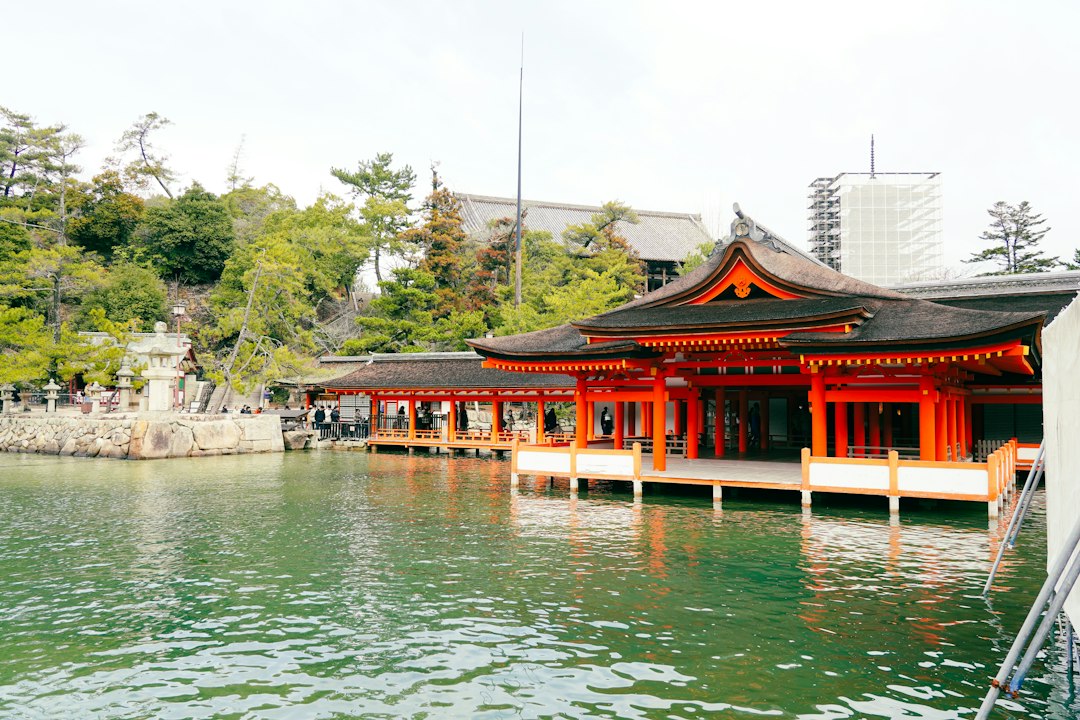
Photo: Zion C / Unsplash.
Low tide: the architecture reveals a different face
When the water retreats, the Great Torii becomes something you can examine more closely. Wet sand appears around the pillars. Footsteps spread across a broad tidal flat, and the gate seems taller than it did from the shore.
According to the Miyajima Tourist Association, the approximate threshold for walking out to the base of the gate is 100 centimetres or less on its tide table. Not every day’s low tide reaches that level. Mud, uneven ground and the returning tide also mean that access is never something to take for granted.4
If conditions allow you to walk out, choose shoes that can get wet or dirty, watch where others are stepping and leave enough time to return well before the water rises. Do not climb the structure, mark it or disturb any of its surfaces. This is a protected historic site as well as a sacred gateway.
Seeing the gate at low tide does not diminish its beauty. It reveals a second composition: the great wooden members, the distant shrine roofs and the ground that was hidden beneath the sea only hours earlier.
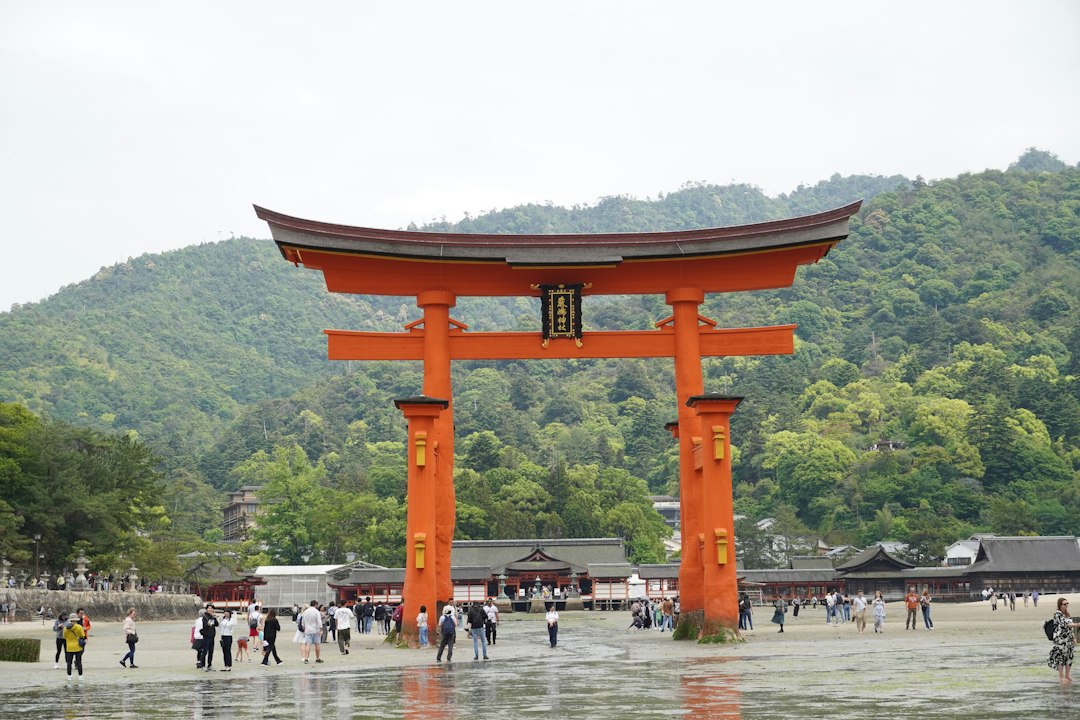
Photo: sabari nathan / Unsplash.
How can such a large wooden gate stand upright?
The present Great Torii was erected in 1875. It stands roughly 16 metres high and is made primarily from massive wooden elements, including naturally grown camphor-tree trunks for its main pillars. Restoration work was carried out from 2019 until December 2022.6
Most surprisingly, the structure does not depend on its two main pillars being driven deep into the seabed. Its great weight helps keep it standing, while smaller supporting pillars and carefully engineered joints contribute to its stability. Hidden inside the upper structure is additional ballast. The result combines structural thinking with a monumental simplicity that feels appropriate to the setting.7
Up close, what first looked like a clean red outline against the sea becomes a complicated piece of craft, timber and maintenance. The sea makes the picture famous; human skill makes the structure possible.
The island beyond its most famous view
The shrine and gate may be the main reason for your journey, but Miyajima has other rewarding layers. The busy Omotesando shopping street is full of local shops and small places to eat. Try momiji manju, a maple-leaf-shaped cake often filled with sweet bean paste or custard, or local seafood such as grilled oysters and anago meshi, rice topped with conger eel.8
For a quieter contrast, head towards Momijidani Park at the foot of Mount Misen. Those who have more time can explore the forested slopes, temples and panoramic views of the Seto Inland Sea; a ropeway operates towards the mountain, but it does not take you directly to the summit. The paths require proper footwear and time.9
You may also meet deer near the shoreline and streets. They are wild animals, and local visitor guidance asks people not to feed them. Keep paper and food wrappers secure and carry your rubbish away, since swallowing litter can harm them.10
A simple route for your first Miyajima visit
Rather than following a rigid checklist, let the island and the day’s tide suggest the order. A half-day visit can focus on the coast; a full day leaves room for a temple, a meal and the mountain landscape.
- Travel to Miyajimaguchi. From Hiroshima Station, the JR Sanyo Line reaches Miyajimaguchi in roughly 30 minutes. Walk to the pier and take a ferry to Miyajima, a crossing of around 10 minutes.2
- Enjoy the first view from the coast. Walk from Miyajima Pier towards Itsukushima Shrine. Photograph the Great Torii from shore, but leave plenty of space for the people around you.
- Visit Itsukushima Shrine. Walk the vermilion corridors and take time to appreciate the way the buildings frame the water and the mountains.
- Choose the next stop by the tide. If the water is low enough, you may be able to approach the gate. If it is high, find a viewpoint for the floating-shrine effect. If neither is possible, enjoy the ever-changing shoreline rather than waiting all day for an ideal photograph.
- Explore beyond the water. Finish with Omotesando, Momijidani Park or a relaxed meal, then catch the ferry back to the mainland.
The shrine’s official site lists standard admission at ¥300 for adults. As of November 2026, its opening hours are 6:30 a.m. to 5:30 p.m. for October 15–November 30, with seasonal variations. A separate ¥100 Miyajima visitor tax generally applies to people entering the island by ferry, subject to exemptions. Check the official sites before your visit, as transport fares and opening arrangements can change.1112
Questions before you go
Is the Great Torii free to see?
Yes. You can admire the offshore gate from public shoreline without paying a shrine admission fee. Walking through Itsukushima Shrine itself is a separate paid visit.
Can I always walk to the gate at low tide?
No. The water generally needs to fall to around 100 centimetres or less according to the local tourist association’s tide scale. Some low tides do not reach this level, and surface conditions may still make walking unsuitable. Check the official tide table.
When does the shrine look as though it is floating?
The local tourist association uses approximately 250 centimetres or higher as the guideline for the floating effect. The date and predicted tide height matter more than the clock time alone.
How much time should I spend on Miyajima?
A half day is enough to see the gate, visit the shrine and browse the main street at an unhurried pace. Allow a full day if you want to add Mount Misen or spend time watching the tide change.
Can I visit Miyajima from Hiroshima in one day?
Yes. The train-and-ferry route makes it a practical day trip from Hiroshima City. Check the last return ferries if you intend to stay for evening illumination.
The sea is part of the design
Some places change with the seasons. Miyajima can change before lunch is over. With water around its pillars, the gate is a line of vermilion against the sky. When the tide draws back, the same gate becomes a structure you can understand with your eyes and footsteps.
That is what makes Itsukushima more than a postcard. Its beauty is not fixed in one perfect moment. The architecture was made to live with a moving sea, and each visit reveals a different layer.
Sources and further reading
- Japan National Tourism Organization: Itsukushima Shinto Shrine (World Heritage) — island’s sacred setting and shrine history.
- Japan National Tourism Organization: Itsukushima-jinja Shrine — sea approach, ferry access and architecture.
- Itsukushima Shrine: Official Admission and Hours — visitor information and boardwalk guidance.
- Miyajima Tourist Association: English Tide Information and explanation of tide thresholds. Practical estimates: 100 cm and 250 cm.
- Government of Japan: Itsukushima Shrine, Standing Between Mountain and Sea — World Heritage context and 1996 inscription.
- Official Guide to Hiroshima: Reiwa Renovation of the Great Torii — 2019–2022 restoration.
- Miyajima Official Website: The Great Torii — structure, materials and engineering.
- Miyajima Official Website: Local Food — momiji manju, oysters and anago-meshi.
- Japan National Tourism Organization: Mt. Misen — forest, paths and ropeway.
- Miyajima Official Website: Nature Heritage — wild deer and litter precautions.
- Itsukushima Shrine: Entrance Fees and Seasonal Opening Hours — checked November 2026.
- Japan National Tourism Organization: Miyajima — transport, ferry crossing and visitor tax.
Opening hours, ferries and tidal conditions can change. Check official local information before travelling.


Comments