Rakugo in Japan: One Storyteller, Many Characters
A glance becomes another person. A fan becomes chopsticks. How a seated storyteller gives an audience a whole world to imagine.
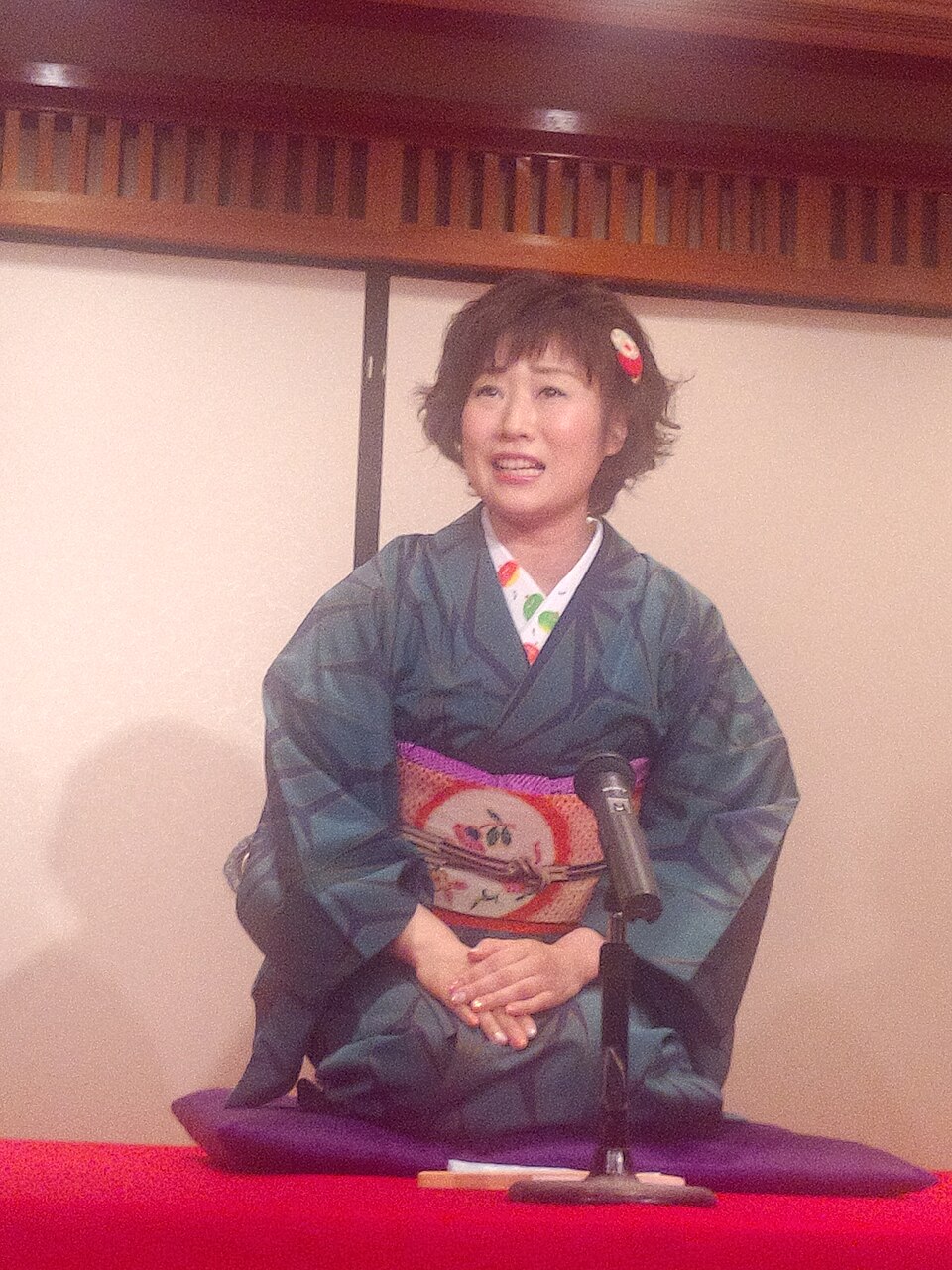
Yoshibay / Wikimedia Commons, Public domain. Resized to 960 pixels wide; composition unchanged.
There is only one person on the cushion. Yet a conversation is taking place: a question, an answer, then a very different reaction. The cast has changed without anyone entering the stage.
This is a useful way into rakugo, Japan’s art of solo storytelling. Its familiar image is a performer seated on a zabuton cushion, creating scenes through speech, expression and gesture. The audience supplies the scenery in its imagination.1
For a first encounter, try asking a small question: how do I know who is speaking now? Following that change gives you something specific to watch, even before you understand every line.
The small turn that introduces another person
One basic technique is to change the direction of the face, looking toward opposite sides of the stage to distinguish the speakers. Gestures and expressions help convey their actions and feelings. A conversation can unfold while the performer stays seated.2
Watch for the switch itself. Does a reply arrive with a different expression, a tilt of the head or a change in tone? You are watching one body suggest a relationship between people who are not physically there.
A fan is not always a fan
The familiar small props are a folding fan, or sensu, and a hand towel, or tenugui. Their meanings depend on how the storyteller handles them: a fan can stand for chopsticks or a fishing rod; a towel can become a letter or a purse.2
Try following the hand rather than identifying the object once and for all. The pleasure is in the change: an ordinary item acquires a new purpose through a few movements.
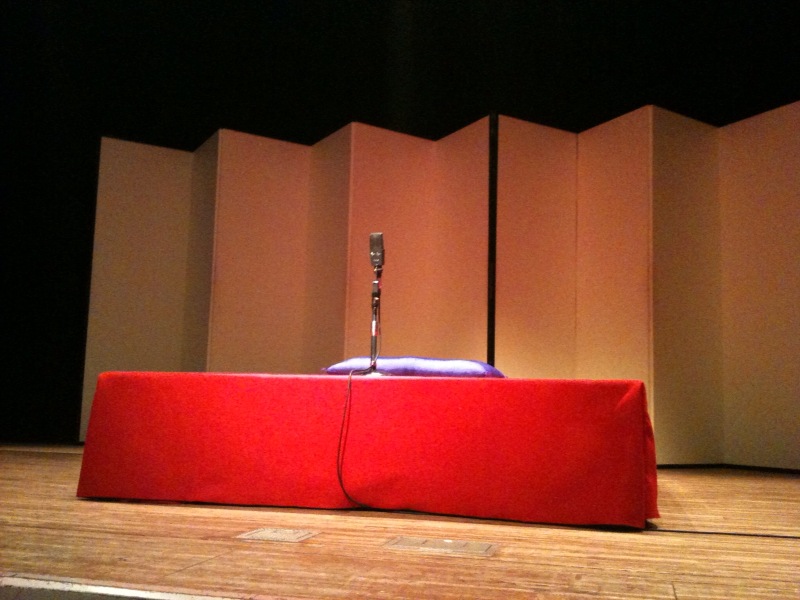
sota / Wikimedia Commons, CC BY-SA 2.0. Original 800-pixel-wide image; composition unchanged.
The story begins before the story
A common structure moves from an opening makura into the main tale and ends with an ochi, also called a sage. The makura may sound like casual conversation or a short anecdote. It helps bring listeners into the performance.3
The Japan Arts Council describes another job for this introduction: in a regular yose setting, a storyteller can gauge the audience’s response before settling on a tale. The opening may also explain an unfamiliar old expression that will matter later.3
The ochi brings the tale to its concluding turn, perhaps through wordplay or a witty line. Thinking about that structure changes how you listen: the seemingly casual opening may have prepared you for something that only becomes clear at the end.
The neighbours behind the jokes
Some traditional stories become easier to follow when you know a little about their social world. The cast can include tenants, shop workers and retired householders who offer advice—sometimes more confidently than their knowledge warrants.4
Consider the ōya, often translated as “landlord.” In the Edo-period setting explained by the Japan Arts Council, this figure managed rental housing on an owner’s behalf and also had neighbourhood responsibilities. The relationship with tenants could extend well beyond collecting rent.4
That is a useful detail to carry into a story. When one character asks another for help, the exchange may depend on an established social role. Knowing who is responsible for whom can make the scene less puzzling without explaining away the joke.
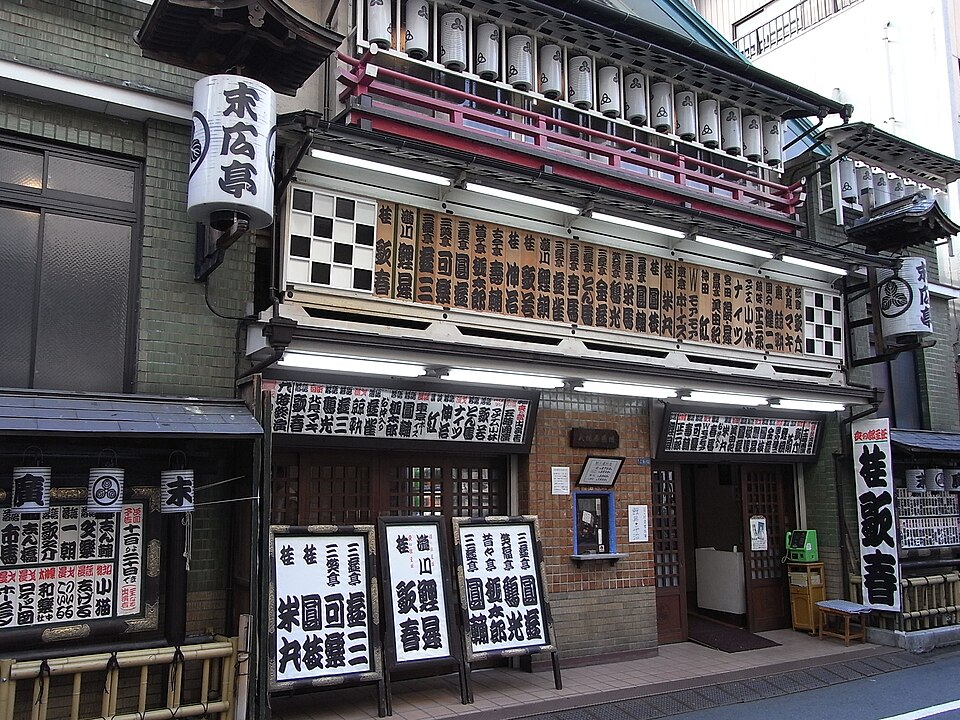
江戸村のとくぞう / Wikimedia Commons, CC BY-SA 4.0. Resized to 960 pixels wide; composition unchanged.
Rakugo and yose are connected, but different words
Rakugo names the storytelling art; yose refers to the variety-entertainment setting associated with it. A yose program can bring together different arts, including rakugo, daikagura juggling and acrobatics, or wazuma magic.5
This matters when you choose a show. Read the program as well as the venue name. An afternoon of varied acts and a performance centred on a particular storyteller can offer quite different introductions.
In the photograph above, Shinjuku Suehirotei’s entrance is surrounded by names and signboards. Look at it as a theatre with a changing program, rather than expecting the lineup in an archive photograph to be the one you will find on a visit.
Choosing a first performance in English
Rakugo depends heavily on words, timing and shared references. Seeing the character changes can be rewarding, but it does not make every joke understandable without the language. If following the story is your priority, look for a performance that explicitly offers English or translation.
The Japan Cultural Expo introduces English-friendly ways to experience the art, while its report on Myoujin Show–Rakuza describes a program with an English-speaking translator and demonstrations of performance techniques.1, 5 Treat those as starting points for research: check the organiser’s current program, venue and language arrangements before booking.
Three useful checks: Is the storytelling itself in English, translated, or simply described in English on the website? Is this a rakugo show or a mixed bill? Does the event include an introduction for newcomers?
You do not need to arrive knowing a catalogue of famous stories. Start by following one exchange, one change of expression, one object that becomes something else. The stage may be small; the world you are invited to picture is much larger.
Sources & further reading
- Japan Cultural Expo — An introduction to rakugo and English-friendly experiences. Overview of solo storytelling and visitor-oriented programs.
- Japan Arts Council, Cultural Digital Library — Gestures and props (Japanese). Character changes, facial direction, fans and hand towels.
- Japan Arts Council, Cultural Digital Library — Makura, main story and sage (Japanese). Story structure and the audience’s role in the opening.
- Japan Arts Council, Cultural Digital Library — Rakugo’s characters (Japanese). Tenants, housing managers, shop workers and retired householders.
- Japan Cultural Expo — Dive into the Fun World of Yose Entertainment. The variety-show setting and a report on an introductory program.
The credited archive photographs show separate settings; they do not depict the English-friendly program mentioned here. Suggestions about what to watch are editorial guidance. Event arrangements should be checked with the organiser.






Comments