Japanese Fandom · Craft & Connection
Cosplay in Japan: Bringing Characters to Life
A wig that needs trimming, a skill learned from a friend, a pose that brings recognition: the human work behind becoming a favourite character.
ANIME & FANDOM · 5 MIN READ
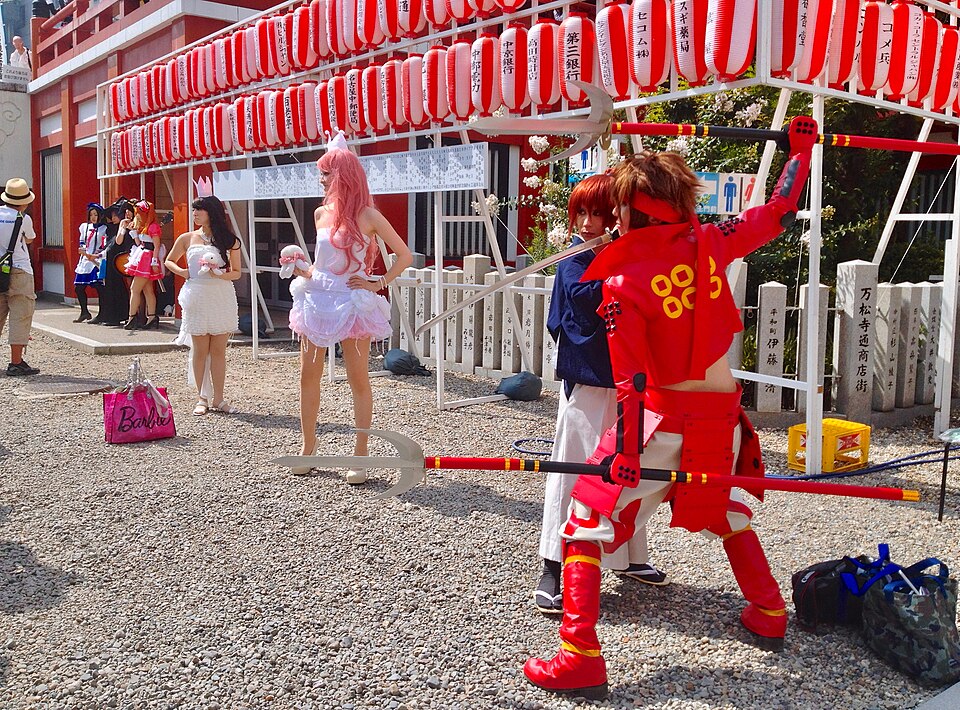
Photo: KKPCW, via Wikimedia Commons · CC BY-SA 4.0. Reduced resolution; full composition retained. This photograph remains under CC BY-SA 4.0.
Recognition can happen before anyone says a word.
A colour, a silhouette, the way someone holds a prop: together, these details can make a character feel present. In the photograph above, cosplayers gather beneath the lanterns at Nagoya’s Osu Kannon. One person strikes a wide pose; others wait or arrange themselves nearby.
The finished appearance invites another kind of curiosity. How did someone learn to make it? What happens when another fan recognises the character? Published interviews with Japanese cosplayers offer a way into that experience, from a hesitant first attempt to friendships that continue after an event ends.
The first attempt can be awkward
Cosplay, short for costume play, gives fans a way to interpret characters through dress.
In a 2024 interview with AJET CONNECT, Nanasemeron, a Japanese representative at the 2022 World Cosplay Summit, recalled her first cosplay: Kikyo from Inuyasha, worn at a vocational-school festival. She used a ready-made costume and did not yet know how to trim a wig. The fringe kept getting in her eyes.
She later learned techniques from her competition partner, Moimoi, and studied other people’s work on social media. Asked about future ambitions, she wanted to pass her prop-making skills on to someone else, as others had taught her.
Her account makes the craft approachable: learning, practising, and eventually passing a skill on.
Look at the choices inside a costume
One way to enjoy cosplay is to slow down and notice a few decisions. You can do this without knowing every character’s name. The photographs here offer several places to begin.
| Look for | A question to consider |
|---|---|
| Shape and colour | Which part of the silhouette makes the outfit recognisable from a distance? |
| Pose and expression | How does a turn of the head or the position of a hand change the impression? |
| A shared scene | What happens when two people arrange their characters together? |
These are suggestions for looking, rather than a scorecard. A broad gesture and a quiet pose can both make a photograph interesting. The pleasure lies in noticing the decisions that bring the image together.
When a costume becomes a performance
The World Cosplay Championship’s official introduction describes a formal route into the craft. Pairs qualify through national or regional selection events before competing in Nagoya. Costume work and stage performance are evaluated, and teams document how they constructed their outfits.
Its guidance generally requires contestants to make their competition costumes themselves, while allowing specified help and disclosed alterations to ready-made clothing. These are championship requirements; they should not be mistaken for a standard every casual participant must meet.
Watching with this process in mind can change what catches your attention. Alongside the finished outfit, consider how it moves and how two performers work together. A performance gives the costume a sequence of actions and a relationship to another character.
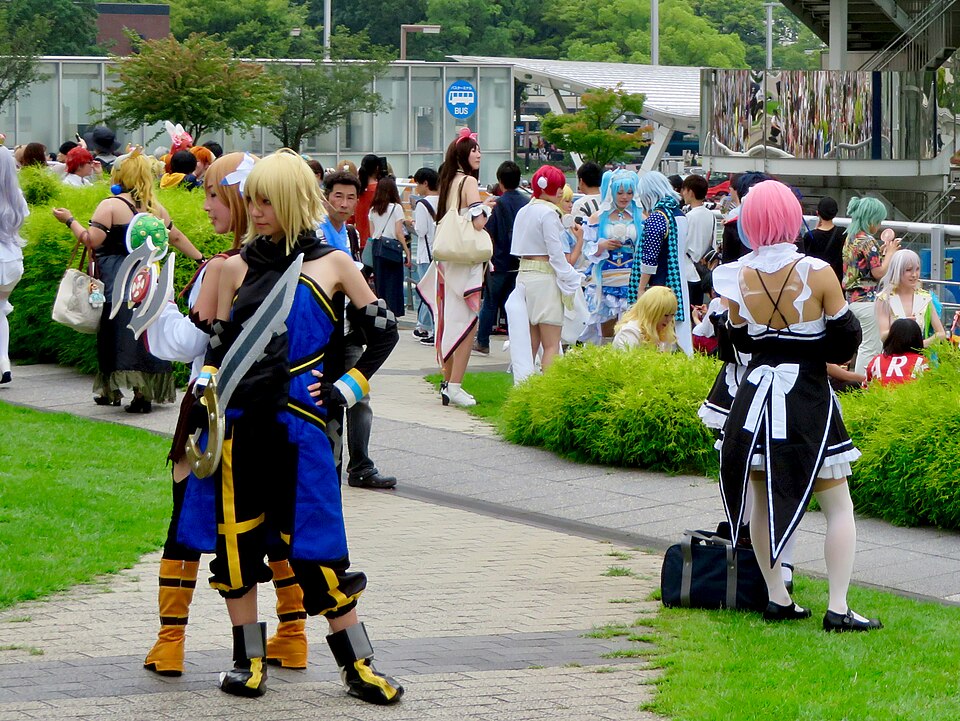
Photo: KKPCW, via Wikimedia Commons · CC BY-SA 4.0. Reduced resolution; full composition retained. This photograph remains under CC BY-SA 4.0.
A friendship can outlast the event
In J-CAST News’s reporting from the 2022 summit, Mioshi and Miomayo, Japan’s 2018 representatives, described the international connections their participation had opened.
They said people communicated with them despite their limited English; some overseas participants had learned Japanese through anime and songs. By the time of the interview, they were still showing one another completed costumes and exchanging information about how to make them.
The lasting connection in that account is wonderfully practical. After the stage and the photographs, there is another outfit to show and another technique to discuss. A shared interest gives people a reason to continue a conversation.
This is one pair’s experience, not a promise about every event. It does suggest a useful question when looking at a crowded cosplay photograph: which conversations might carry on once everyone goes home?
A photograph is something people make together
A successful cosplay photograph asks for attention on both sides of the camera. A person chooses how to stand; a photographer chooses where to look. Treating that moment as a collaboration helps keep the person visible within the character.
The summit’s official photography guide makes consent central. Ask before taking a photograph, obtain agreement for requested poses, and ask permission before publishing an image online. A costume is an invitation to appreciate someone’s work, while the wearer decides how they want to be photographed.
A simple question—“May I take your photo?”—is a good beginning. If you hope to post it, say where. Accept a refusal comfortably, and give people time to rest or leave. The encounter matters as much as the picture.
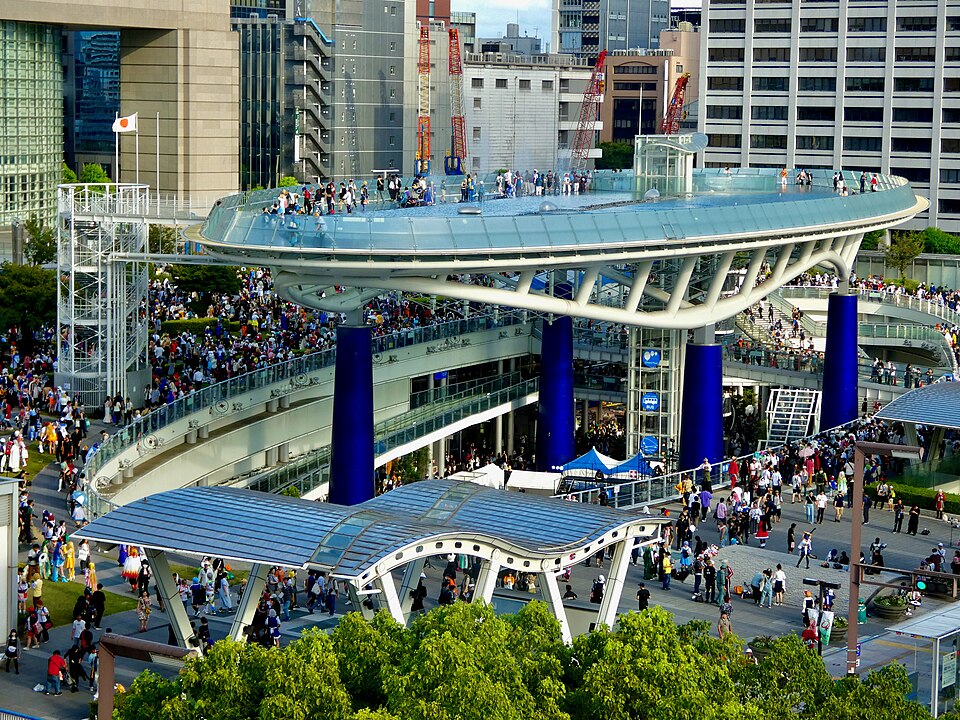
Photo: Kyu3, via Wikimedia Commons · CC BY-SA 4.0. Reduced resolution; full composition retained. This photograph remains under CC BY-SA 4.0.
Find a way in that feels enjoyable
If you want to try cosplay, choose a character or a particular detail you enjoy. Decide what would feel manageable within your time, comfort and budget. Your first aim might be a photograph with a friend, or learning one new technique.
Before attending an event in Japan, read its own participation information. The World Cosplay Summit provides separate cosplayer guidance and participation rules covering tickets, changing arrangements, costumes, props and permitted areas. Other events may use different arrangements, so check the edition you plan to attend.
The venue also belongs to everyday city life. Keep paths clear, follow staff instructions and take photographs in the designated places. Planning those ordinary details leaves more attention for the character and the people you came to meet.
When you next see a cosplay photograph, look for one decision you appreciate: the shape of a sleeve, a carefully chosen pose, the way two characters fit together. It offers a small way to recognise the fan’s own creativity within a familiar fictional world.
Sources & image credits
- AJET CONNECT, Mark Christensen: interview with Nanasemeron — her first costume, learning from Moimoi and wish to teach others.
- World Cosplay Championship: official introduction and participation guidance — selection, costume construction and performance; competitors should consult the rules for their particular year.
- J-CAST News: report from the 2022 World Cosplay Summit — interview with Mioshi and Miomayo, paraphrased from Japanese.
- World Cosplay Summit: photography guide, cosplayer guide and participation rules — consent and event arrangements.
The personal accounts come from published interviews, not interviews conducted by LAYERS OF JAPAN. The photographs illustrate the event and setting; the named interviewees are not identified in them. Each photograph’s source and Creative Commons licence appear in its caption.









Comments