Japanese Fandom · Everyday Life
Why Fans Take Their Oshi Everywhere
An acrylic stand at a café, a plush companion on a day out, a carefully arranged bag: the small objects that bring a favourite into everyday life.
ANIME & FANDOM · 5 MIN READ
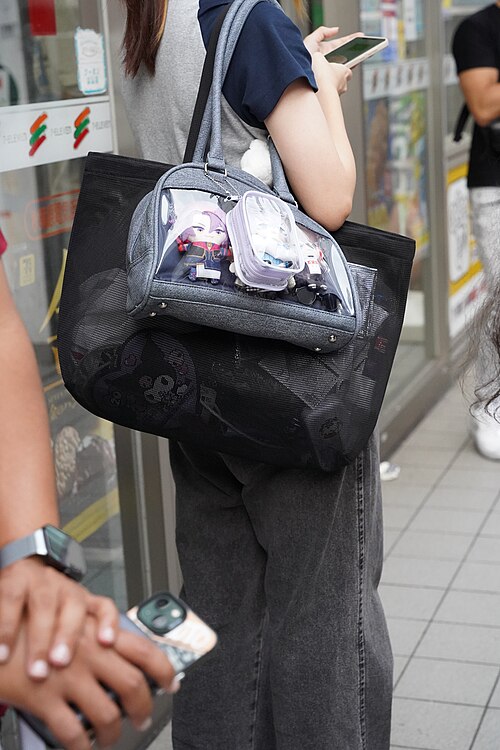
Photo: Benlisquare, via Wikimedia Commons · CC BY-SA 4.0. Reduced in size; the original composition is preserved. This photograph remains under CC BY-SA 4.0.
A bag can carry the practical things needed for a day out—and a little company.
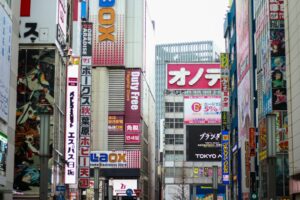
In the Akihabara photograph above, a plush toy looks out through a clear panel. It has a place among the things its owner carries through the city. That small arrangement opens a larger question: what makes taking a favourite character or performer along feel enjoyable?
This is one visible part of oshikatsu, the activities through which people enjoy and support an oshi, or favourite. Here, we follow the objects that leave the shelf: what fans do with them, what they make, and how an ordinary outing can become a personal memory.
Three ways to bring a favourite along
| Word | What to look for |
|---|---|
| Akusuta | Short for acrylic stand: a printed image of a person or character on acrylic, fitted into a base so it can stand upright. |
| Nui | A shortened form of nuigurumi, or plush toy. Nuitori means photographing a plush toy as the subject of a scene. |
| Ita-bag | A bag arranged to display fan goods. The clear-front bags in this article carry plush toys where other people can see them. |
The forms invite different kinds of play. A stand can sit beside a drink. A plush can wear a handmade outfit. A bag can keep a small display together while its owner moves from place to place. The interest lies partly in what the fan chooses to do with the object.
A favourite in the photograph
In CBC Television’s street interviews published by TBS NEWS DIG, people carrying acrylic stands described taking pictures with them at meals and stylish cafés. One interviewee explained the appeal as being able to walk around with their oshi; another compared the experience to a date.
Those are individual descriptions, with room for different feelings. For one fan, the fun may be an imagined shared outing. For another, it may be the picture itself: a tiny figure, an oversized dessert, a composition that makes them smile. The same object can hold several kinds of affection.
One way to read such a photograph is as a meeting between two interests. It records somewhere the fan went and something they love. The background matters because it gives the familiar object a new setting.
When carrying turns into making
A more detailed example comes from COVERedge’s published interview with Chun, a hololive fan in his thirties. Inspired by Shirogane Noel’s concert outfit, he decided to make a version for his plush toy despite having little sewing experience.
He bought a book, received help from a friend and worked through repeated attempts. The outfit took about a month to finish. He then took the dressed plush to the show and photographed it by Noel’s banner. Preparing the outfit had given him something absorbing to do while looking forward to the performance.
This account comes from hololive’s own corporate publication and describes one person’s experience. It offers a concrete example of fandom making space for a new skill: selecting materials, solving a small construction problem, and finally taking something handmade out into the world.
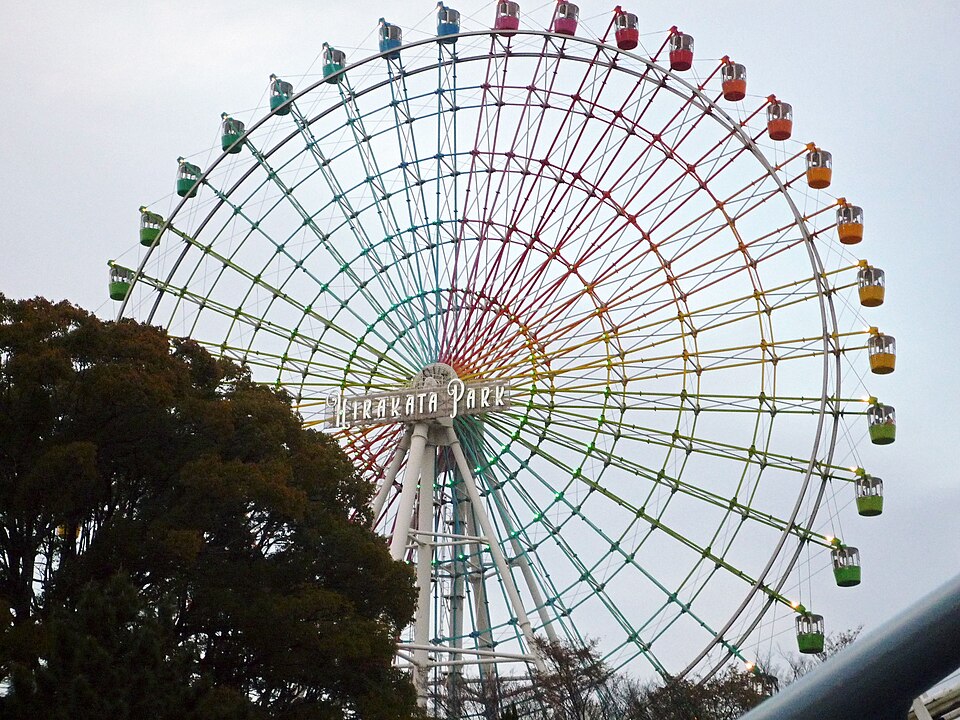
Photo: Japan Maik, via Wikimedia Commons · CC BY-SA 3.0. Reduced in size, with no crop or retouching. This photograph remains under CC BY-SA 3.0.
A place for photographs—and a choice about company
There are also organised settings for this kind of play. In a March 2026 announcement, Hirakata Park in Osaka Prefecture described a plush-photography gathering planned for April 4–5. Its programme offered reserved areas for taking pictures and coloured wristbands indicating whether participants welcomed conversation or preferred to concentrate on photography.
That wristband detail is revealing. A shared enthusiasm can create an opportunity to meet, while leaving room for someone who simply wants time with a camera. The event design recognised both preferences.
The announcement also described nuitori as making the plush the main character in scenes such as a café visit or a journey. These April dates are a past example, not a current booking recommendation; consult the park’s official information for future events.
A glimpse of one fan community
A COVERedge survey of adult holoplus app users, conducted in August 2026, received more than 2,000 responses. In every age group reported, more than 40 percent said they had taken photographs while out with plush toys or acrylic stands.
These were respondents using a particular fandom’s official app, so the findings cannot describe Japan as a whole. They do show that, within this surveyed community, taking a small object out into the world was a familiar activity alongside watching streams and attending shows.
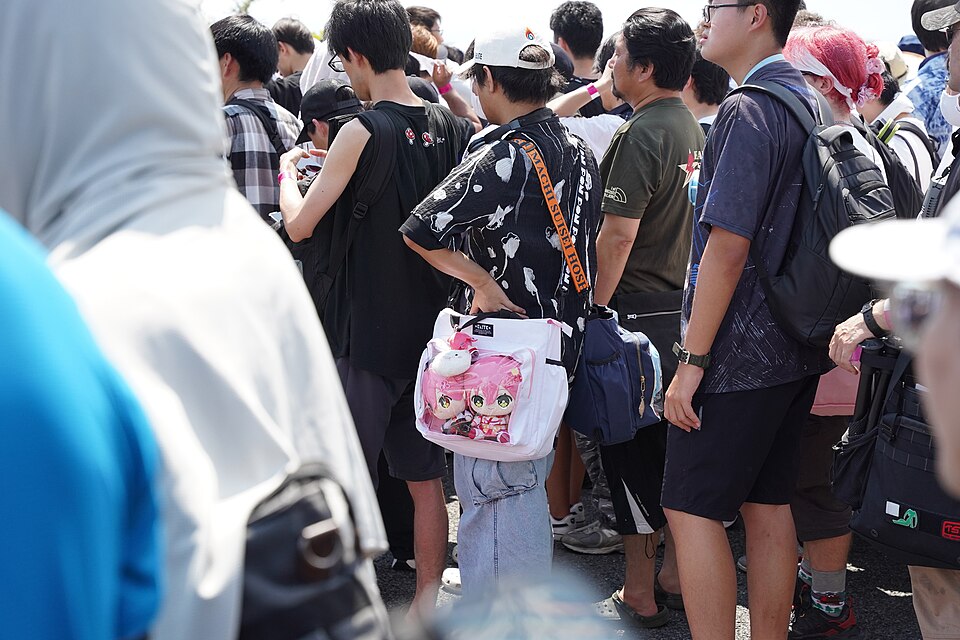
Photo: Benlisquare, via Wikimedia Commons · CC BY-SA 4.0. Reduced in size; the original composition is preserved. This photograph remains under CC BY-SA 4.0.
Let a shared interest open a conversation
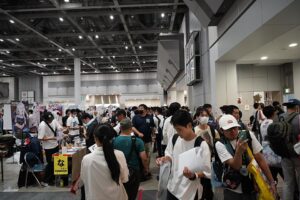
At an event, a visible character can provide something to recognise before two people have spoken. The Comiket photograph above captures that possibility in a crowd. The Comic Market Committee’s introduction describes the event as a place for distributing self-published work, with self-expression central to its purpose. Carrying a favourite and making something of your own can meet in the same setting.
A visible collection is only an opening. Let its owner decide whether they want to talk. You might ask which character the plush represents or how they chose its outfit, then give them room to respond.
Try it at your own scale
If the idea appeals to you, begin with something you already enjoy and one photograph you would like to keep. Choose a setting where you can pause comfortably, with the venue’s permission where needed.
- Keep the space usable. Stay within your table or designated photo area, and leave paths and queues clear.
- Ask before including other people. Get permission before photographing someone’s display or posting an identifiable image of them.
- Choose your own level of involvement. Decide what feels enjoyable within your time and budget. A small keepsake can be enough.
The finished picture may matter because of the afternoon around it: where you went, who came with you, or the outfit you learned to make. A familiar figure becomes part of a memory that belongs to the person behind the camera.
Sources & image credits
- CBC Television / TBS NEWS DIG: report on acrylic stands — product explanation and street interviews.
- COVERedge: fan interviews on handmade plush outfits and other activities — Chun’s account, paraphrased from the published interview.
- Keihan / Hirakata Park: plush-photography gathering announcement (PDF) — the planned event, wristbands and description of nuitori.
- COVERedge: holoplus fan survey — respondents, survey scope and activity results.
- Comic Market Committee: What is Comic Market? (PDF) — the event’s purpose and self-publishing background; this historical introduction is not used for current admission rules.
This article draws on published reporting and interviews. The people in the photographs are not identified as the interviewees. Photographs are credited individually above; their stated Creative Commons licences apply to the photographs.





Comments