Anime Pilgrimage · Lake Motosu, Yamanashi
Laid-Back Camp at Lake Motosu: The View That Starts the Journey
Follow Laid-Back Camp to Lake Motosu, where Rin and Nadeshiko first meet. Discover the real landscape, Koan camping options and the details that make a visit work.
ANIME & FANDOM · 6 MIN READ
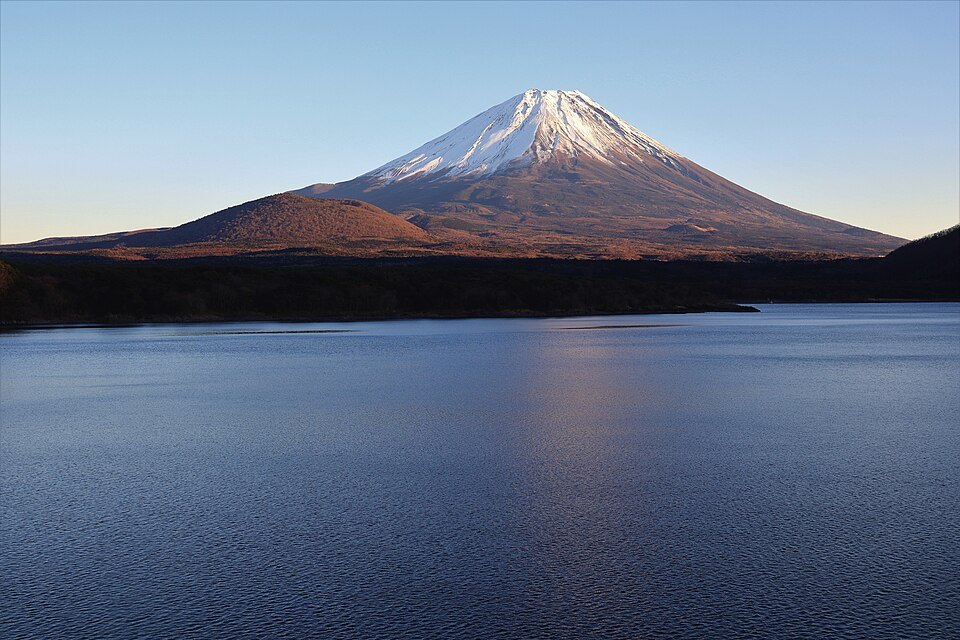
Photo: Alpsdake, 4 December 2021, via Wikimedia Commons · CC BY-SA 4.0. Resized and JPEG-compressed for the web; no crop or retouching by LAYERS OF JAPAN.
The mountain is only one reason to come to Lake Motosu.
A quiet campsite, a cold evening and the possibility of seeing Mount Fuji: Laid-Back Camp, known in Japan as Yuru Camp△, begins with a small journey. In the first episode, Rin Shima cycles to Lake Motosu for a solo camping trip in November. There she meets Nadeshiko Kagamihara, who has recently moved to Yamanashi and come looking for the mountain. [1]
For an anime pilgrimage, that is an inviting starting point. There is no long list of landmarks to collect before the day counts as a success. The appeal is in making time for one place: watching the light on the water, preparing something warm and allowing an ordinary pause to become memorable.
At Lake Motosu, the setting deserves that attention even before you match it to the screen.
Where Rin and Nadeshiko’s story meets the real lake
Yamanashi’s official tourism guide identifies Koan Campground (浩庵キャンプ場) as the real location associated with their first meeting. It also points out the bench beside the toilets near the campground, familiar from the opening episode. The campsite looks across Lake Motosu toward Mount Fuji. [2]
The large view and the modest bench work together. One gives the scene its scale; the other makes it feel like a place where someone might stop, get tired or unexpectedly begin a conversation. That balance is part of the pleasure of visiting a setting from this series.
When planning, check the name carefully. Koan Tent Village, the operator’s second campground, is a separate wooded site across the lake. It is not the same location as the lakeside Koan Campground featured here. [4]
Choose a day visit or a camping stay
The campsite’s lakeshore is managed space. Yamanashi’s location guide makes clear that access beyond reception is for checked-in campers. Seeing a familiar place in an anime does not make the camping area an unrestricted sightseeing stop. [2]
For time beside the water at Koan, look at its official camping and day-camping options. Reservations are required. Day camping offers a way to enjoy the setting without spending the night, while an overnight stay needs proper equipment and preparation. [3], [7]
A booking does not secure a particular patch of shoreline: pitches are unnumbered and visitors choose an available space after entering. Buy your food before travelling, and arrange any equipment rental in advance rather than expecting a tent to be waiting at reception. Check the operator’s current fees and arrival instructions for your visit. [3], [4]
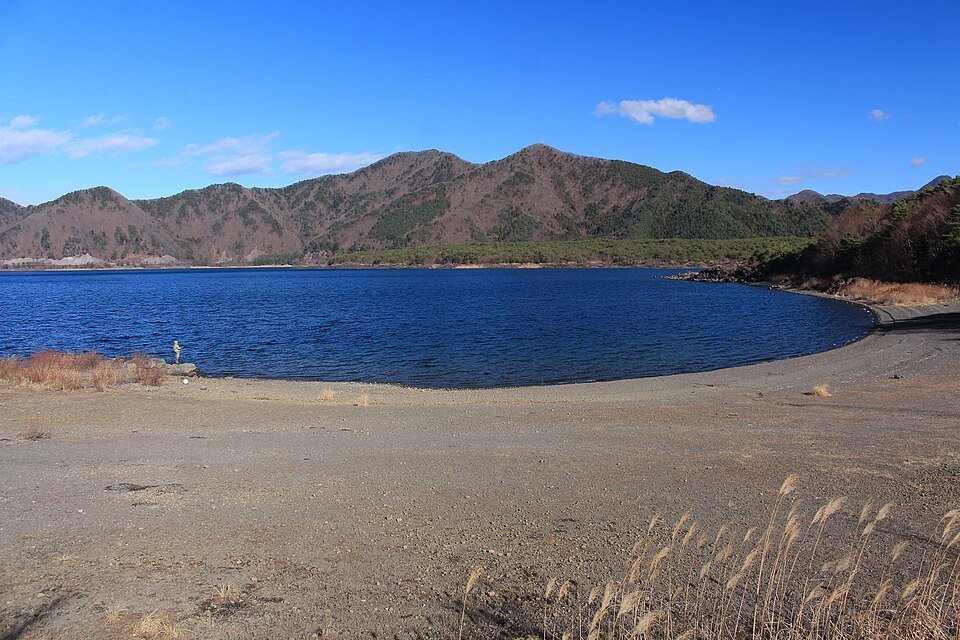
Photo: Alpsdake, 17 December 2015, via Wikimedia Commons · CC BY-SA 4.0. Resized and JPEG-compressed for the web; no crop or retouching by LAYERS OF JAPAN.
Leave room for the weather—and an optional climb
The photographs here show clear views, but they are records of particular days. Treat Mount Fuji’s appearance as a possibility, not a promise. Even the opening episode begins with cloud across the mountain. [2] A good visit leaves space for the lake itself: the curve of a shoreline, the colour of the water and the shape of the surrounding hills.
If conditions and your plans allow, Nakanokura Pass viewpoint offers another perspective. The tourism guide describes a trail starting beside the toilets, approximately 620 metres and 20–30 minutes to the viewpoint. That is an uphill trail, not a flat extension of the roadside stop; allow additional time to return. [2] Wear suitable footwear, check local signs and trail conditions, and keep enough daylight for the descent.
Plan the final part of the journey
For visitors travelling without a car, the most useful detail is the difference between Motosuko bus stop and Koan Campground. The operator’s access page describes Fujikyu bus connections from Kawaguchiko Station or Shin-Fuji Station to Motosuko bus stop, followed by a pickup to Koan. Before relying on that arrangement, confirm eligibility, operating hours and your arrival with Koan directly. Plan the return connection too. [5]
There is also a Minobu town bus connection from stations on the JR Minobu Line, including Shimobe-Onsen. The Iitomi–Motosuko line runs on Saturdays, Sundays and public holidays, excluding December 29–January 3. It is not a daily weekday service. Consult the current town timetable before building a route around it. [5], [6]
For a first visit, a simple itinerary is sensible: travel to the area, spend time at the lake and return with a comfortable margin. Adding several distant anime locations can turn the quiet part of the day into the part you rush.
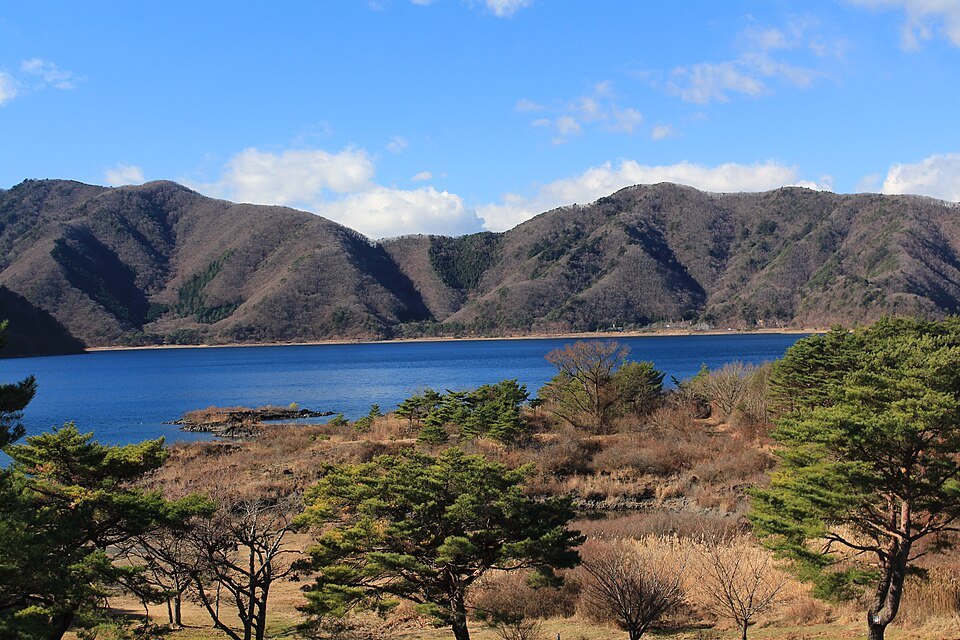
Photo: Alpsdake, 17 December 2015, via Wikimedia Commons · CC BY-SA 4.0. Resized and JPEG-compressed for the web; no crop or retouching by LAYERS OF JAPAN.
Keep the welcome as quiet as the scenery
Koan is a working campground shared with people who may have come for a night outdoors rather than an anime location. Keep cameras out of other visitors’ pitches, avoid making someone else’s tent part of a posed scene, and give the bench and paths room to serve their everyday purpose.
The operator requires visitors to take their rubbish home; its FAQ also says there is no disposal area for charcoal. Plan how to carry waste away before you arrive. Swimming and drone use are prohibited at Koan Campground, so neither belongs in a plan for recreating the view. [3], [4]
If the anime’s cold-weather atmosphere is what draws you here, prepare for the real conditions. Koan warns of icy roads and asks drivers to use winter tyres from December to mid-April; severe weather can also cause closure. Check the forecast and operator notices close to departure, and bring clothing and camping equipment appropriate to the expected temperatures. [7]
A little time beside the water
The nicest souvenir from this kind of journey may be a photograph you did not plan: ripples crossing the lake, a stand of trees or a mountain partly hidden by cloud. Looking for a familiar scene gives you a reason to arrive. Once there, you can let the real landscape hold your attention.
That is the invitation in a Lake Motosu pilgrimage: make the preparations carefully, then give yourself time to notice where you are.
About the photographs: These are real Lake Motosu photographs taken in 2015 and 2021, not current photographs of Koan’s facilities or exact scene comparisons. Conditions, access and facilities may have changed. All three photographs are by Alpsdake and remain under CC BY-SA 4.0; photo credits and licence links are included with each image.
Sources and useful links
- Laid-Back Camp official anime website: first-season episode 1 synopsis (Japanese).
- Yamanashi Tourism Organization: real locations from episode 1 (Japanese).
- Koan Campground: camping, day camping, equipment and rules (Japanese).
- Koan: frequently asked questions (Japanese).
- Koan: official access information (Japanese).
- Minobu Town: municipal bus information and timetables (Japanese).
- Koan: reservations and operating notices (Japanese).
Check current booking conditions, transport timetables and local notices before travelling.








Comments