Anime Pilgrimage · Yotsuya & Roppongi, Tokyo
Your Name in Tokyo: From Suga Shrine to a Museum Café
Red handrails, a station footbridge and a café suspended above a museum lobby: follow the film into three very different corners of Tokyo.
ANIME & FANDOM · 5 MIN READ
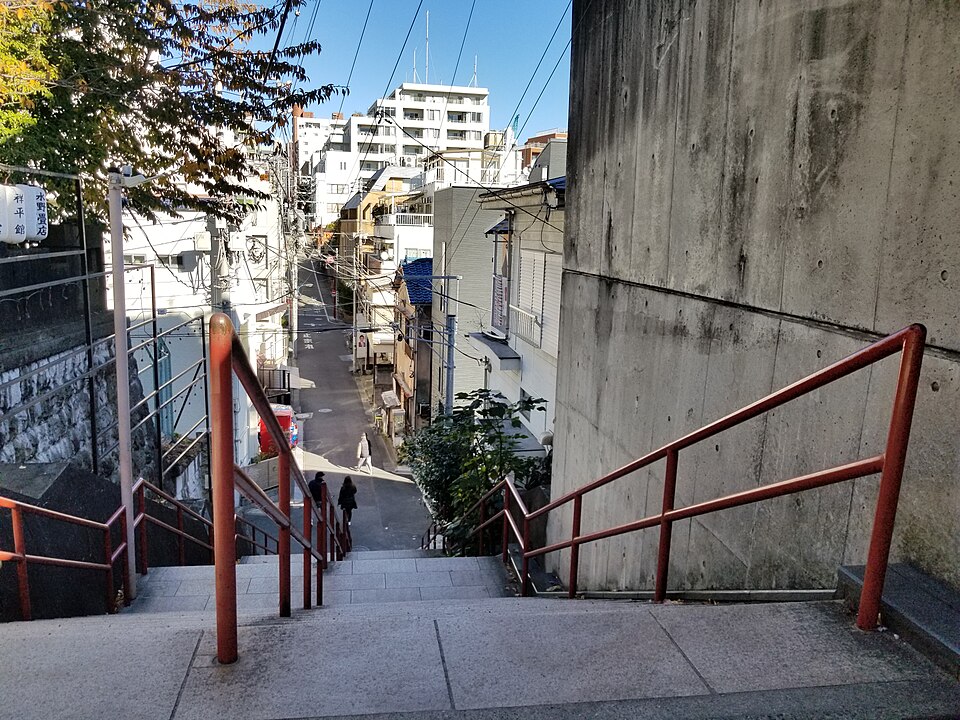
A red handrail can make an unfamiliar Tokyo street feel remembered.
At Suga Shrine in Yotsuya, stone steps descend between buildings towards a narrow neighbourhood street. The staircase, known as Otokozaka, became a destination for fans after appearing in the 2016 film Your Name.1 Arriving there brings a small but satisfying change of scale: an image from a cinema screen becomes somewhere you can stand.
Begin with the shrine and nearby Shinanomachi footbridge, then add the National Art Center, Tokyo if you have more time. These stops reveal a quieter side of the film’s city, through places for walking, waiting and meeting. Our Your Name guide to Hida-Furukawa explores another part of that journey.
Suga Shrine: spend time beyond the staircase
The steps are steep, and the neighbourhood continues around them. Let residents and worshippers pass, keep photographs brief when people are waiting, and stay within public routes. The view belongs to daily life as well as to the memories visitors bring.
Once you reach the top, give the shrine itself some attention. Suga Shrine’s official history identifies its principal deities as Susanoo-no-Mikoto and Uka-no-Mitama-no-Mikoto, associated respectively with protection and with harvests, good fortune and prosperous business. It took the name Suga Shrine in 1868.2
That longer history gives the visit depth. Look around the precinct, follow the shrine’s instructions and allow anyone praying a little space. You can enjoy recognising the staircase and still discover something about the place at its summit.
The shrine lists walking access from Yotsuya-sanchome Station on the Marunouchi Line, as well as Yotsuya and Shinanomachi stations. Its published estimates are about seven minutes from Yotsuya-sanchome and ten from the other two.3 Allow longer for navigation and slopes. If steps are difficult, consult the shrine’s access map before choosing your approach.
Shinanomachi: a familiar pause above the street
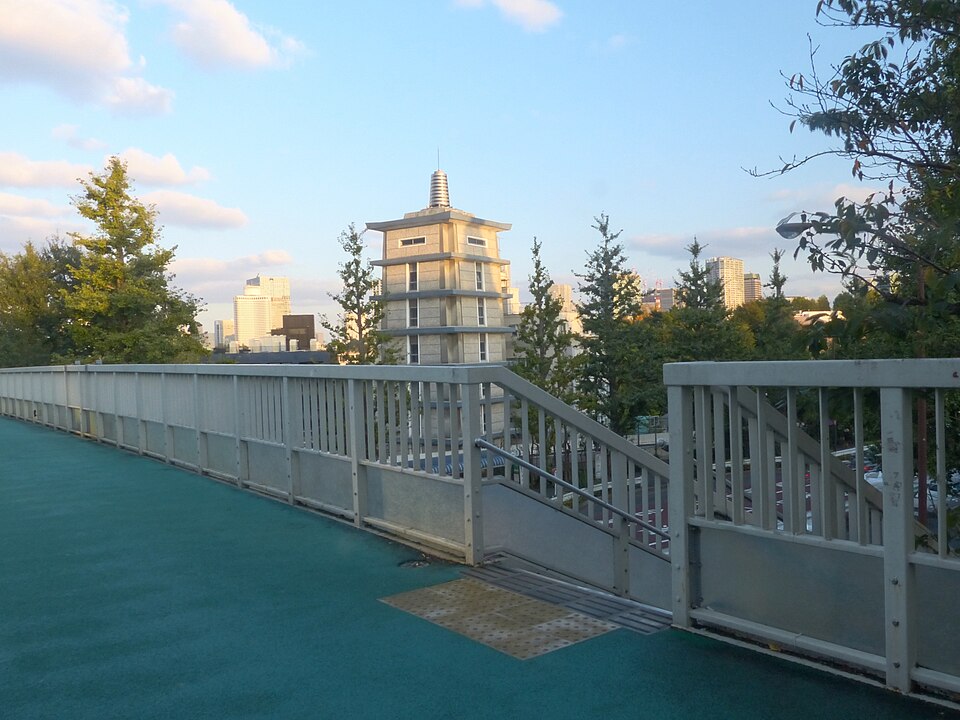
The pedestrian bridge just south of JR Shinanomachi Station is another recognisable location. LIVE JAPAN’s location guide identifies it in several scenes, including moments involving phone calls and Taki’s outing with Okudera.4 Its railings and stair opening give the memory a concrete outline.
Walk here from the shrine using a current map, taking the small streets at an unhurried pace. Once on the bridge, look at the whole setting: the deck underfoot, the trees beyond the railings and the buildings that make up the view. These everyday details are a large part of the pleasure of recognising it.
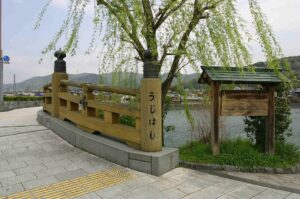
The photograph below was taken in November 2016. It shows the bridge’s relationship to the surrounding streets, while also recording how it looked around the time of the film’s release. Expect ordinary changes in paint, signs and neighbouring buildings. Keep the stairs and crossing route clear as you take a photograph.
Roppongi: find the café inside the art centre
For a longer outing, make a separate journey to the National Art Center, Tokyo in Roppongi. Its second-floor Salon de Thé ROND appears during Taki and Okudera’s museum date. The centre’s archive for its 2017 Makoto Shinkai exhibition explicitly identifies the café and scene.5
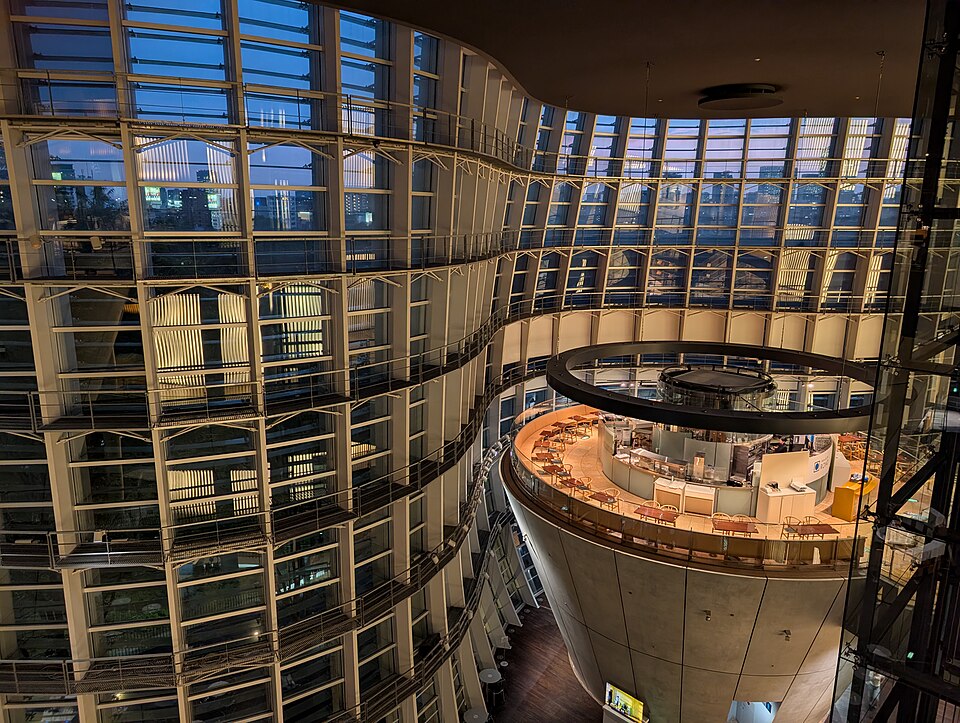
The building rewards a visit in its own right. Designed by Kisho Kurokawa architect & associates with NIHON SEKKEI, it has a sweeping glass façade that brings views of surrounding greenery into the lobby.6 Moving through the space changes the relationship between the glass, the curved surfaces and the people on different levels.
Salon de Thé ROND occupies the top of an inverted cone on the second floor, with tea, coffee and light refreshments listed by the centre.7 Check its current opening information before planning a break there, and leave room for a wait. The special seat-reservation offer in the 2017 archive belonged to that past exhibition.
The June 2026 photograph below shows the atrium and the third-floor restaurant, Brasserie Paul Bocuse Le Musée. It illustrates the building’s atmosphere. For the café associated with the film, follow the signs to Salon de Thé ROND on 2F.7
Choose the version of the day that suits you
For a compact visit, keep the shrine and footbridge together and allow time for a meal nearby. Add Roppongi when you want to spend a longer day following the film, with a journey between districts and perhaps an exhibition as well.
- Start in Yotsuya: reach Suga Shrine from the station that suits your route, visit the precinct and pause at the famous steps.
- Continue to Shinanomachi: use a current walking map to reach the station-side footbridge. This is a useful point to finish the shorter outing.
- Add the art centre: plan onward transport towards Nogizaka or Roppongi. The centre lists direct access from Nogizaka Station, Exit 6, on the Chiyoda Line, with walking access from Roppongi Station too.8
- Check the day before you go: the art centre normally closes on Tuesdays, with a holiday exception. Consult its current calendar and the café’s own hours.8
Entry to the art centre building is free; exhibition admission is separate, and café orders are an additional expense.8 You can therefore choose how much of the afternoon to devote to the building, a drink or the art on display.
Across these three places, the memorable details are small enough to notice for yourself: a handrail, a turn in a stair, a table overlooking an open room. Give them time, and Tokyo can become more personal with each stop.
Sources & image notes
- Chuosuki web magazine — Suga Shrine and its film connection (Japanese).
- Suga Shrine — official history and deities.
- Suga Shrine — official access routes and precinct guide (Japanese).
- LIVE JAPAN — Your Name locations in Tokyo (Japanese; updated January 2023). Used for the Shinanomachi scene identification.
- National Art Center, Tokyo — 2017 Makoto Shinkai exhibition archive (Japanese). Confirms the café’s film connection; historical ticket offers are no longer treated as current.
- National Art Center, Tokyo — architecture.
- National Art Center, Tokyo — restaurants and cafés.
- National Art Center, Tokyo — visitor guide and access; current opening information.
Information checked on 25 October 2026. The route is an editorial suggestion, with a separate journey for the Roppongi extension. Photographs show real locations in 2016, 2024 and 2026; they are not anime stills. Credits and licences appear beneath each image. Check current access, opening times and on-site instructions before visiting. This is an independent travel article.




Comments