On a plan of Kiyomizu-dera, Otowa Waterfall looks almost next door to Okuno-in. The important bit the flat map cannot show is that one is below the other. From the Main Hall, you can look out over the slope without seeing where a visitor actually stands to reach the water. Use the two wooden stages to get your bearings before heading down.
First the view from the Main Hall, then the view of it
The famous projecting stage belongs to the Main Hall, or Hondō. From here you can appreciate just how high the hillside feels. Continue toward Okuno-in, the Inner Sanctuary. It has a stage of its own. Looking back from this side brings much more of the Main Hall and its timber supports into a single view. If your photographs all seem to show people standing on planks, changing stages will change the picture.
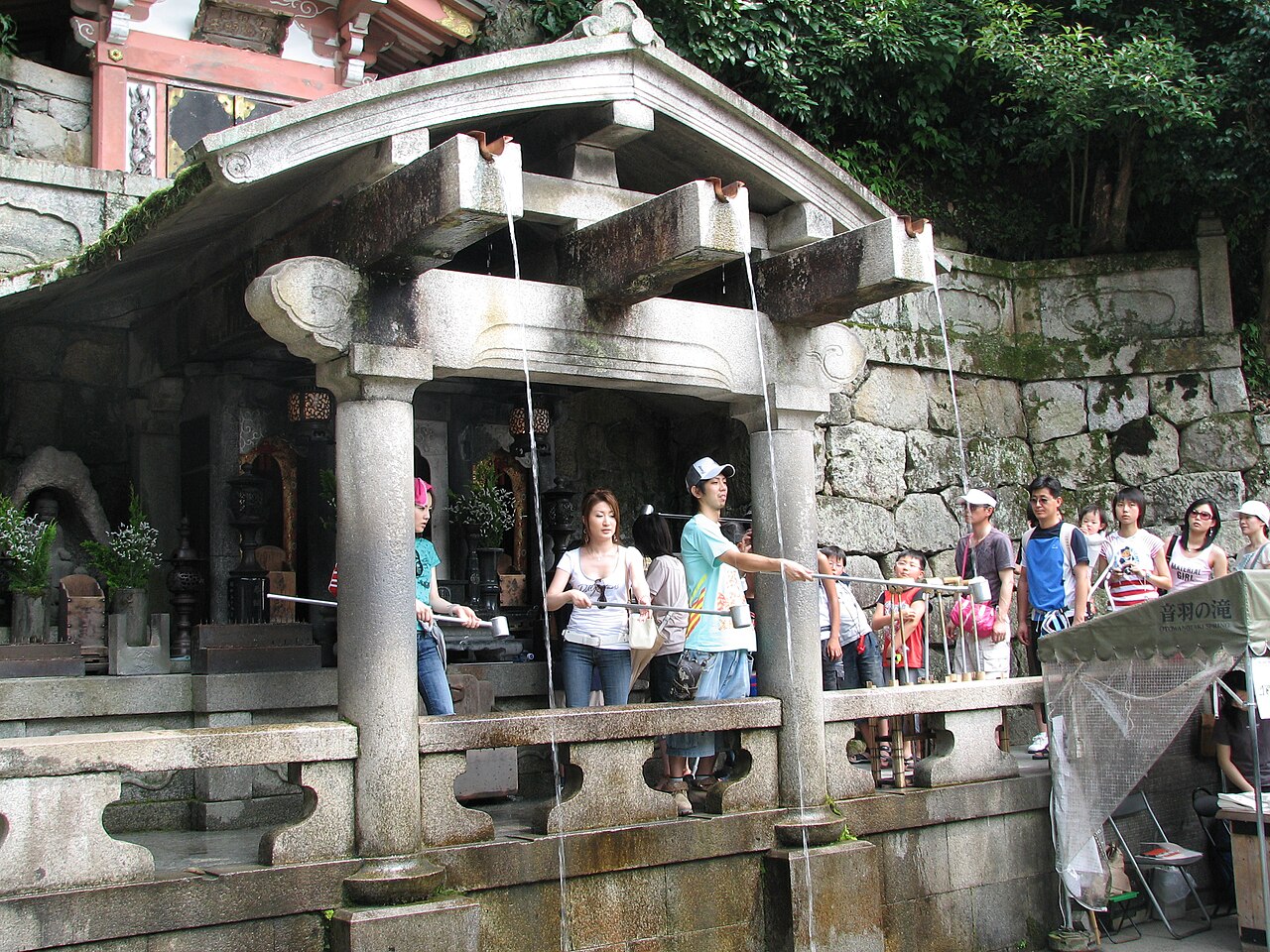
The temple identifies Okuno-in as the building directly above Otowa Waterfall. Look for 音羽の瀧 on its grounds map. The map also uses numbers: Okuno-in is 9 and the waterfall is 10. A useful rendezvous is “at the waterfall below,” especially if half your group would like another minute with the view.
What the three streams are doing here
Water emerges in three narrow falls. The temple traces its beginnings, and the name Kiyomizu, meaning clear water, to this spring. In the temple’s account worshippers catch water in a dipper and pray for purification and the fulfillment of a wish. Its explanation describes the practice shared by the three streams. You can follow what people are doing without first assigning a different life outcome to each spout.
Look up from below once you have found the water. A few minutes ago the stage gave you a view out across the city. From here you can read how the buildings sit on the hillside, and hear the small watercourse that helped determine why a temple was built in this place.
When the stair route does not suit everyone
The temple publishes a separate wheelchair-route map. Open that alongside the ordinary grounds plan before picking a meeting point. The marked route includes slopes and gravel, and the temple allows visitors to turn back along the way. Agree on a specific landmark you can each reach. “By the stage” is easy to say at breakfast and unexpectedly unhelpful once you discover there are two.



Comments