Culture & Traditions · 11 minute read
Beyond the Lanterns: The People Who Keep Japan’s Festivals Alive
The beauty of a Japanese festival may last a night. The work behind it can last all year—and the responsibility of carrying it forward can span generations.
LAYERS OF JAPAN
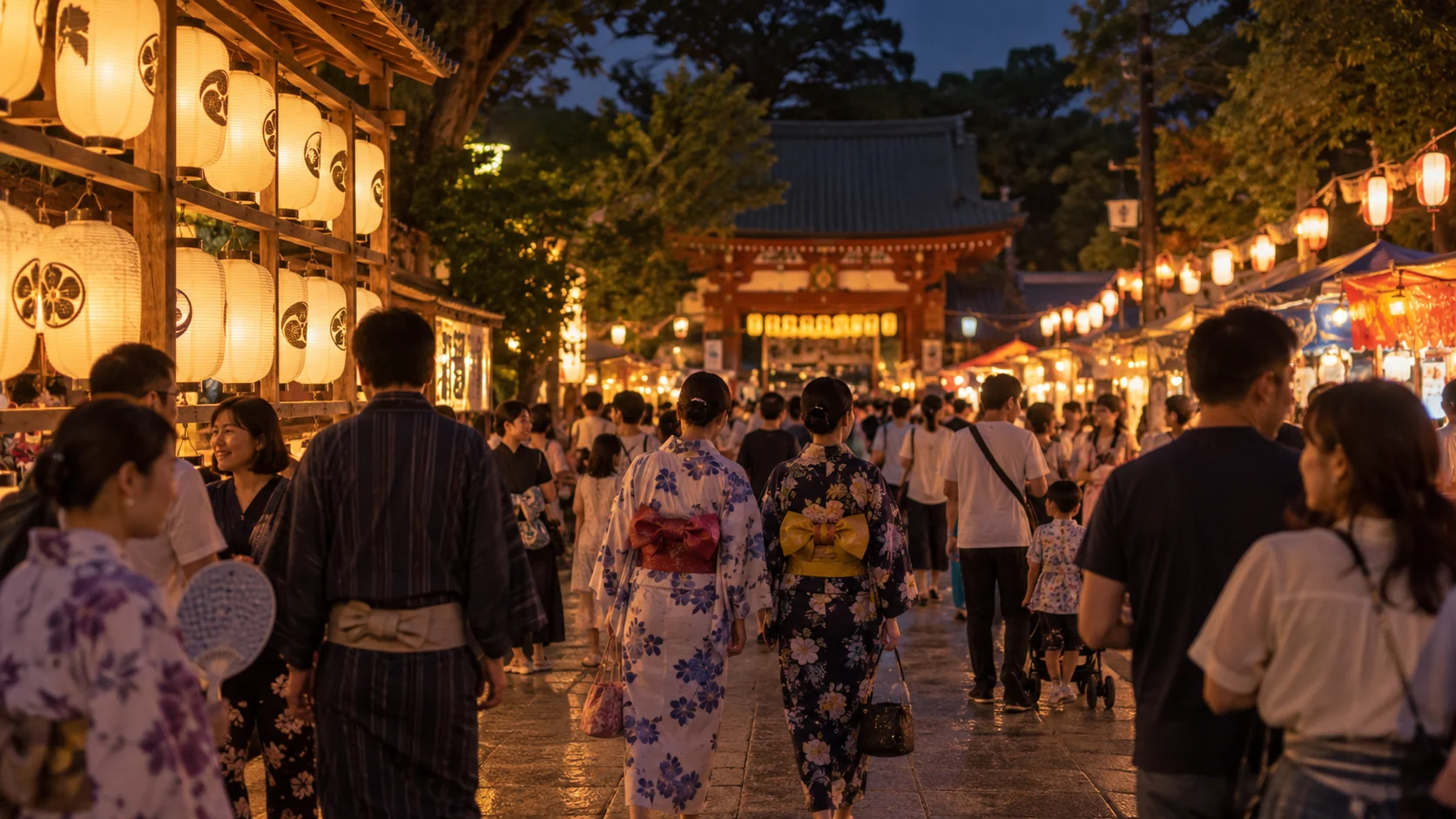
At dusk, the lanterns begin to glow.
A street that was ordinary in the afternoon becomes something else. Children weave between food stalls. A drumbeat rolls across the neighborhood. Someone adjusts the knot of a summer yukata, and somewhere beyond the crowd, a portable shrine waits to be carried.
For a visitor, this can feel like the Japan of a dream: color, movement, music, and tradition gathered into a single unforgettable evening.
But the most important story may be happening just outside the photograph.
Who hung those lanterns? Who repaired the shrine? Who practiced the music, arranged the route, found the volunteers, collected the contributions, cleaned the street, and made sure the event could happen safely?
Who will do those things next year?
A festival does not survive simply because it is old. It survives because people keep choosing to carry it forward.
That choice is becoming more complicated across Japan.
1. What Is a Matsuri, Really?
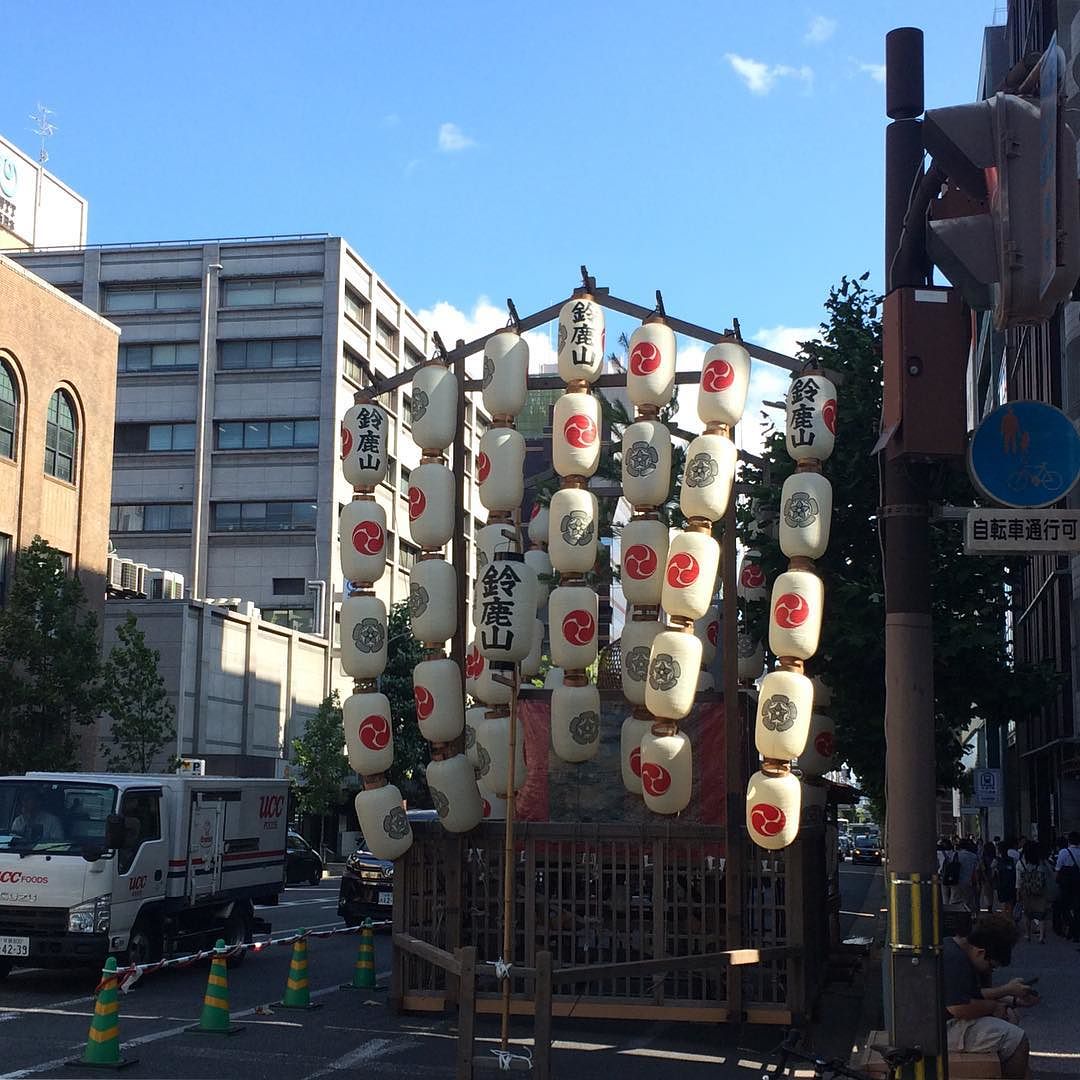
The Japanese word matsuri is often translated simply as “festival.” Yet it covers a remarkable range of practices.
Some festivals are closely connected to Shinto shrines and the worship of local deities, or kami. Others are linked to Buddhist observances, agricultural seasons, historical events, or celebrations created by local communities. Not every fireworks display is a religious ritual, and not every shrine festival resembles a crowded summer street fair.
The customs also differ profoundly from one region to another. A mountain village may hold a ritual involving music and offerings. A city neighborhood may carry a mikoshi, a portable shrine associated with a deity’s procession. Another community may carefully assemble a towering float, known in some traditions as a yama, hoko, or yatai.
To an outsider, these are beautiful forms of entertainment. To participants, they may also express gratitude, hopes for peace, protection against misfortune, remembrance of ancestors, or continuity with the people who lived there before them.
The difference matters.
When we describe matsuri only as something tourists come to see, we risk forgetting that many of these events existed long before there was an audience of travelers.
2. The Work Nobody Photographs
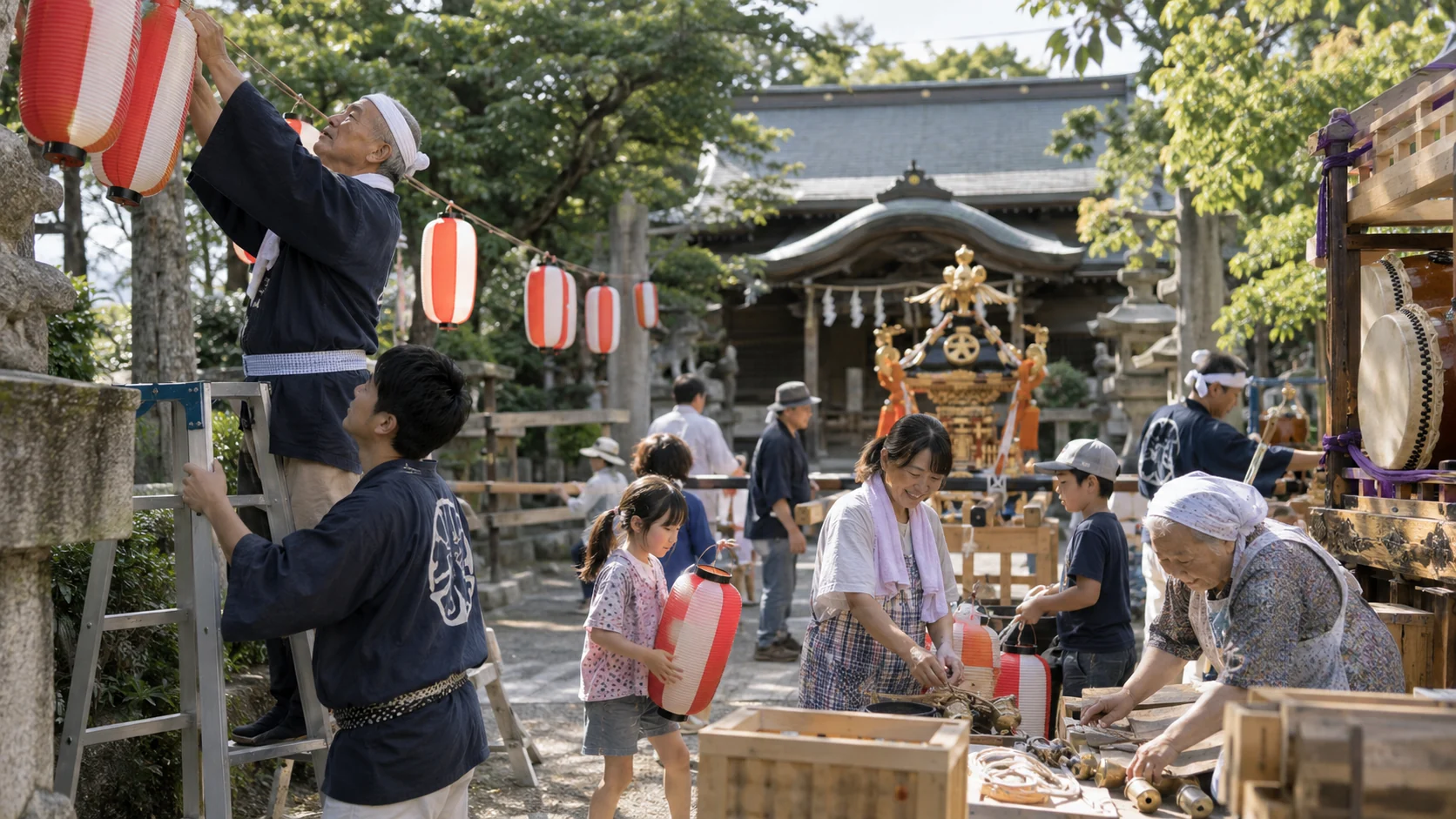
One of the most revealing things about a Japanese festival is how much happens before the first drumbeat.
Committees meet. Costumes and equipment are checked. Instruments must be maintained. Routes and crowd arrangements need attention. Participants rehearse. Food, water, cleaning, storage, and transportation all require planning.
Some work is paid, including skilled craftsmanship and professional event services. Much of the continuity, however, depends on residents, shrine parishioners, neighborhood associations, preservation groups, and other people contributing time and expertise.
The preparation itself can be a form of inheritance.
An older participant explains how to fasten a decoration. A musician corrects the rhythm of a younger player’s hands. Someone remembers where a piece of equipment is stored, who made it, and how it was repaired after a storm many years earlier.
In 2016, UNESCO recognized 33 Japanese yama, hoko, and yatai float festivals as intangible cultural heritage. In 2025, the UNESCO listing was extended to incorporate four additional festivals. Its description emphasizes not just the final procession, but also the cooperation, craftsmanship, and transfer of knowledge that make these celebrations possible.
A spectacular float is impressive. The community that knows how to build and move it is the deeper heritage.
3. The Mikoshi Is Heavy—and So Is the Responsibility
During some festivals, a group of bearers lifts a mikoshi onto its shoulders and moves through the streets, calling out in rhythm. The sight can be exhilarating: bodies working together, voices rising, the energy of the procession spilling into the crowd.
But a mikoshi is more than a picture of collective strength.
Someone must recruit enough people, organize participation, protect the route, and consider the physical demands of carrying it. The work does not end when the procession disappears around the corner.
It is tempting to romanticize this as a pure expression of devotion. Yet the people involved may have jobs, children, elderly relatives, and other responsibilities. Giving time to a festival can be deeply rewarding, and also exhausting.
A tradition may bring a neighborhood together while placing a disproportionate burden on the residents who are always expected to help.
The festival belongs to the community. But does the work of keeping it alive fall fairly across that community?
That question is becoming harder to avoid.
4. When There Are Not Enough People Left
Japan’s demographic changes are felt especially sharply in some rural communities. Younger residents move away for school or work. Longtime organizers grow older. The number of people available to prepare and perform a festival becomes smaller.
The disappearance of a festival does not always begin dramatically. Sometimes it starts with fewer rehearsals. A reduced procession. One role left unfilled. A committee that cannot find its next leader.
A particularly painful example came in February 2024, when the famous Sominsai ritual at Kokusekiji Temple in Ōshū, Iwate Prefecture, was held for the last time in its longstanding form.
The event drew large crowds and had a history stretching back centuries. Yet according to an account published by Nippon.com, much of the burden of organizing it had fallen on roughly ten local households with aging residents. Preparing the ritual had become too difficult to sustain.
This is the part of rural Japan that a photograph cannot easily convey.
A festival may be loved by thousands of visitors. Still, it depends on a much smaller number of people willing—and able—to perform the unglamorous work.
Popularity alone does not guarantee survival.
5. Returning Home to Keep a Tradition Alive
Not every story ends with cancellation.
In Nagano Prefecture’s remote Tōyama-gō area, the Shimotsuki Matsuri is associated with ritual performances around boiling water, prayers, and the turning of the seasons.
As the population declined, the Kizawa district struggled to find enough local households to sustain the event. Younger people formed an organization to learn the customs from elders and help take over the work. Some of those involved live elsewhere for much of the year.
That detail is quietly important.
Leaving a hometown does not necessarily mean leaving its traditions behind.
A person may build a life in another city and still feel drawn back to the music, the people, and the annual rhythm of a place that shaped them.
The distance between rural Japan and urban Japan is not always a clean break. Sometimes the festival becomes the reason people return.
And sometimes those who return bring new ways of organizing, communicating, and sharing the work.
6. Who Is Allowed to Carry the Tradition?
When a community is short of participants, a difficult question can emerge: who counts as someone entitled to take part?
Some festivals have historically restricted particular roles by gender, family background, neighborhood membership, or religious custom. Those rules may feel essential to certain practitioners. To others, they can make a tradition difficult to sustain—or exclude people who care deeply about it.
The situation varies from festival to festival, and change is rarely simple.
Research on Japan’s float festivals has documented both enduring gender restrictions and cases where women gained access to roles that had previously been reserved for men. Shortages of participants have sometimes pushed that process forward, alongside changing attitudes.
A striking example comes from the Hana Matsuri of the Okumikawa region in Aichi Prefecture. In the Misono district, where the community was very small, organizers opened participation to children from outside the district. Girls also came to perform a ritual dance traditionally associated with boys.
Elsewhere, traditions have adapted in different ways. In a coastal district of Miyazaki Prefecture, surfers who moved to the area helped revive a local fire festival. People initially regarded as outsiders gradually became important contributors to the community’s celebration.
These examples do not prove that every old rule should be discarded or that every community has agreed on what change should look like.
They reveal something more interesting: keeping a tradition alive sometimes requires discussing what, exactly, must remain the same.
Is the most important thing the identity of every participant? The continuity of a prayer? The music? The craft? The relationships among people who gather?
The answers are not always identical.
7. The Difference Between an Audience and a Community
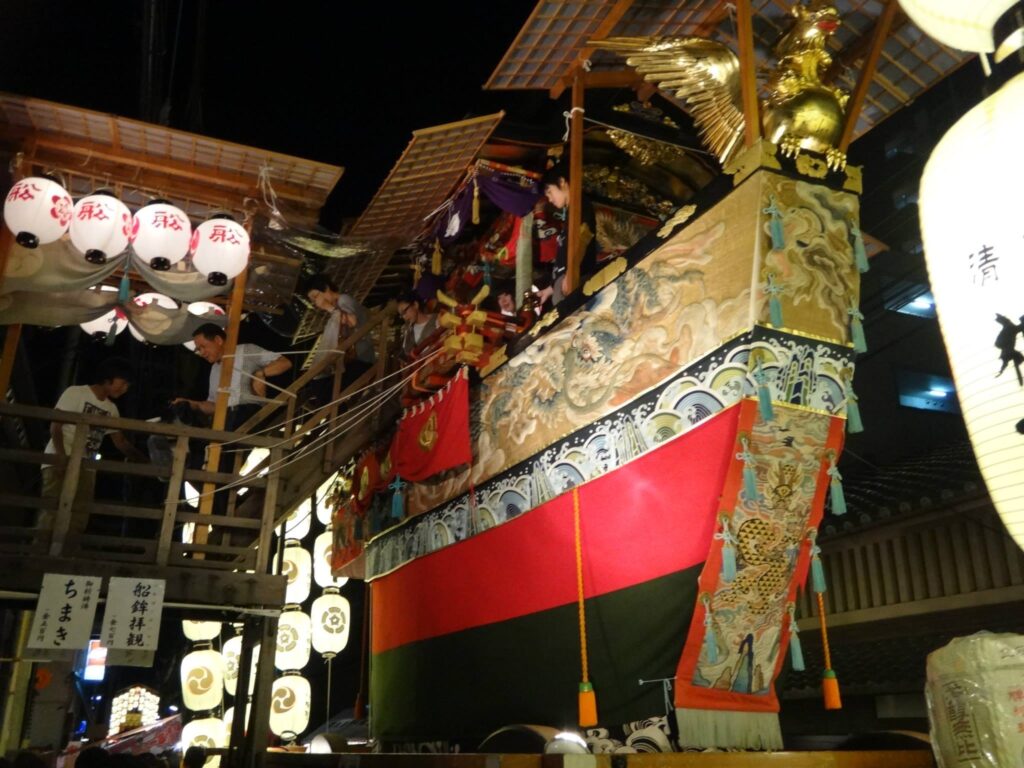
Tourism can help a festival flourish.
Visitors can bring money to local shops and accommodation, create wider interest in a region, and encourage residents to recognize the value of their own cultural practices. Famous festivals are often vital to the identity and economy of their cities.
But more visitors can also create problems: crowding, noise, litter, pressure on volunteers, and a growing temptation to design the event around what looks impressive in a photograph.
A shrine ritual and a tourist attraction can occupy the same street, but they are not necessarily the same thing.
For the visitor, the highlight may be a colorful procession or the perfect lantern-lit picture. For a local resident, the most significant moment may be a prayer, a reunion, or a role performed each year in memory of a parent or grandparent.
Neither perspective has to cancel the other. A festival can welcome guests while remaining meaningful to the people who sustain it.
Respect begins with remembering that we are visiting a living event, not merely observing a performance arranged for our cameras.
8. Why Festivals Matter After Disaster
Japan’s festivals also reveal something about resilience.
After the devastating earthquake on the Noto Peninsula in January 2024, some communities faced the question of whether it was appropriate—or even possible—to hold traditional celebrations.
An account published by Nippon.com describes how numerous communities involved in Noto’s kiriko lantern festivals chose to continue in some form, even amid the difficult process of recovery.
This was not a simple return to normal. Homes, roads, businesses, and everyday life had been disrupted.
But for some participants, carrying the familiar lights again was a way of affirming that their community still existed.
A festival can be a celebration. It can also be a reminder that people have endured loss together, and that the future remains something they want to face together.
That emotional meaning cannot be measured by visitor numbers.
9. The Night After the Festival
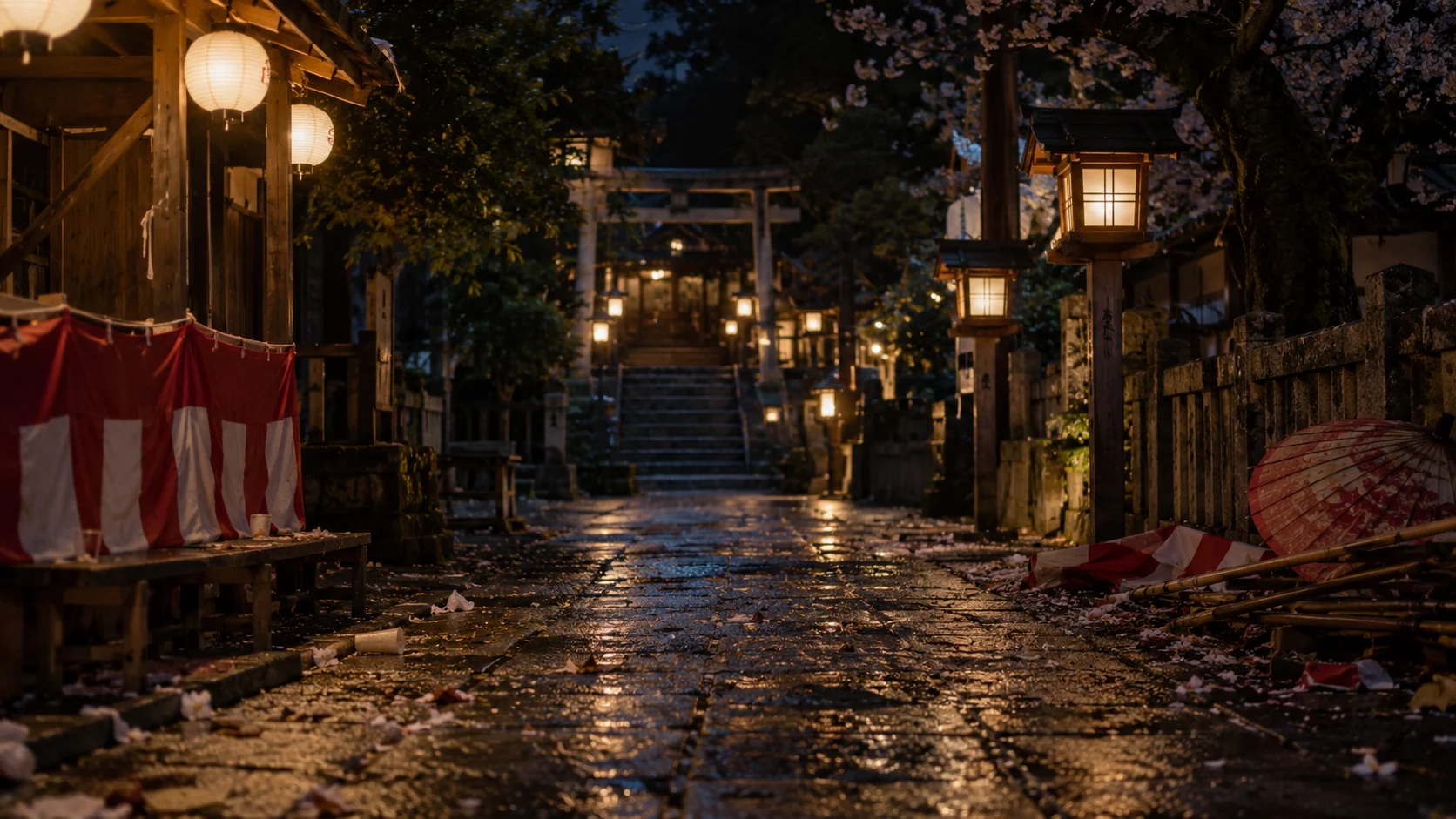
When the crowds leave, the work continues.
Decorations must be taken down. Instruments are returned. Equipment is inspected and stored. Streets are cleaned. Accounts are settled. Plans for next year begin, often before the exhaustion of this year has faded.
An empty shrine approach after a festival can feel almost startlingly quiet.
The lanterns no longer shine over a sea of faces. There is no thunder of drums, no line of bearers in the street. The spectacle has disappeared.
But perhaps this is when we can see its real foundation most clearly.
A festival is not only an evening of celebration. It is the relationship between people that allows that evening to exist.
There may be no easy way to preserve every custom unchanged. Some celebrations will become smaller. Some will open their doors to new participants. Some will find new forms; others may come to an end despite the affection people feel for them.
That reality should not make us value Japanese festivals less.
It should make us appreciate what is at stake when people choose to keep them alive.
10. What the Lanterns Cannot Tell Us
The next time you stand beneath glowing lanterns in Japan, look beyond the color and the music.
Think of the hands that tied the ropes. The people who taught the rhythms. The parents who brought their children to rehearsals. The elders who worried that there would be no one to take their place. The newcomers who asked to help. The people who returned home because the festival still mattered to them.
The beauty you see is real.
So is the effort behind it.
And so are the difficult choices about the future.
A festival does not survive because its traditions are old. It survives because someone chooses to carry them forward.
For the traveler, a matsuri may become a cherished memory of Japan.
For the people who make it happen, it may be a way of saying something even more profound:
We are still here. And we still belong to this place.