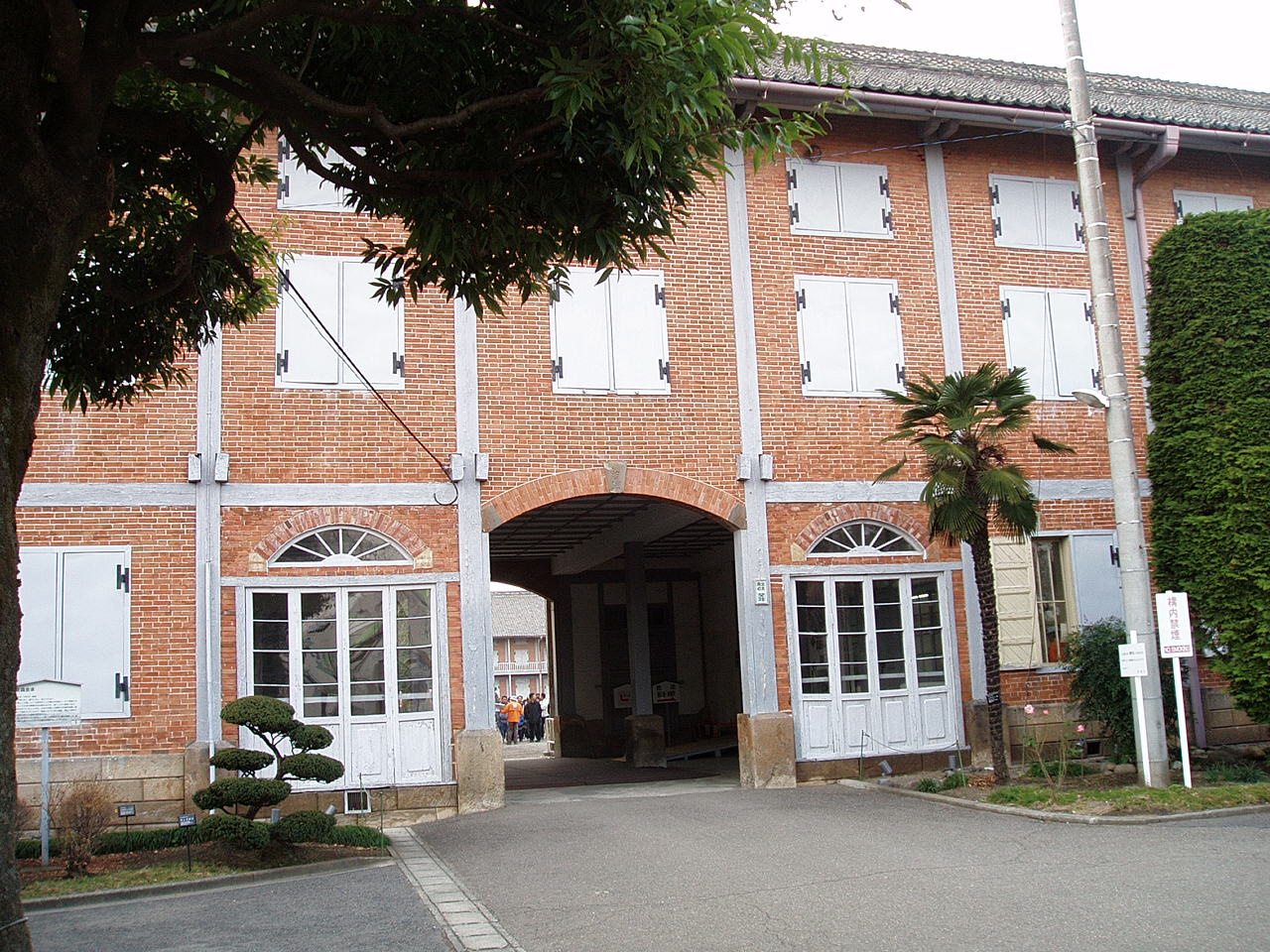
Photograph: East Cocoon Warehouse at Tomioka Silk Mill. Hasec · Public domain
The best clue at Tomioka Silk Mill in Gunma is a noun. Start with a cocoon, not with a piece of silk clothing. Where would a factory keep thousands of cocoons dry, and where would workers unwind their filaments? Two long brick buildings answer those questions. You can tell them apart by looking up at an arch and then at a roof.
The warehouse with a date over the arch
The East Cocoon Warehouse stretches about 104 metres. Read the characters on the keystone above its central arch: 明治五年, the fifth year of Meiji, or 1872, the year the mill began operating. The arch makes a handsome photograph, but it also gives you a fixed point from which to grasp the length of the building. Look how far the windows extend on either side.
The upper floor stored dried cocoons. Offices and work areas occupied the lower floor. One façade thus belongs to a building that did two very different jobs. Notice the exposed timber that divides the brickwork into panels. The mill describes this as timber framing with brick infill, an arrangement you can read from outside before you step into any exhibition.
Under the roof of the reeling hall
The reeling hall, about 140 metres long, housed the work of drawing silk filament from cocoons. Reeling comes before weaving. No threads cross to make cloth here: filaments are drawn off cocoons and gathered into raw silk. That distinction turns a long room full of machinery into a place with an intelligible beginning and end.
Look above the machinery. Roof trusses allowed the middle of the hall to remain free of columns, leaving a long working space beneath them. Put the two views together: a line of upper windows in the warehouse, then a long clear floor in the hall. The buildings give you two stages in the life of one material, even before you read a machine label.




Comments