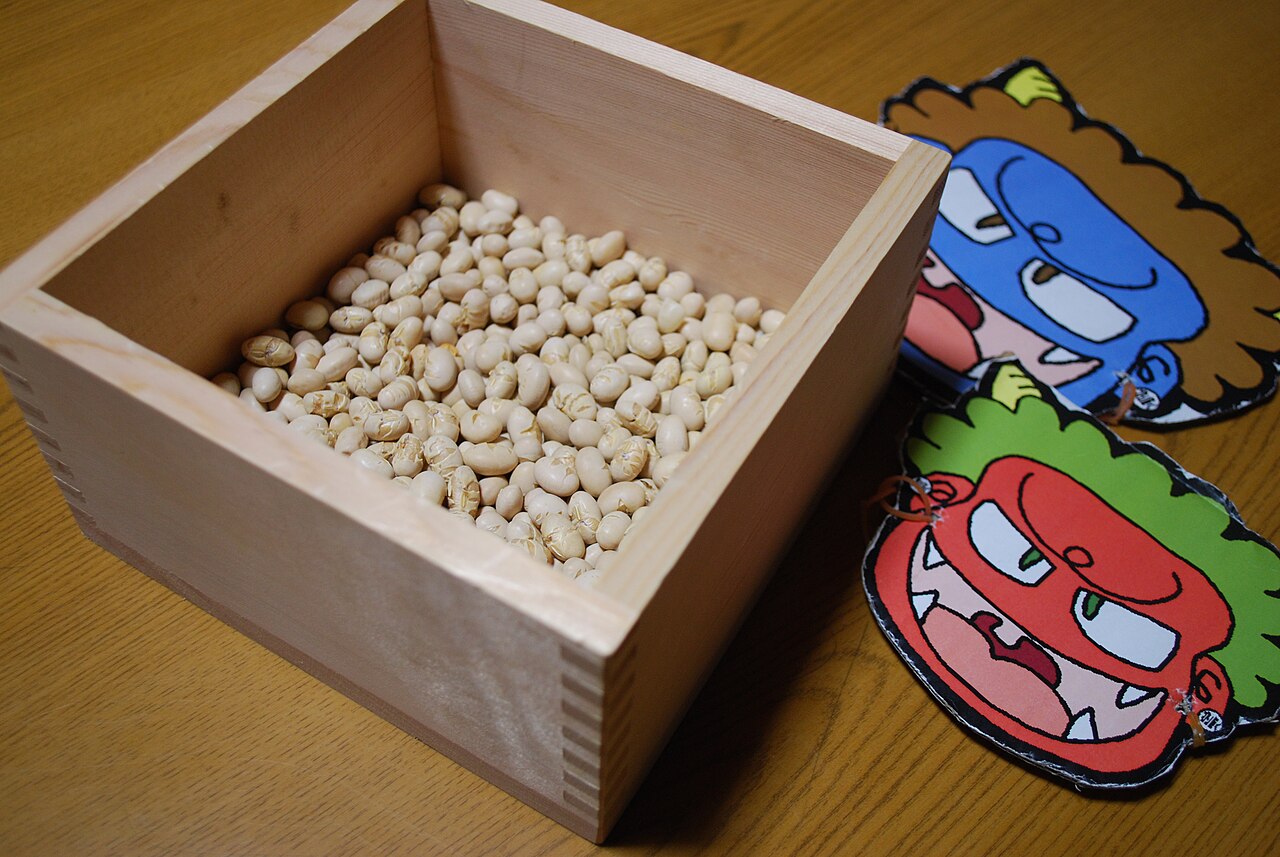
At the start of February, one Japanese supermarket display may put bags of beans next to an ogre mask. Another counter is taking orders for a thick roll of sushi. Both belong to Setsubun, the day before the traditional beginning of spring, but the two foods do quite different jobs.
Mamemaki: why the beans go to the doorway
In the familiar custom of mamemaki, roasted soybeans are scattered to send misfortune out and welcome good fortune in. An oni mask turns the idea into something children can see. The common calls send the oni out and invite fortune into the house. Communities and temples have local variations.
The doorway makes the custom easy to understand: it gives the words “outside” and “inside” a physical line. At a public event, watch who is scattering beans and where the audience stands. A shrine’s large gathering and a family standing by their front door can look quite different while drawing on the same seasonal idea.
Ehomaki: why someone mentions a compass
An ehomaki is a thick sushi roll associated with eating while facing the year’s auspicious direction. That direction changes with the year. The custom is strongly associated with Osaka and spread more widely. In shops, look for the characters 恵方巻 on the label. A normal sliced roll in a lunch set is a different menu item.
Setsubun is often marked on February 3, but its date depends on the calendar and can shift. If you are building a trip around an event, check the specific year and organiser. The beans tell you about a threshold at the house. The roll tells you why a person at the table might turn to face a particular way.
Read next · Kanazawa’s Tsujiura: How to Read Three Fortunes Hidden in New Year Sweets
Sources and visitor information
Lead image · katorisi · Wikimedia Commons · CC BY-SA 3.0



Comments