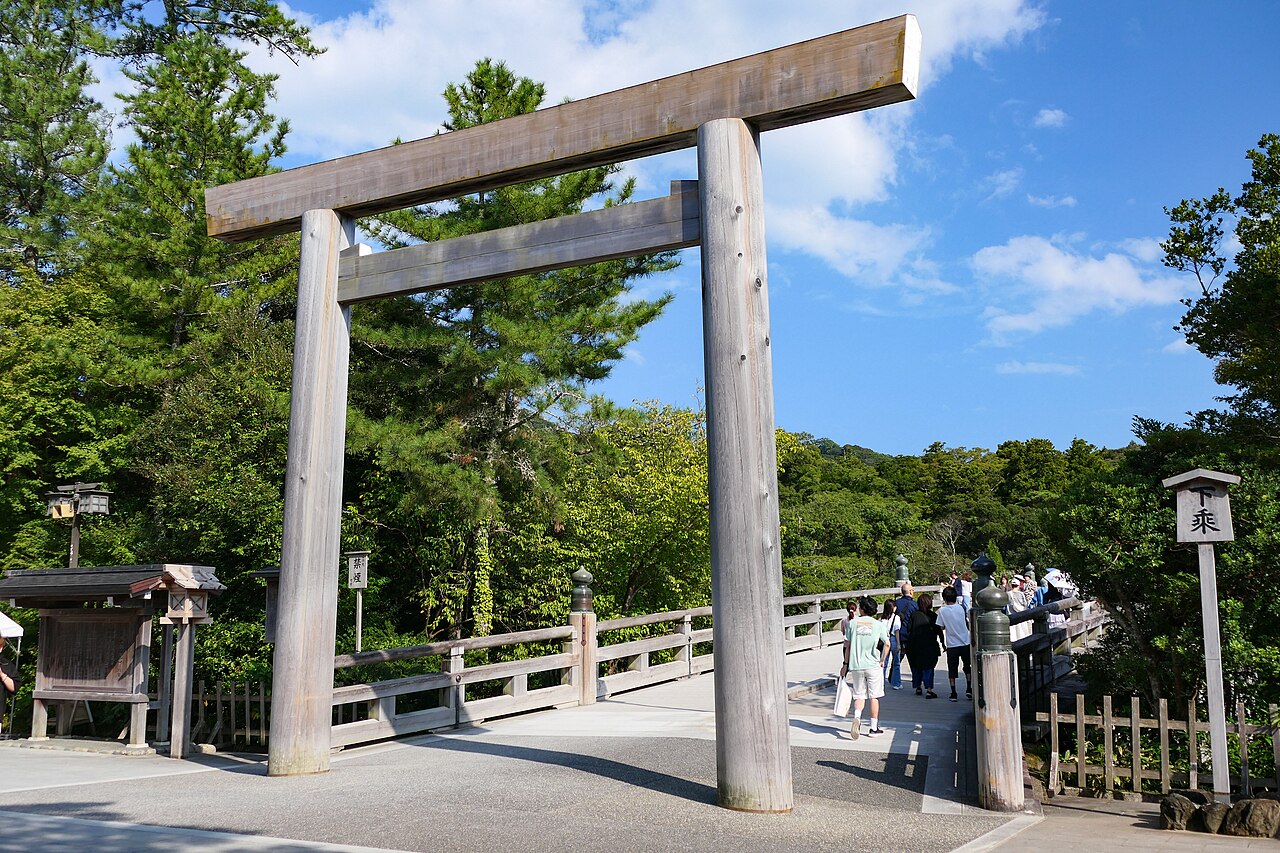
When someone says they visited Ise Jingu, they may be describing two stops separated by a bus ride. Geku, the Outer Shrine, is close to Iseshi Station. Naiku, the Inner Shrine, begins across Uji Bridge by the Isuzu River. Give each place its own pin on your map before setting out.
Start near Iseshi Station
Geku is dedicated to Toyouke Omikami, associated with food and the everyday needs of life. The customary order puts Geku first. Starting here also makes practical sense if you arrive by train at Iseshi: you can walk from the station, visit the shrine and then pick up transport to Naiku. Allow time to walk back out of the grounds as well as in.
At the main sanctuary, visitors stop at the designated place outside. The enclosed buildings are partly screened from view. Taking a moment to observe the gravel approach, fences and layers of roofs gives a better sense of the space than hunting for an unobstructed photograph.
Cross Uji Bridge for Naiku
Naiku enshrines Amaterasu Omikami. Uji Bridge marks the entrance to the grounds. After crossing, pause on the approach to notice how the sound changes as you leave the shops behind. The river beside the route is the Isuzu, a useful reference point when reading the map.
For a short visit, pick a meeting point outside Uji Bridge before splitting up for food on the nearby shopping streets. If your return train leaves from a different station, check the bus destination by name. “Back to the station” can mean different things in Ise.
Read next · Kyoto’s Kifune Shrine: Reading a Fortune That Appears in Water
Sources and visitor information
Lead image · MaedaAkihiko · Wikimedia Commons · CC0 1.0


Comments