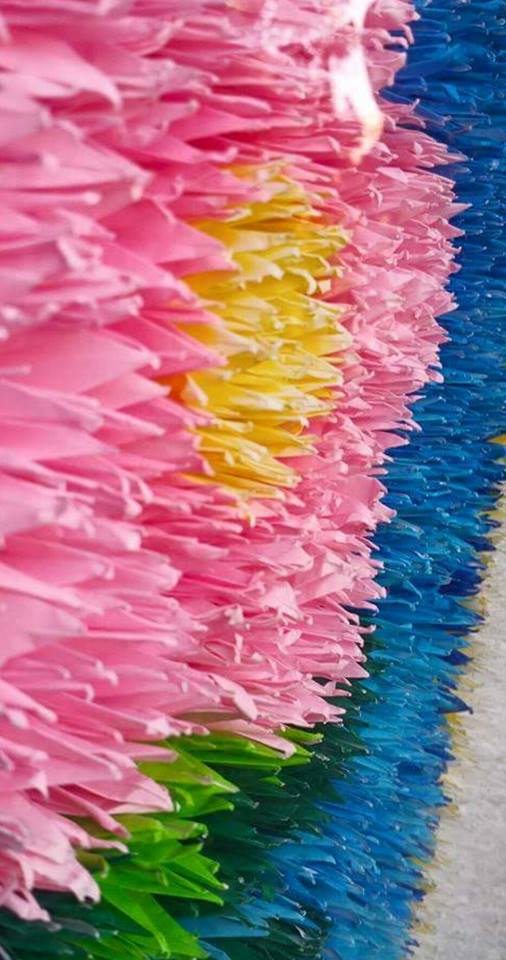
At Hiroshima’s Children’s Peace Monument, it is worth turning away from the statue for a moment. Around it are cases filled with folded paper cranes. Viewed from across the path, the colours look almost woven. Up close, each stripe resolves into individual birds made by individual hands.
The child behind the paper cranes
Sadako Sasaki was two years old when the atomic bomb was dropped on Hiroshima. Years later she developed leukemia. While in hospital, she folded paper cranes, drawing on an older Japanese custom associated with making a wish. Her story gives the cranes at this particular place their meaning.
After Sadako died in 1955, her classmates helped campaign for a monument to the children who died because of the bombing. The monument was unveiled in 1958. A girl holding a crane rises above it. Look from that figure to the offerings nearby: one is a permanent memorial, the others are gestures that people continue to bring.
If you would like to leave a crane
Hiroshima City welcomes paper cranes at the monument and publishes instructions for people sending them from overseas. Read the city’s guidance before organising a group project or mailing a large piece. Visitors can also simply stand and look. The experience does not require arriving with something prepared.
If you visit with children, let them choose a detail in the cases first. Asking “How many different ways have people arranged their birds?” leaves room for a real observation. Then explain whose story brought the first generations of schoolchildren to this spot.
Read next · Hiroshima Peace Memorial Park: Why the Museum, Cenotaph and Dome Line Up
Sources and visitor information
Lead image · Alymcavoy17 · Wikimedia Commons · CC BY-SA 4.0


Comments