Entertainment & Celebrities · ARASHI Member Stories 04
Kazunari Ninomiya Beyond ARASHI: Acting, Exit 8 and His 2026 Chapter
From a Japanese pop idol to a Clint Eastwood film, Cannes red carpets, a looping subway nightmare and his own entertainment company: the many creative lives of Kazunari Ninomiya.
10 MIN READ · UPDATED NOVEMBER 2026
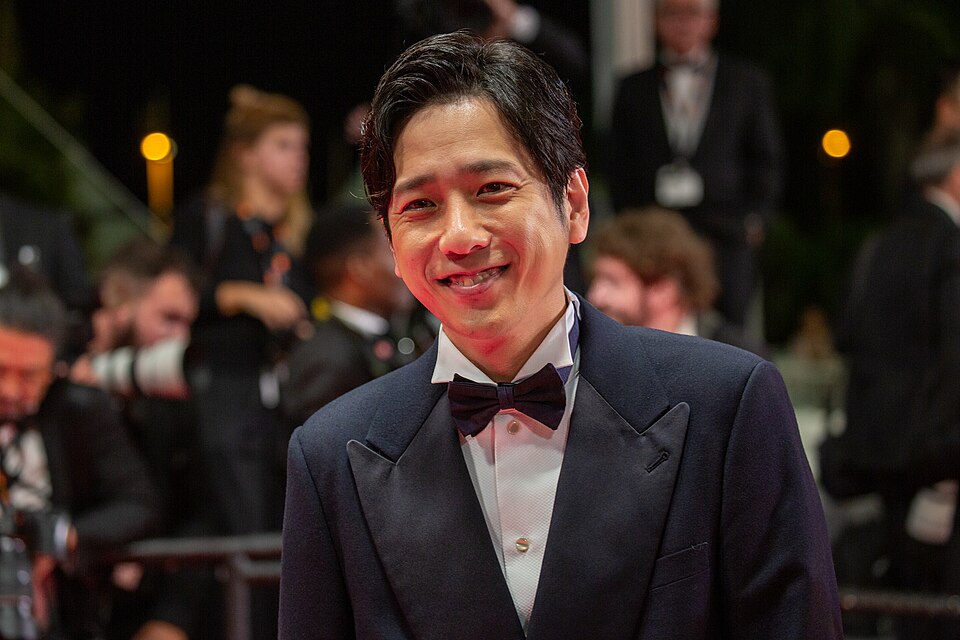
Photo: Kacy Bao / WikiPortraits / Wikimedia Commons · CC BY-SA 4.0. Wikimedia-resized thumbnail, otherwise unmodified.
A boy who became a pop star in 1999 grew into an actor who could hold the screen opposite veterans of Japanese cinema. By 2025 he was walking the Cannes red carpet for a film about a disturbing, repetitive underground passage. And in 2026 he appeared in a major television drama while running his own entertainment company.
For Kazunari Ninomiya (二宮和也), the long-running Japanese pop group ARASHI is only one part of a much larger story. He was one of the group’s five original members, but international audiences may also know him as the young soldier from Clint Eastwood’s Letters from Iwo Jima, the photographer in The Asadas! or the anxious traveller in the Japanese game adaptation Exit 8.1
In 2026, ARASHI’s group activities came to an end after a final concert on May 31. Ninomiya, however, continued to act, host programmes and build his independently run company, Office Nino. Here is a guide to those different creative identities and where to start exploring his work.
Who is Kazunari Ninomiya?
Ninomiya was born on June 17, 1983, in Tokyo. Often called “Nino”, he debuted in 1999 as an ARASHI member alongside Satoshi Ohno, Sho Sakurai, Masaki Aiba and Jun Matsumoto. The group became a major presence in Japanese music, concerts and television for more than two decades.1
He has a public image that can seem surprisingly casual for someone whose résumé includes serious drama. In Japanese variety programmes, his dry humour and unshowy manner contrast with the attention he receives as a lead actor. This contrast should not be taken as a claim about his private personality, but it does help explain why audiences can connect the same face with very different kinds of entertainment.
For international readers, “Ninomiya” is the family name and “Kazunari” the given name. Japanese media commonly use the family name first; English-language publicity often reverses the order. Both forms refer to the same performer.
From a pop group to an international film
One of the earliest internationally significant moments in Ninomiya’s acting career came in 2006 with Letters from Iwo Jima. Directed by Clint Eastwood, the film depicts the 1945 battle from the perspective of Japanese soldiers. Ninomiya plays Saigo, a young soldier who previously worked as a baker and whose experiences make the conflict personal rather than simply strategic.2
For many Western viewers, the film was the first time they encountered an ARASHI member without knowing anything about J-pop. It was not a concert film or an idol vehicle; it placed a young Japanese actor in a serious historical drama alongside veteran performers.
The film also demonstrates why acting needs its own evaluation apart from celebrity status. Whether someone likes ARASHI’s music does not determine how they respond to Ninomiya’s screen work. The performance must stand on what the character does, what remains unsaid and how the camera captures it.
A Los Angeles Times feature from December 2006 included Ninomiya’s comments about the historical material he was encountering through the production. The article also documents the challenging questions raised in Japan about how the battle should be remembered.3
Why his acting can feel so different from his idol persona
Acting for television and film rewards details that might disappear in a huge arena: a brief pause before a line, a refusal to meet another character’s eyes, or an expression that changes almost without movement. Ninomiya has become associated with precisely this kind of understated work, although individual viewers will respond to particular performances differently.
In ARASHI, the five members shared a collective image. The appeal of a group can depend on harmony, choreography and the pleasure of watching familiar personalities interact. In a drama, Ninomiya may be asked to let an entire fictional world take the place of that familiar personality.
The interesting thing is not that one identity is more “serious” than the other. Music, television and film demand different skills. His career lets audiences compare those forms of performance across many years.
Nagasaki: Memories of My Son and a major acting award
The film Nagasaki: Memories of My Son (母と暮せば, Haha to Kuraseba), directed by Yōji Yamada and released in 2015, tells a story that moves between grief and memory after the atomic bombing of Nagasaki. Ninomiya plays a young medical student whose presence lingers in his mother’s life.4
For the role, he won the Best Actor award at the 39th Japan Academy Film Prize in March 2016. The award was a recognition of a dramatic performance, not a popularity vote about his pop career. In a cast including Sayuri Yoshinaga and Haru Kuroki, the film asks its actors to balance the ordinary tenderness of family with an enormous historical loss.4
If Letters from Iwo Jima shows the experience of war from the battlefield, Nagasaki: Memories of My Son considers the emotional afterlife of war within a family. Watching them in sequence reveals how two films can approach history from radically different perspectives.
The Asadas!: family photographs and the 2011 earthquake
In 2020, Ninomiya starred as photographer Masashi Asada in The Asadas! (浅田家!), directed by Ryōta Nakano. The film draws on the real photographer’s family portraits, in which relatives dress up and act out the lives or jobs they once imagined.5
What begins as an eccentric and funny way of making family photographs develops into a story about memory. The 2011 Great East Japan Earthquake becomes part of the film’s emotional centre, and the question of what a photograph can preserve grows more urgent.
The film is an especially good introduction for audiences interested in Japan beyond famous travel destinations. It connects an everyday family, a creative vocation and a national disaster without losing sight of the people in the pictures.
The Tokyo Metropolitan Government’s location office and Japan’s film database provide English-language descriptions of the production, while the film’s availability with English subtitles depends on regional distribution.5
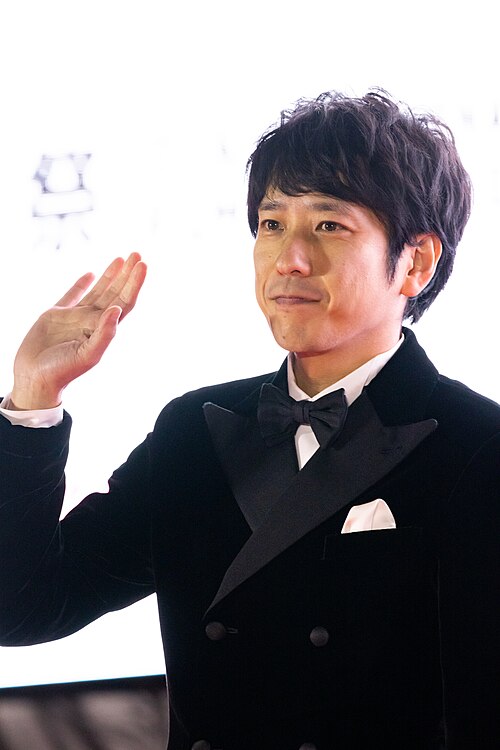
Photo: Dick Thomas Johnson / Wikimedia Commons · CC BY 2.0. Wikimedia-resized thumbnail, otherwise unmodified.
Another historical drama: Fragments of the Last Will
The 2022 film Fragments of the Last Will (ラーゲリより愛を込めて) brought Ninomiya back to an emotionally demanding wartime story, this time involving Japanese prisoners detained in Siberia after World War II. He played Hatao Yamamoto, a man whose relationships with fellow detainees and family give the film its personal scale.
The historical circumstances are different from those in Letters from Iwo Jima, yet both films ask how an individual maintains a sense of humanity under oppressive conditions. They also demonstrate how much of Ninomiya’s screen career has involved roles where resilience is conveyed through actions and relationships rather than speeches alone.
His appearance at the 2022 Tokyo International Film Festival, shown in the licensed photograph above, belongs to the film’s release period. That is a genuine event photograph of him—not a substitute image of another performer.
Exit 8: when a simple corridor becomes unsettling
By 2025, Ninomiya was involved in a very different type of film. Exit 8 (8番出口), directed by Genki Kawamura, adapts the independent game created by KOTAKE CREATE. The game asks a person to walk through an apparently ordinary underground passage and detect changes: a misplaced sign, a strange detail or some small violation of the expected pattern.6
The film opened in Japan on August 29, 2025, and was officially selected for a Midnight Screening at the 78th Cannes Film Festival. Ninomiya played the central figure navigating the passage and was also credited for screenplay cooperation—a notable step beyond performing a script written entirely by others.6
This was not simply a copy of a game. A game can place responsibility directly in the player’s hands, asking them to turn around when something changes and proceed when everything appears normal. A film cannot give the viewer the same control. Instead, suspense must come through composition, pacing, sound and the decisions made by the character on screen.
In an August 2025 interview with the magazine CREA, Ninomiya discussed his involvement in shaping the screenplay and collaborating with the filmmaking team. That makes the project a particularly interesting bridge between acting and creative production.7
The success of the film’s international festival appearance may also help explain why some overseas viewers now discover his work from a psychological-thriller angle before learning about ARASHI at all.
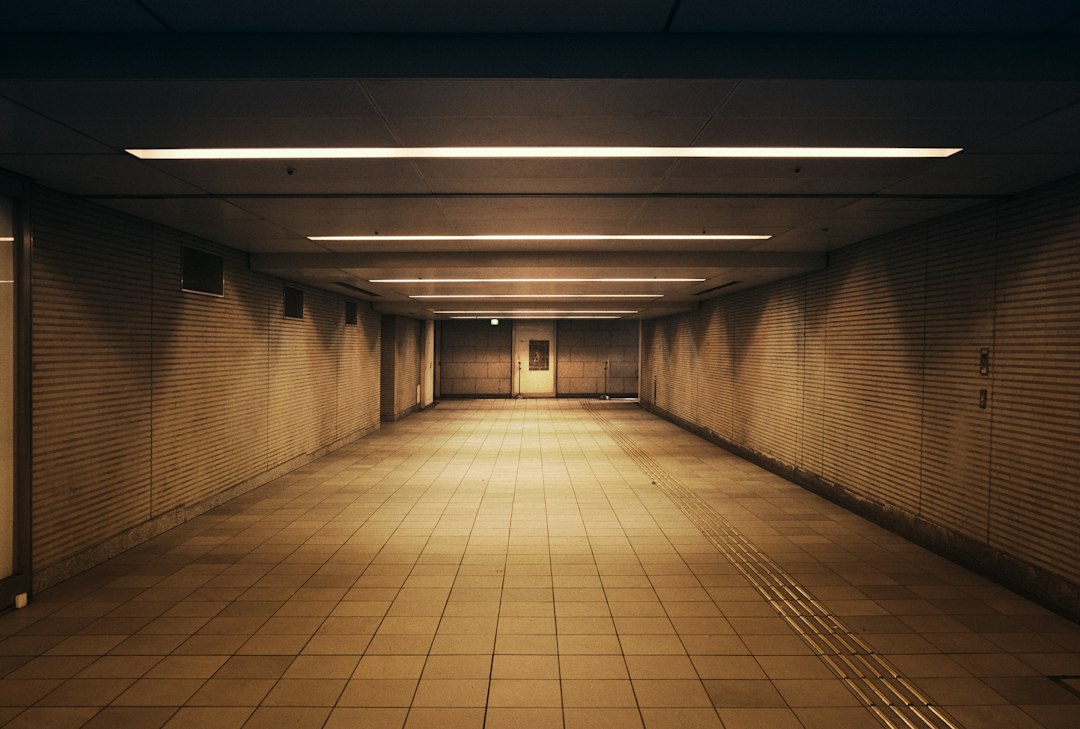
Photo: Yamato Yamaguchi / Unsplash.
Two very different 2026 projects: VIVANT and everyday television
In 2026, Ninomiya was part of the returning TBS drama VIVANT. The original 2023 series combined international intrigue, intelligence operations and emotionally complicated family ties. Its sequel started broadcasting in July 2026, expanding the scale of the drama and returning to characters audiences already knew.8
Ninomiya returned as Nokor, a central figure associated with the organization Tent. The second season’s final episode aired on November 8, 2026, bringing its extended 24-episode story to a conclusion on television. The production moved between large-scale action and a story of identity, personal loyalty and betrayal.8
But that was not the end of VIVANT. On the same evening as the finale, TBS and Toho announced a new theatrical film for December 4, 2026. It is scheduled to continue the story on the big screen, with a simultaneous IMAX release. As of November 14, the film has been announced but is not yet in Japanese theatres.9
The office’s official artist page also lists more relaxed television and digital programmes, including Nino Nanoni on TBS and Friday Mystery Club!!! on Nippon Television. His Prime Video reality project Secret NG House returned for its second season in May 2026.1
The range is striking: a suspense drama requiring concentration and character work appears in the same career as a lighthearted studio format where humour and timing carry the programme. Both rely on his screen presence, but in different ways.
Office Nino: taking charge of his own career
Following changes in Japan’s entertainment industry, Ninomiya established his independent management company Office Nino in 2023. The company maintains his official profile, current media appearances and projects. It is an important difference from the earlier system under which ARASHI and its individual members were represented by the same large agency.10
In October 2026, Office Nino announced that actor Ryo Ryusei (竜星涼) had joined the company. This development showed that the company was no longer only a vehicle for one artist’s bookings. The official announcement and contemporary reporting describe Ryusei becoming a new member of the agency after a previous representation arrangement ended.10
Independence can mean more creative freedom, but it also carries the responsibility of deciding how a business runs and which collaborations it takes on. It would be an exaggeration to say that every programme, film or commercial involving Ninomiya is produced by his own company. An artist’s management relationship and a film’s actual production company are different things.
That distinction matters to international readers trying to understand Japanese entertainment today: a performer can remain famous for work in a former group while building new projects and a new professional structure.
The unexpected bridge to the YouTube generation
Ninomiya also developed an online presence through a YouTube channel known as Yonino Channel (よにのちゃんねる), which began under an earlier name. The channel provided a looser setting for familiar Japanese entertainers to talk, collaborate and film everyday activities, separate from the highly produced television broadcasts that had long defined their public image.
For someone learning Japanese, these videos can be difficult without subtitles or background knowledge, but they also reveal an important part of contemporary fandom. A viewer can follow a performer in a concert, watch a scripted drama, and then encounter that same public figure in a conversational online format.
As with any artist account, check that you have the official channel before subscribing. Reposted clips and fan translations may omit context, and the presence of a video online does not automatically mean it has official English captions.
What does his 2026 Kōhaku role mean?
On October 9, 2026, NHK announced Ninomiya as one of the hosts of the 77th NHK Kōhaku Uta Gassen, Japan’s major televised year-end music programme. He will host alongside Masato Sakai, Mana Ashida and NHK announcer Naoko Suzuki, in a programme scheduled for December 31, 2026.11
He has hosted the show before, but this is another public moment that links his ARASHI history and his independent career. Sakai is also his co-star in VIVANT, making their planned appearance together on a music programme particularly interesting.
At the time of writing, the 2026 broadcast has not yet taken place. The announcement confirms the hosts and scheduled broadcast, not the final running order or everything that will happen onstage.
What should an international viewer watch first?
For the difference between an ARASHI theme and another singer’s contribution, see Two Songs in Ninomiya’s Freeter, Ie o Kau: ARASHI’s Theme and Kana Nishino’s Insert Song.
The most useful starting point depends on the kind of storytelling you already enjoy. Ninomiya’s film work spans many genres, and no single title fully explains it.
- For historical drama: Letters from Iwo Jima (2006). It offers an international entry point without requiring prior knowledge of ARASHI.
- For a family drama: Nagasaki: Memories of My Son (2015). Watch the contrast between intimate performance and the enormous historical event behind the story.
- For a story about creativity: The Asadas! (2020), which connects family photography to the aftermath of the 2011 earthquake.
- For a psychologically unsettling thriller: Exit 8 (2025). The film is particularly accessible to people curious about modern Japanese games and their screen adaptations.
- For a large-scale drama: VIVANT (2023, 2026). Start with the original series before the sequel so that its shifting relationships make sense.
- For pop music: explore ARASHI’s concerts and songs, especially the music surrounding the group’s 2026 farewell, then compare that collective energy with the subtlety of his film roles.
Screening and streaming rights change by country. Check legal local distributors and subtitle availability before paying for any service. A film announced for Japan’s cinemas is not automatically available worldwide on the same date.
Frequently asked questions about Kazunari Ninomiya
How old is Kazunari Ninomiya in November 2026?
He was born on June 17, 1983, so he is 43 years old as of November 14, 2026.
Was Ninomiya in Clint Eastwood’s Letters from Iwo Jima?
Yes. He played Saigo, a young Japanese soldier, in Eastwood’s 2006 film. It helped introduce his acting to audiences outside Japan.
What award did he win for Nagasaki: Memories of My Son?
He won Best Actor at the 39th Japan Academy Film Prize in March 2016 for his role in Yōji Yamada’s 2015 film.
Did Ninomiya write the film Exit 8?
He is credited with screenplay cooperation, not sole or primary screenwriting. The official credits name Kentarō Hirase and Genki Kawamura as the screenwriters, with Kawamura also directing.
Is Ninomiya still part of ARASHI?
He was one of the group’s five original members. ARASHI ended group activities after its final Tokyo Dome concert on May 31, 2026; he continues to work as an actor, presenter and company founder.
What does Office Nino do?
It is Ninomiya’s independent management company, which lists his professional projects and, as of October 2026, also represents actor Ryo Ryusei.
Has the 2026 VIVANT sequel finished?
Yes. TBS aired the final episode of the second-season television story on November 8, 2026. A separate new movie is scheduled for December 4, 2026, so that theatrical release is still upcoming.
Is he hosting Kōhaku in 2026?
Yes. NHK announced him in October as one of the hosts for the year-end programme on December 31, alongside Masato Sakai, Mana Ashida and Naoko Suzuki.
Many roles, one continuing story
Ninomiya’s career can look difficult to summarize because it crosses so many kinds of entertainment. He was a member of one of Japan’s best-known pop groups, then appeared in an internationally recognized historical film, won major domestic acting honours, explored modern game-inspired storytelling and founded a company of his own.
It is tempting to arrange those achievements into a simple narrative of an idol “becoming” a serious artist. The reality is more interesting. Acting and ARASHI overlapped for most of his career, just as television presenting, online video and independent management now overlap with dramatic roles.
In May 2026, the five-member group concluded its long story. But for Ninomiya, the work continued. A film festival photograph, a Tokyo subway corridor and an upcoming national television broadcast may seem unrelated. Put them together, and they form a picture of someone who has learned to move between very different stages.
Sources and further reading
- Office Nino: Official Kazunari Ninomiya Profile — birth date, current broadcasts, releases and recent career.
- Warner Bros.: Letters from Iwo Jima — 2006 film and director Clint Eastwood.
- Los Angeles Times: Japanese Confront History with Iwo Jima, December 18, 2006 — Ninomiya’s participation and comments.
- Sumitomo Corporation: Nagasaki: Memories of My Son at the Japan Academy Film Prize, March 10, 2016 — Best Actor award.
- Tokyo Location Box: The Asadas! (2020); Japanese Film Database: The Asadas! — story, cast and production.
- AOI Pro.: Exit 8 Official Production Information — 2025 release date, Cannes Midnight Screening, source game and screenplay cooperation.
- CREA: Interview with Kazunari Ninomiya About Making Exit 8, August 27, 2025 — the creative process and screenplay input.
- TBS: VIVANT Official News; TBS: November 8, 2026 Episode Guide — 2026 second-season finale and cast.
- Toho: VIVANT 2026 Film Official Site — theatrical release scheduled for December 4, 2026.
- Office Nino: Company News and Artist Roster; TBS News: Ryo Ryusei Joins Office Nino, October 1, 2026.
- CINRA: 77th NHK Kōhaku Uta Gassen Host Announcement, October 9, 2026 — December 31 schedule and hosting team.
Facts and announced future projects are described as of November 14, 2026. The two authentic festival photographs are openly licensed and credited; the Tokyo subway photo is illustrative, not a still or verified filming location from Exit 8.






Comments