Entertainment & Celebrities · ARASHI Member Stories 01
Satoshi Ohno Beyond ARASHI: The Dancer, Artist and His New Chapter
Known to millions as ARASHI’s quiet leader, Satoshi Ohno also spent decades drawing, painting, sculpting and choreographing. After the group’s 2026 farewell, the artist behind the idol has a different story to tell.
9 MIN READ · UPDATED NOVEMBER 2026

Photo: Japanese Station / Wikimedia Commons · CC BY 3.0. Cropped still extracted from a licensed 2019 video by the original Commons uploader; displayed unmodified here.
There are two ways to picture Satoshi Ohno. In one, he stands on a huge concert stage, singing and dancing with four people whose names became familiar to an entire generation. In the other, he works with a pen, paint or a digital drawing tool, trying to discover what an image might become.
For much of his career, both pictures were true at once. Satoshi Ohno (大野智), born in Tokyo on November 26, 1980, was the leader of the five-member group ARASHI. But he was also a choreographer and visual artist who held solo exhibitions while still performing as one of Japan’s most recognizable entertainers. The second part of his story has become especially important since ARASHI concluded its group activities on May 31, 2026.1
This is the first article in our five-member ARASHI series. Instead of repeating the group’s entire history, we will look at Ohno’s distinctive creative work, the choices that shaped the group’s final chapter and what he has shared with fans in 2026.
Who is Satoshi Ohno?
Ohno joined the talent agency then known as Johnny & Associates in 1994, when he was 14. In 1999, he debuted as a member of ARASHI alongside Sho Sakurai, Masaki Aiba, Kazunari Ninomiya and Jun Matsumoto. Their debut single, A・RA・SHI, was released in November that year.2
He came to be known affectionately as the group’s leader, but the label can be misleading if you imagine someone constantly directing interviews or taking the loudest role on television. Much of the appeal of ARASHI’s five-member chemistry came from their contrasting personalities. Ohno’s public style was often relaxed and understated, while his singing and dancing showed a more concentrated kind of energy.
The difference between an apparently unhurried personality and precise performance became part of his artistic identity. It is more useful to think of him as a performer with several modes than to assume the quieter moments on television revealed everything about the person.
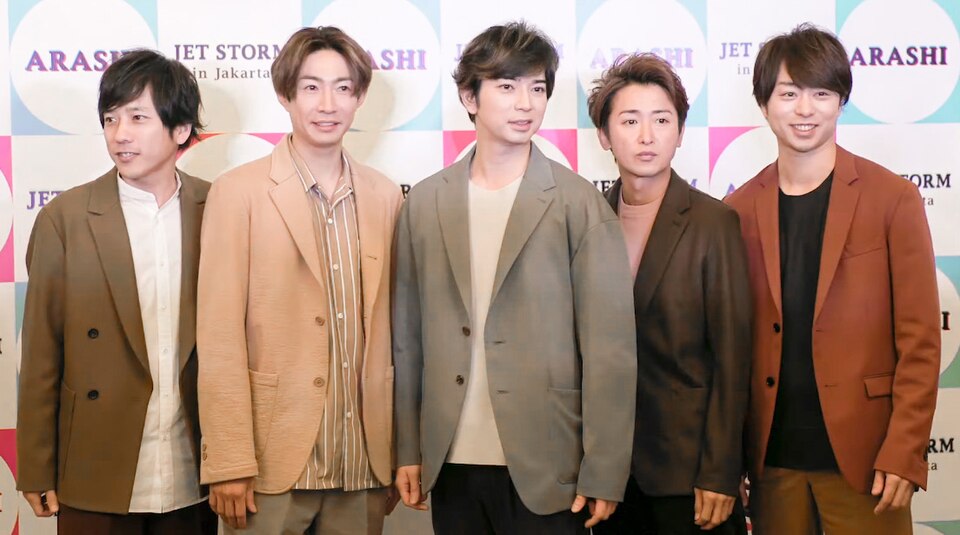
Video still: Japanese Station, via Wikimedia Commons · CC BY 3.0. Video still from the version supplied on Wikimedia Commons; reduced in size.
The dancer and choreographer behind the calm expression
Fans often describe Ohno’s dance as unusually controlled, but you do not need to accept that praise on faith. Watch a performance and notice how his movements change direction, how his body settles into a musical phrase and how much of the expression comes from small details rather than exaggerated gestures.
Ohno was more than a performer interpreting choreography prepared entirely by others. The official exhibition biography published by Tokyo City View identifies him as a singer and dancer who choreographed numerous songs for ARASHI’s concerts.2
That fact helps explain why his visual art and stage work belong in the same profile. Choreography is a form of composition: deciding where bodies move, where an audience’s eye should look, and how a musical rhythm becomes a visual moment. A pen drawing asks different technical questions, but it also involves rhythm, space, restraint and repetition.
A useful first step is to compare Ohno’s solo performance work with a full ARASHI concert. A solo stage emphasizes control of one body and one voice; the group performance shows how his movement fits within a larger visual structure. The contrast tells you more than a single viral dance clip could.
An actor with an unexpectedly wide range
International viewers may encounter Ohno through drama rather than music. His television work includes the psychological thriller Maō (2008), the fantastical comedy Kaibutsu-kun (2010) and the mystery series Kagi no Kakatta Heya (2012).3
These roles are not all the same kind of character. One is connected to darkness and revenge; another to playful supernatural comedy; another to a reserved specialist solving locked-room puzzles. That range is useful for someone who knows only the cheerful television image of a popular idol.
The availability of these series outside Japan changes with licensing agreements. Before buying a DVD or subscribing to a streaming service, check whether the particular title is legally available in your country and whether English subtitles are included.
Art was not a hobby invented after ARASHI
One common mistake is to treat Ohno’s painting and drawing as a retirement pastime. His art career was public long before ARASHI’s 2020 hiatus. He had been making visual work for years when he published the art book FREESTYLE and held his first solo exhibition in 2008.4
His work has included intricate drawings, paintings, sculptural figures and other experiments in material and scale. Some pieces seem playful; others invite a closer look at minute repeating patterns. The variety is important. His career does not fit neatly into the idea of a pop star who produces one recognizable style of picture on the side.
In 2015, he presented FREESTYLE in Shanghai 2015 in China and FREESTYLE II in Tokyo and Osaka. The Tokyo City View organizer’s announcement reported that the exhibitions up to that point had drawn a combined audience of approximately 120,000 visitors.4
Those numbers reflect interest in the work, but they do not explain it. A more revealing question is why an artist already working on enormously visible stages continued to return to the private, time-consuming process of making things by hand.
FREESTYLE 2020: art above Tokyo
Ohno’s FREESTYLE 2020 exhibition took place from September 9 to November 8, 2020 at Tokyo City View, the observation area at Roppongi Hills. It was the third major installment in the FREESTYLE exhibition series, bringing together earlier works, new pieces and records of his creative process.5
The exhibition was unusually broad. Reports from the venue describe painting, line drawing, figures and three-dimensional works. Among the new pieces was an image created for the jacket of ARASHI’s single “Kite” (カイト). The art crossed the boundary between a private studio practice and an object encountered by music listeners on a record cover.6
The exhibition also featured a large sculptural head and a detailed drawing, demonstrating his willingness to work at very different scales. It showed that creative activity was not only about a final polished object. The accumulation of sketches, experiments and revisions formed part of the story.
Important: FREESTYLE 2020 was a historical event and is not currently open. The official exhibition archive remains a good place for readers to see the original announcement and follow links to documented materials.
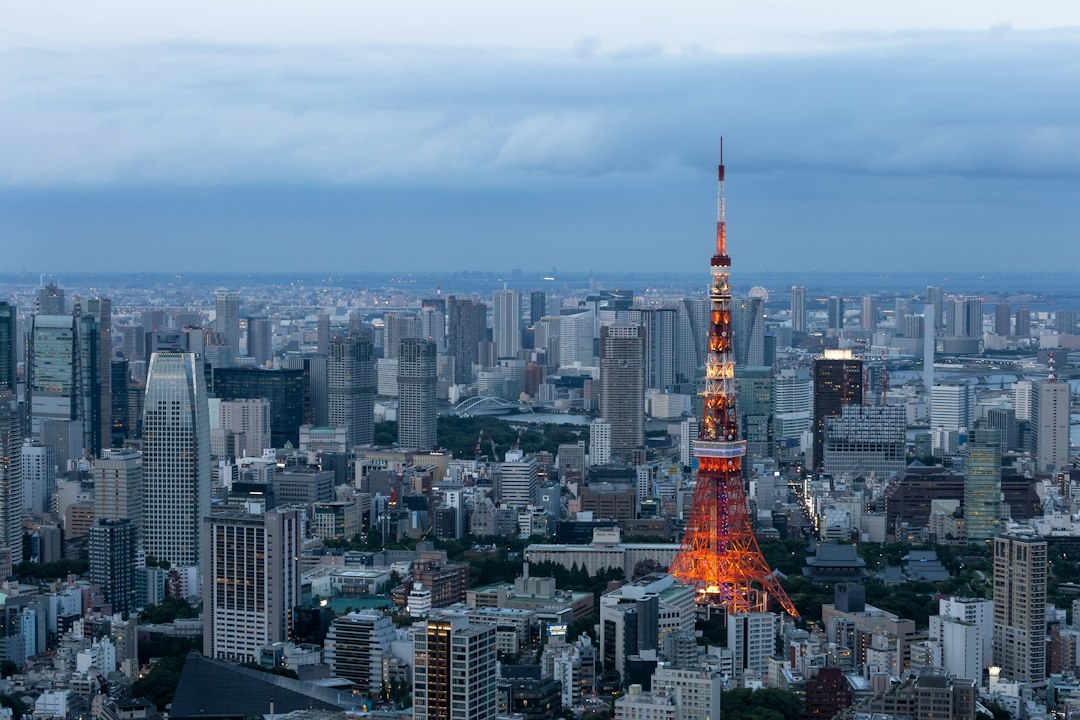
Photo: Riccardo Chiarini / Unsplash.
The long hiatus and the final ARASHI tour
In January 2019, ARASHI announced that the group would suspend activities after the end of 2020. Ohno’s wish to spend time outside the usual entertainment schedule was an important factor in the decision, which the five members discussed together. ARASHI’s hiatus began after December 31, 2020.7
For many followers, the hiatus was a source of uncertainty rather than a neat conclusion. The pandemic also changed how the group could perform its last scheduled events in 2020. After years of quiet, the five announced in May 2025 that they would return for a final tour in 2026 and then conclude group activities.
The last concert of ARASHI LIVE TOUR 2026 “We are ARASHI” was held at Tokyo Dome on May 31, 2026. That date ended the group’s activities after more than 26 years. For Ohno, it was both the conclusion of the five-member story and a personal professional turning point.8
It is misleading to describe the 2026 concerts as an indefinite comeback. The final tour was deliberately announced as a farewell, and the members’ individual futures were not automatically the same.
Leaving STARTO did not mean abandoning creativity
On February 28, 2026, STARTO ENTERTAINMENT officially announced that Ohno would leave the company on May 31, the same day ARASHI concluded its activities. Ohno issued his own message expressing gratitude for his many years with the agency and explaining his intention to move ahead at his own pace.9
That statement is best read for what it actually says. It confirmed the end of his agency relationship, not a detailed list of future career promises. It did not mean that every member of ARASHI had made the same decision or that all of their individual activities would cease.
In fact, the months following the farewell brought new public activity from Ohno under his own name. Understanding what followed makes it especially clear why the simple word “retirement” would give an incomplete picture.
July 2026: SATO-JIMA opens
On July 3, 2026, Ohno announced official X and Instagram accounts associated with his personal project “SATO-JIMA” (さと島). The new community opened on July 15, 2026, as a space where he could share aspects of his daily life, interests and creative activity in a more personal format.10
The official site is sato-jima.com, and the publicly announced social accounts are @satojima_x and @satojima_official. Fans should use those official destinations rather than lookalike accounts claiming to speak for him.
SATO-JIMA is separate from ARASHI’s former group fan club and from STARTO’s FAMILY CLUB. Its own sign-up rules, payment requirements and international accessibility should be checked directly through the SATO-JIMA FAQ. Do not assume that rules applying to the older group membership automatically apply to this new service.
Ohno has also shared announcements of digital events through SATO-JIMA. These are examples of continued engagement with fans, but individual membership benefits, livestream access and event schedules can change. Read the current terms before purchasing an access pass or assuming a future event will be available overseas.
October 2026: an artist speaks to VOGUE JAPAN
A particularly revealing part of the new chapter arrived with the December 2026 issue of VOGUE JAPAN, published on October 30, 2026. In an interview released online on October 26, Ohno discussed his creative process, earlier exhibitions, and why making art remained important to him after the group farewell.11
One memorable detail is that he uses more than 200 marker pens in his work. The interview also discusses his interest in digital drawing on an iPad and how he can experiment with colours and shapes before committing to a design. Rather than framing technology and hand-drawing as opponents, he describes different tools as offering different possibilities.12
The follow-up web-exclusive interview explored artists who have inspired him, including Itō Jakuchū, Yayoi Kusama and Yoshitomo Nara. It also showed how the design of SATO-JIMA—the logo, merchandise and the character called Satobō—became part of his own creative experimentation.12
For readers who want to see his recent work rather than just hear it described, the first VOGUE JAPAN interview and web-exclusive second part contain official editorial images and further detail. We link to those licensed photographs and artworks instead of reproducing them without permission.
What does his new artistic direction mean?
It would be easy to tell this story as a dramatic reversal: an idol leaves a band and becomes an artist. But that framing erases decades of work made while he was still on stage. Art was not an unexpected second identity invented in 2026; it was something he practised alongside a demanding public career.
What changed in 2026 was the framework around the work. Without the schedule of a continuing five-member group, Ohno could present his own interests and experiments in a different way. The SATO-JIMA project suggests an approach shaped more by personal curiosity, conversation with fans and the freedom to choose what to make.
Whether that leads to another large exhibition, smaller displays or projects not yet announced remains his choice. The October interviews explored possibilities, but possibilities should not be rewritten as confirmed dates or venues. The best way to follow new developments is through Ohno’s official channels.
Where should an international listener begin?
If you know Satoshi Ohno only from his recent art interviews, start with the group that made him famous. Listen to several ARASHI songs, then look for official concert footage that highlights his singing and dancing. The first performances to explore are not necessarily the most elaborate: comparing a slower melody with a dance-heavy concert number reveals how his stage presence changes.
- Begin with ARASHI’s early career. Hear the debut song A・RA・SHI and read about the group’s five-member formation.
- Watch a dance-focused official performance. Pay attention to timing, transitions and control rather than looking only at the spectacle of the whole stage.
- Explore his acting work. Try Maō, Kaibutsu-kun or Kagi no Kakatta Heya where officially available with subtitles in your region.
- Read the FREESTYLE archive. The Tokyo City View exhibition pages and Mori Building’s official release provide documented background on the artwork.
- Read the 2026 VOGUE JAPAN interviews. They offer his own explanation of the creative process rather than only fans’ interpretations.
- Check SATO-JIMA for current announcements. Keep the separate fan-service rules and any fees in mind before signing up.
These are suggestions for exploration, not a claim that a particular paid service or past livestream is available worldwide. Older recordings and rights-restricted television productions may be harder to find legally outside Japan.
Frequently asked questions about Satoshi Ohno
Is Satoshi Ohno the leader of ARASHI?
He was the five-member group’s leader throughout its career. ARASHI completed its group activities after the final Tokyo Dome concert on May 31, 2026.
Is he also a painter and artist?
Yes. He published FREESTYLE and held his first solo exhibition in 2008, followed by presentations in Shanghai, Tokyo and Osaka in 2015 and FREESTYLE 2020 at Roppongi Hills. His work includes drawing, painting and sculpture.
Did Satoshi Ohno retire in 2026?
He left STARTO ENTERTAINMENT on May 31, when ARASHI ended its activities, but announced SATO-JIMA the following July and continued to discuss his art publicly. Calling him fully retired would not reflect those later activities.
What is SATO-JIMA?
It is a personal online community launched by Ohno on July 15, 2026. It is separate from the former ARASHI group fan club. Consult its official FAQ for current terms and participation requirements.
When was his most recent major exhibition?
FREESTYLE 2020 ran from September 9 to November 8, 2020 at Tokyo City View in Roppongi Hills. No new exhibition date is confirmed here; consult his official announcements for future plans.
Did Ohno really work on ARASHI’s choreography?
Yes. Tokyo City View’s official exhibition biography explicitly states that he choreographed numerous numbers used in ARASHI concerts.
Where can I see his artwork legally?
The official Tokyo City View exhibition archive, Mori Building announcement and the October 2026 VOGUE JAPAN features provide photographs and commentary. Do not confuse fan reposts or unauthorized merchandise with an official release.
A quieter kind of presence
Some performers are remembered for their biggest speeches or boldest public gestures. Ohno’s career invites a different kind of attention: the detail inside a dance phrase, the patience of an intricate drawing and the willingness to let a project become something unexpected.
It is also a reminder that a public role does not fully define a person. For more than 26 years, audiences knew him as one of ARASHI’s five members. In 2026, that story reached its conclusion, while the creative practice that had been running alongside it remained very much his own.
Sources and further reading
- Tokyo City View: FREESTYLE 2020 Exhibition Archive — birth date, early career and art practice; STARTO: February 28, 2026 notice — departure date.
- Tokyo City View: Satoshi Ohno Biography — 1999 debut, singing, dancing and work choreographing concerts.
- DramaWiki: Satoshi Ohno television roles — listed dramas and broadcast years. Streaming availability varies.
- Mori Building: FREESTYLE Exhibition History, July 11, 2020 — 2008 and 2015 art shows and audience figures.
- Tokyo City View: FREESTYLE 2020 Event Information — exact dates and venue.
- Internet Museum: FREESTYLE 2020 Exhibition Report, September 9, 2020 — objects, new works and the “Kite” jacket artwork.
- Nikkan Sports: Ohno’s Career and the Hiatus, February 28, 2026 — historical context.
- OTOMO: ARASHI’s Final Concert at Tokyo Dome, June 1, 2026 — final performance and conclusion of group activity.
- STARTO ENTERTAINMENT: Official Announcement About Satoshi Ohno, February 28, 2026 — personal statement and May 31 departure.
- TV Asahi News: SATO-JIMA Launch and Official Accounts, July 3, 2026; SATO-JIMA official website.
- VOGUE JAPAN: Satoshi Ohno on Continuing to Create, October 26, 2026.
- VOGUE JAPAN: Additional Interview and Artwork, October 30, 2026 — materials, creative influences, digital drawing and SATO-JIMA design.
Reported as of November 14, 2026. Images refreshed November 16, 2026. The 2019 portrait and ARASHI group image are archival video stills credited to Japanese Station under CC BY 3.0. The Roppongi Hills image is a city view, not a photograph of Ohno’s artwork or exhibition.







Comments