Music & Everyday Culture · City Pop
How Japanese City Pop Found a New Audience
An old recording can arrive in your life as something entirely new. City pop offers a way into Japanese music through voices, grooves and the people who keep passing songs along.
ENTERTAINMENT & CELEBRITIES · 6 MIN READ
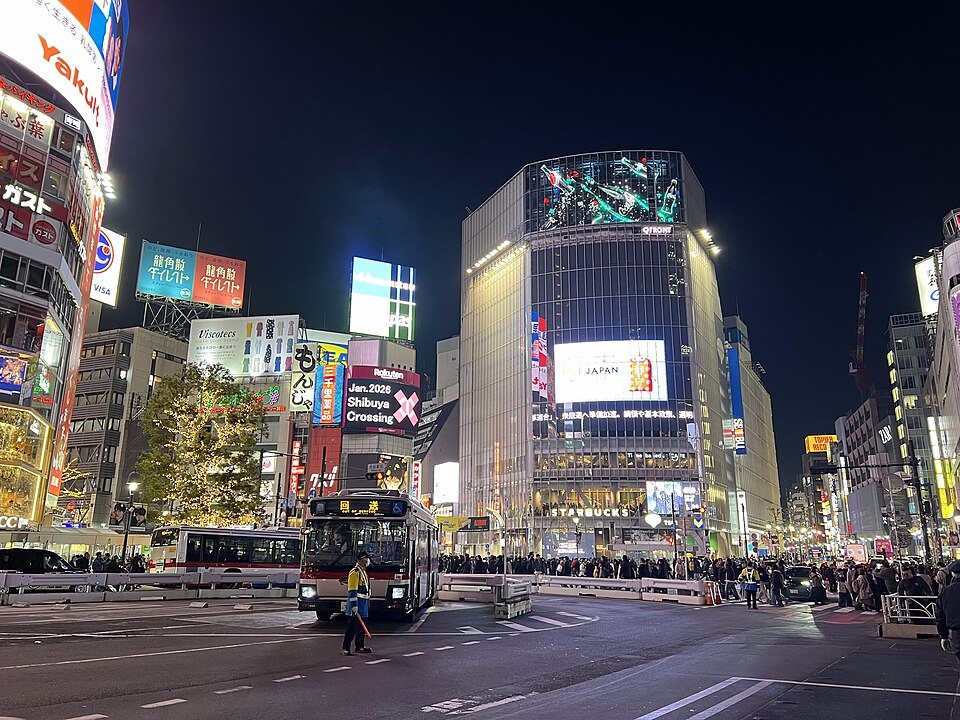
Photo: Asanagi, 17 January 2026, via Wikimedia Commons · CC0. Resized and JPEG-compressed for this article; no cropping or retouching by LAYERS OF JAPAN.
Sometimes a song arrives decades late, and still feels exactly on time.
Imagine finding a song without knowing its year. A bass line catches your attention, a voice enters, and you stay for the next chorus. Only afterwards do you discover that the recording is older than you expected—and that people far from Japan have been making the same discovery.
That is one way into city pop. Japanese recordings associated with the 1970s and 1980s have acquired another life through online listening, covers and renewed interest in records. For someone encountering them today, the attraction can begin with a song rather than a history lesson.[1], [3]
A name with room inside it
City pop is a useful starting point, but its edges are not tidy. Even Toyokasei, the organiser of the CITY POP on VINYL event, acknowledges disagreement over which music belongs under the name. The term gathers together a range of Japanese pop associated with the 1970s and 1980s rather than describing one fixed musical formula.[5]
A history published by Nippon.com traces an important early strand through Sugar Babe, the band formed in 1973 whose members included Tatsuro Yamashita and Taeko Onuki. Its mixture of pop, older styles and soul helped establish a direction that other musicians developed. The roots therefore reach further back than the shorthand image of late-1980s bubble-era Japan might suggest.[1]
For a first listen, let the category stay loose. Follow the part that interests you: a bass phrase, the space around a vocal, a guitar sound or the way a chorus opens up. You do not need to settle a genre debate before finding something you want to hear again.
“Plastic Love” finds another moment
Mariya Takeuchi’s “Plastic Love” appeared on her album Variety in 1984, followed by a 12-inch single in 1985. Warner Music Japan’s release history makes an easy-to-miss distinction: the song and that original single belong to different years.[2]
Decades later, YouTube helped carry the recording to a much wider international audience. Nippon.com’s account of the revival identifies a 2017 upload as a significant point in that later circulation.[1]
The renewed attention also reached physical records. Warner issued another 12-inch edition in 2021, pairing an extended club mix with the album version. Looking at the label’s page provides a small lesson in listening: a familiar song title can lead to different versions, with different lengths and arrangements.[2]
Rather than treating the first version you encounter as definitive, compare them. Notice what gets more room, when the voice arrives and how the track feels when it has longer to unfold.
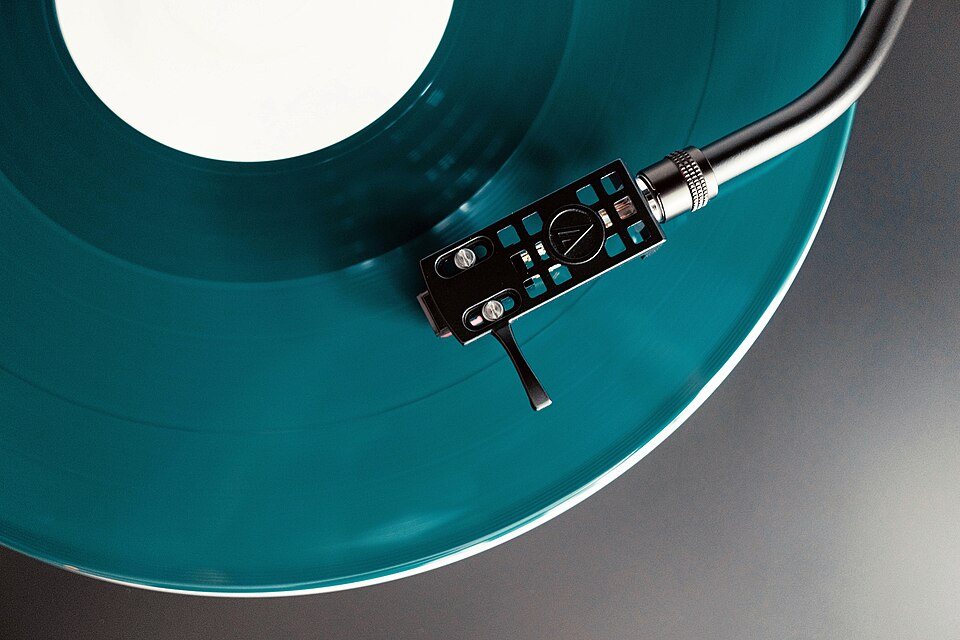
Photo: M. Johnson, 25 December 2019, via Wikimedia Commons · CC BY 2.0. Resized and JPEG-compressed for this article; no cropping or retouching by LAYERS OF JAPAN.
“Stay with Me” crosses languages
Miki Matsubara’s debut single, “Mayonaka no Door / Stay with Me,” was released in November 1979. In November 2020, her label Pony Canyon reported renewed listening overseas, including growth in Indonesia, Thailand and Malaysia. The same announcement discussed overseas Japanese-language covers, including one by Indonesian singer Rainych.[3]
This makes the revival more interesting than a simple story of an old song becoming fashionable. A listener can arrive through a cover, seek out the original voice and then explore the rest of a catalogue. Another may first encounter a remix.
Pony Canyon’s 2021 compilation Miki Matsubara meets Tetsuji Hayashi offers a concrete example: its track list brings together the single version, an Incognito remix and a Night Tempo re-edit. Those credits show several ways of returning to the same recording.[4]
For an English-speaking newcomer, a partly familiar title can be an invitation. The next step is to pay attention to the singer and the song beyond that recognisable phrase.
The city in your headphones
There is pleasure in imagining a place while listening: evening light in a window, a train carrying you home, a road beside the sea. A photograph of Tokyo can strengthen that feeling. But the image is an interpretation, not a complete account of the society that produced the music.
We suggest letting the songs create their own pictures without asking those pictures to stand for everyone’s life in Japan. An elegant arrangement can be enjoyed on its own terms. Learning who wrote, played and recorded it adds another kind of pleasure: the imagined city begins to have actual people inside it.
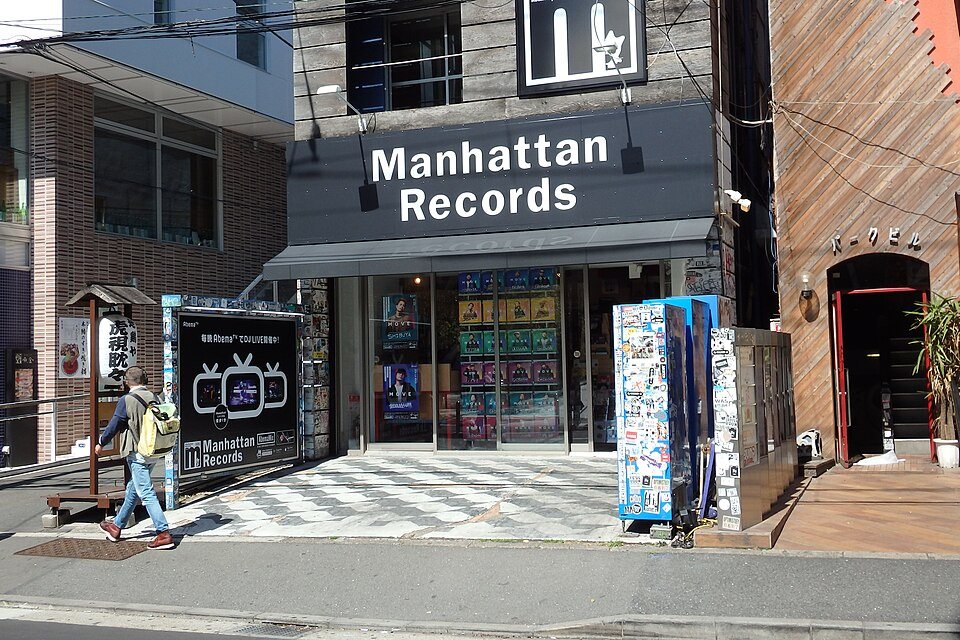
Photo: Mike Steele, 15 April 2019, via Wikimedia Commons · CC BY 2.0. Resized and JPEG-compressed for this article; no cropping or retouching by LAYERS OF JAPAN.
From a saved track to a record-shop shelf
The route now also runs from a screen back into shops. Interviews published in 2025 and republished by TOKYO UPDATES describe overseas customers discovering Japanese music through social media and YouTube, then seeking records in Tokyo. Shopkeepers discuss interest in city pop alongside jazz, new wave and other styles; these are overlapping listening journeys.[6]
The physical scene includes specialists. TOKYO CITY POP RECORD SHOP, in Yoyogi, describes its stock as Japanese city pop, Japanese jazz, 1980s Japanese rock and anime-related soundtracks. Its own description is another reminder that a record shelf need not respect the boundaries of a playlist title.[7]
If you choose to browse, bring a short list of artists or saved tracks. Ask about condition, editions and any listening facilities the shop offers. Check the particular shop’s information before travelling, and treat a record as something you want to play rather than a souvenir you must buy.
A small listening route
Begin with Takeuchi’s “Plastic Love.” Then try Matsubara’s original “Mayonaka no Door / Stay with Me,” followed by one of the officially credited later versions. Follow the label and artist links below to identify the recordings.
After that, make your own next choice. Read a credit. Try another track by the same singer. Follow a musician whose playing caught your ear. A category can introduce you to the music; curiosity is what keeps the listening going.
About the photographs: These illustrative photographs show Tokyo and a record-listening detail in the years listed. The turntable image does not identify the music being played. Photo credits and reuse terms accompany each image.
Sources and listening references
- Nippon.com — A Guide to City Pop, the Soundtrack for Japan’s Bubble-Era Generation
- Warner Music Japan — Mariya Takeuchi, PLASTIC LOVE: original release history and 2021 vinyl edition
- Pony Canyon — November 2020 announcement on the international revival of Miki Matsubara’s debut single
- Pony Canyon — Miki Matsubara meets Tetsuji Hayashi: recording and remix credits
- CITY POP on VINYL / Toyokasei — About the genre and the record-shop event
- TOKYO UPDATES — Tokyo’s Vinyl Experts Say Overseas Buyers Are “Sustaining the Scene” (interviews first published in The Japan Times, March 2025)
- TOKYO CITY POP RECORD SHOP — Official shop introduction and location





Comments