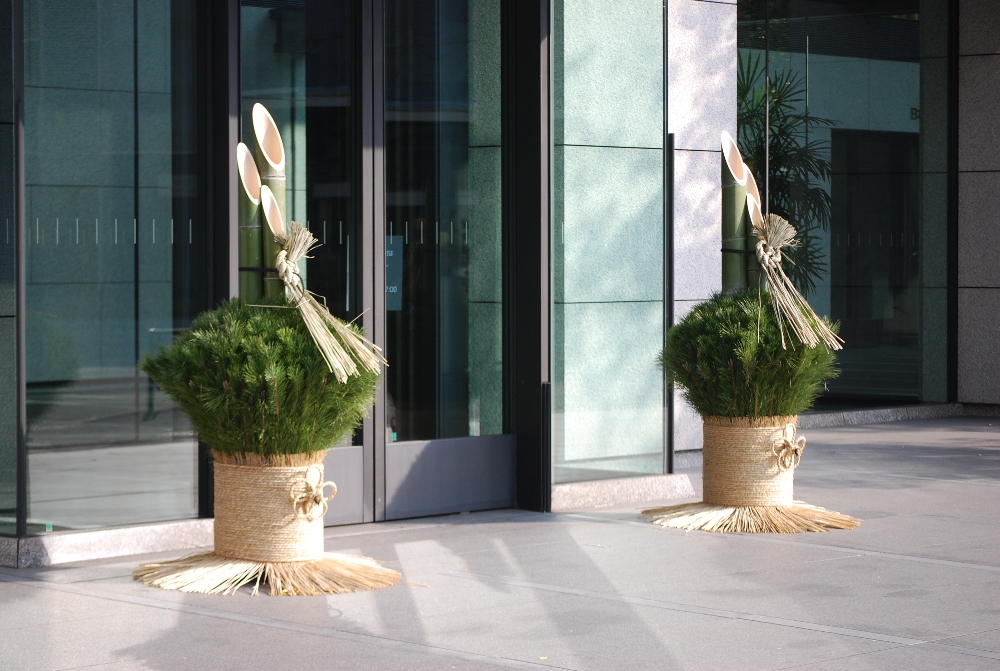
A New Year walk in Japan can take you past two decorations within a few steps. Pine branches and cut bamboo stand by a doorway. Inside a shop, two round white rice cakes are stacked one above the other, sometimes topped with an orange fruit. Their positions tell part of their story.
Kadomatsu: the sign at the entrance
Kadomatsu means “gate pine.” In the New Year tradition it marks an entrance for Toshigami, the deity welcomed at the turn of the year. A tall arrangement with diagonally cut bamboo is easy to recognise, but smaller arrangements or pine branches alone can also mark a doorway. Look for where they are placed before counting the stems.
Try looking back after you have passed. From that angle a pair of arrangements frames the exact line between the street and the shop or home. Even a modest sprig can do the same job in a narrow entry.
Kagami mochi: an offering indoors
Kagami mochi traditionally consists of round rice cakes, a smaller one resting on a larger one. The mirror in its name refers to the round shape of old mirrors. Some displays carry a daidai, a bitter orange associated by a play on words with successive generations. Ready-made versions can preserve the familiar outline while using other materials on the outside.
After the New Year observance, kagami biraki is the occasion for opening the offering and eating the mochi. Timing and practices vary locally. If you visit a host during the holiday, asking when their family opens it is a better conversation starter than assuming a date. The doorway decoration and the indoor offering welcome the same season in different parts of the home.
Read next · Kanazawa’s Tsujiura: How to Read Three Fortunes Hidden in New Year Sweets
Sources and visitor information
Lead image · Katorisi · Wikimedia Commons · CC BY-SA 3.0





Comments