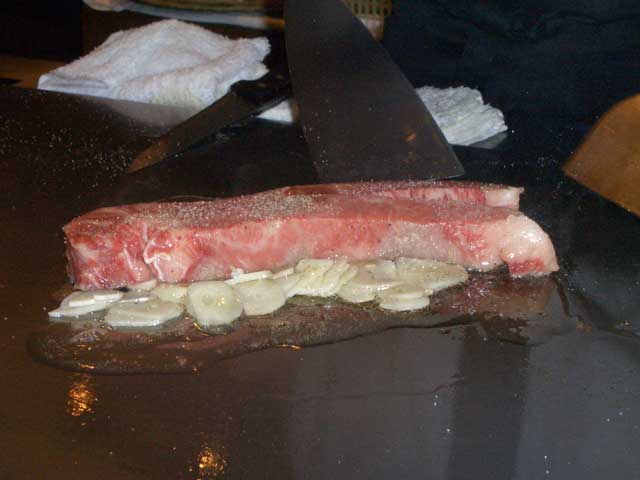
Imagine two lines on a menu: one says “Japanese wagyu sirloin,” the other “Kobe beef sirloin.” Sirloin tells you the cut in both cases. Wagyu identifies a broad category of cattle. Kobe beef is a specific designation within it, with rules about the animal, its origin and the carcass after grading.
Start in Hyogo, with Tajima cattle
The Kobe Beef Marketing & Distribution Promotion Association traces the designation to Tajima cattle born and raised under its rules in Hyogo Prefecture. Animals must meet the association’s origin and production requirements, and the beef must pass further criteria. Tajima lineage alone does not settle the question.
This is why a photograph of dense marbling, however striking, cannot establish the name. A grading label such as A5 also answers a different question from a geographical designation. One describes classified qualities of the carcass. The other requires a particular production history. A restaurant in Kobe can sell several kinds of beef, and certified Kobe beef can be served outside the city.
At the restaurant, check the line you are ordering
The association identifies designated establishments and explains the certification marks, including the Japanese chrysanthemum mark on certified beef. If a menu carries both names, point to the particular dish and ask whether that item uses Kobe beef. A shop sign cannot tell you which of several lunch sets you selected.
Then compare what the menu actually sells: cut, portion, cooking method and whether sides are included. A small tasting portion of certified beef and a full wagyu steak lunch answer different appetites. Knowing what each label promises leaves you free to order the meal you want.
Read next · Tsukiji or Toyosu? Where to Eat Sushi and Where to See the Tuna Auction
Sources and visitor information
Lead image · Robert La Ferla · Wikimedia Commons · CC BY-SA 3.0


Comments