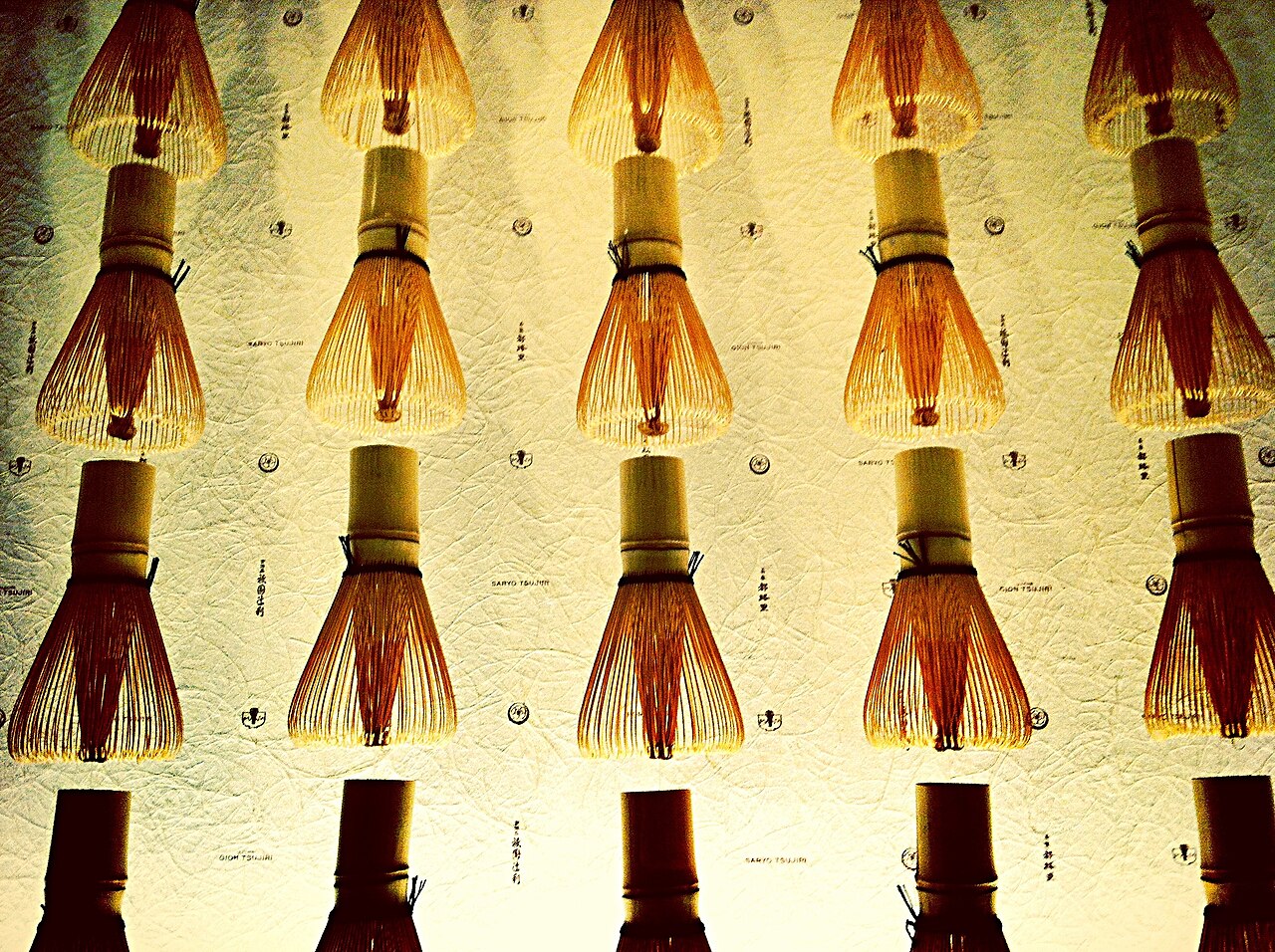
Watch the bamboo whisk, or chasen, when a host makes matcha. For usucha it moves briskly through a relatively loose liquid. For koicha the tea is worked more slowly into a smooth, dense mixture. The names mean thin tea and thick tea, and the difference is easier to understand from that movement than from a photograph of green powder.
Thin tea: look at the surface, then the sides
Usucha uses more water in relation to the amount of tea. It can be whisked to a fine foam, particularly in the Urasenke tradition. Other schools handle the surface differently. A bowl without a high cap of foam therefore tells you little on its own about how well the tea was made.
Take a small sip and notice the speed at which it runs back down the inner wall of the bowl. The vessel’s width leaves room for the whisk, and its colour gives the guest a background against which to see the green.
Thick tea: a different task for the same tool
Koicha uses a higher proportion of matcha. The host works the mixture with the whisk to bring it together evenly. The result has enough body to move slowly when the bowl tilts. Watching that movement helps explain why simply whisking a café matcha faster would not turn it into koicha.
At a museum, look for the containers displayed with a tea bowl. A small lacquered natsume is often associated with thin tea. A ceramic chaire with a lid is associated with thick tea. At a public tea demonstration, the easiest question to ask is “Usucha desu ka?” Once you know the answer, follow the whisk from the first contact with water to the moment it leaves the bowl.
Read next · Matcha in Japan: From Green Powder to a Bowl of Tea
Sources and visitor information
Lead image · Owlsmcgee · Wikimedia Commons · CC BY-SA 4.0



Comments