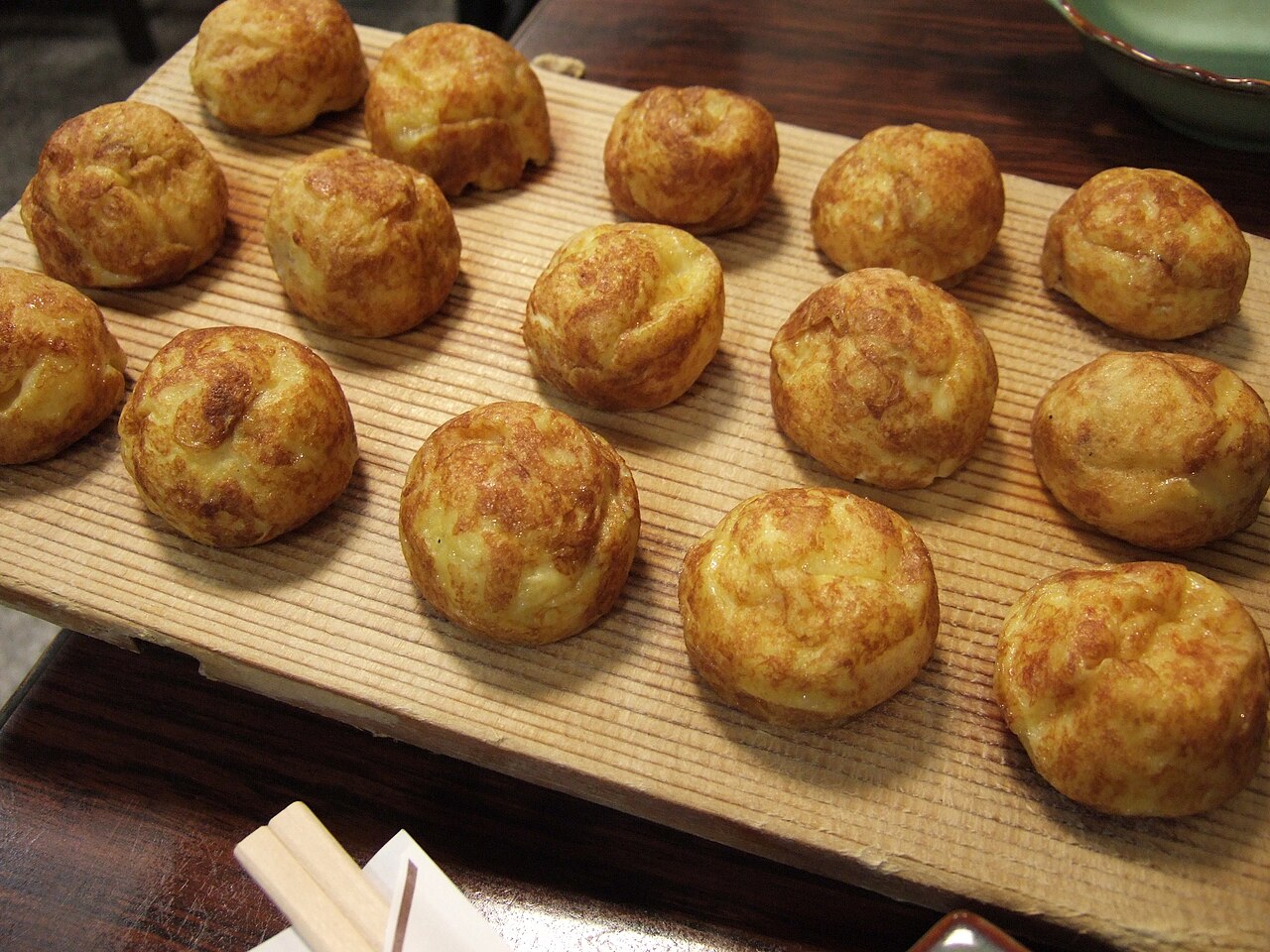
At a counter in Osaka, a tray of takoyaki often arrives with dark sauce painted over the tops. Across the prefectural boundary in Akashi, a board of round octopus bites may arrive almost bare, beside a small cup of clear broth. The shape is familiar. The first bite is a different proposition.
Osaka’s griddle and Akashi’s egg-rich batter
Both dishes are cooked in pans with rounded hollows and have octopus at their centre. Osaka takoyaki typically uses a wheat-flour batter. Sauce, seaweed flakes and bonito flakes are familiar finishes, though each shop decides what belongs on its tray. Turn one over and notice the browned surface surrounding the soft centre.
In Akashi, look for tamagoyaki on a local sign. Here the word can mean the round dish visitors call Akashiyaki. The egg-rich batter makes a tender bite. Outside this context, tamagoyaki often refers to a rolled omelette, so the town and the shape pictured on the menu matter.
What to do with the broth
Lift one Akashi-style piece gently with chopsticks and dip it into the broth just before eating. Leaving it submerged makes a fragile piece harder to lift. Taste one first and notice how the broth meets the egg and octopus. Give the centre time to cool.
When two people share, pass the board while the pieces are still warm. Comparing the first and second bite is half the fun: the one with the smallest dip shows the egg clearly, while a deeper dip brings the broth forward. You can carry that taste memory back to Osaka and recognise the difference before anyone names the dish.
Read next · Osaka or Hiroshima Okonomiyaki? Watch What Hits the Griddle First
Sources and visitor information
Lead image · Midori · Wikimedia Commons · CC BY-SA 3.0


Comments