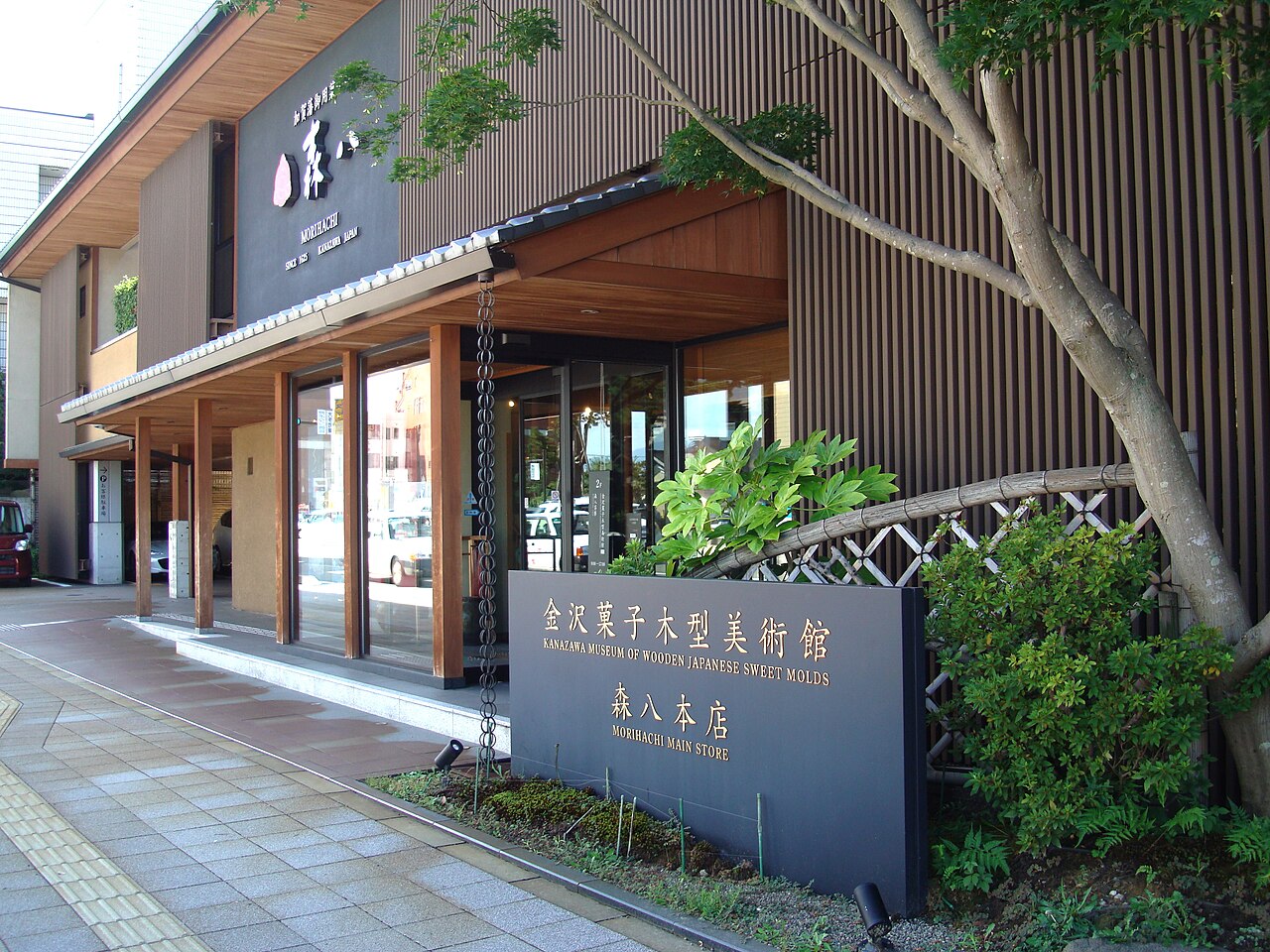
A raised vein on a tiny sugar leaf starts life as a hollow in a block of wood. That reversal is a good reason to linger on the second floor of Morihachi’s main shop in Kanazawa. Its Museum of Wooden Japanese Sweet Moulds displays more than a thousand items, including moulds used since the Edo period. You can look at a shelf of tools as a collection of sweets waiting to be imagined.
Read the impression backwards
Choose a mould with a simple motif and give your eyes two tasks. First trace the outline, which gives the sweet its silhouette. Then look deeper into the cavity. A groove cut down into the wood will stand up on the surface of the finished sweet. An inscription, when there is one, has to come out the right way round after the sweet is turned over. The carver has to think about the view the customer will eventually see.
Rakugan is one of the dry sweets, or higashi, made by pressing a mixture into a mould and letting it dry. Morihachi describes a broader family of mixtures made with starchy flours and sweeteners. Its own Chōseiden uses glutinous rice flour from Hokuriku and Awa wasanbon sugar from Tokushima. For the red version, the maker identifies safflower as the colouring. Another Kanazawa maker, Moroeya, describes toasting non-glutinous rice flour in its account. The name denotes a kind of sweet and a way of forming it, while recipes vary.
From a wooden recess to a tea sweet
Before leaving the display, pick one motif you could recognise in a shop window. Imagine turning the mould over into your palm. Which detail would catch the light first? A petal edge or a ridge that seemed modest in the wood may be the most visible part of the sweet.
Morihachi also offers a separately booked rakugan-making session at its main shop. The museum gives you the maker’s view; pressing and releasing a sweet lets you make the reversal happen yourself. If the workshop is on your itinerary, check its booking page for available sessions before you travel.
Read next
- Kanazawa’s Tsujiura: How to Read Three Fortunes Hidden in New Year Sweets
- Kanazawa’s Yasue Gold Leaf Museum: What to Look for Near Higashi Chaya
Sources and photograph
- Morihachi’s Kanazawa Museum of Wooden Sweet Moulds
- Morihachi on rakugan and Chōseiden
- Moroeya’s account of making rakugan
Cover photograph: Kanazawa Museum of Wooden Japanese Sweet Molds at Morihachi. Yoshihide Fujitani · CC BY-SA 4.0


Comments