If you reach the big flight of stone steps at Nikko Toshogu and find yourself wondering where the sleeping cat went, you have probably just walked under it. The Nemuri-neko is small, set above a passage in the East Corridor on the way to the inner shrine. What makes it worth a second look is on the other side of that same passage.
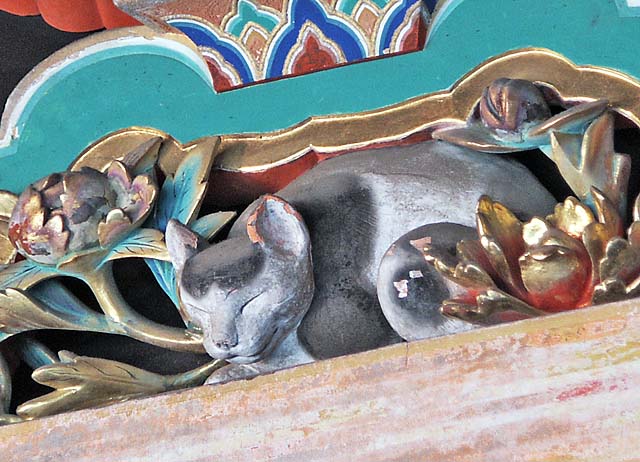
Three animals, three places to look
Start with the Sacred Stable, where the famous monkeys cover their eyes, ears and mouth. Continue to Yomeimon, the elaborate gateway that tends to draw every eye upward at once. Beyond it, follow the signs for the sleeping cat or the inner shrine. Look for 眠り猫 on a sign. The last character, 猫, means cat. If you only remember one character on this visit, that is a good one.
Here the scale changes. The cat rests among peonies, its paws tucked in. A visitor expecting something as large as a guardian figure could easily glance past. As you approach, look up before passing under the carving. Give someone else a clear view while you take yours.
Go through and turn around
Once through the passage, turn and look back above it. Sparrows occupy the reverse side. The delight is partly architectural: a single photograph of the cat leaves out an entire half of what a person walking through the shrine can see. A traditional interpretation links the sleeping predator and undisturbed birds with peace. Imagine what would happen to the sparrows if the cat woke up, and the reading is easy to remember.
The carving is traditionally attributed to the master carpenter Hidari Jingorō. That attribution belongs to the story of the carving; a good guide will use the word “attributed.” Even without knowing the name, you can read the composition in the few seconds it takes to turn around.
Decide separately about the inner shrine
The path onward climbs stone steps through the trees toward Tokugawa Ieyasu’s mausoleum. If that climb is part of your day, stop for the two sides of the carving first. If the steps would be too much for your party, the cat is down at the entrance to this route. No one has to make the whole climb just to see the detail that brought them here.


Comments