Entertainment & Celebrities · ARASHI Member Stories 05
Jun Matsumoto Beyond ARASHI: Screen Roles, Concerts and His 2026 Chapter
A drama can introduce you to Jun Matsumoto. A concert credit reveals another side. Follow the actor and creative director through the works that connect those worlds.
8 MIN READ · NOVEMBER 15, 2026

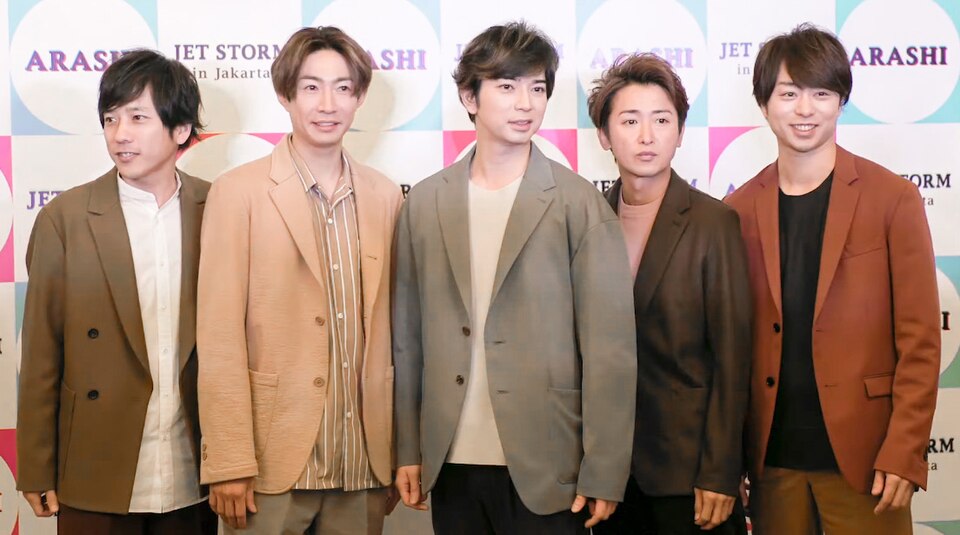
Japanese Station, via Wikimedia Commons · CC BY 3.0. Existing cropped video still from Wikimedia Commons; no further cropping or retouching.
For one viewer, Jun Matsumoto will always be the boy with an impossible amount of money and no idea how to express his feelings. For another, he is a stubborn lawyer, a hesitant future shogun, or a performer whose work continues after he steps away from the microphone.
Those entry points lead to the same person, but they offer different ways of understanding his career. Jun Matsumoto (松本潤) is familiar through ARASHI, through television drama and through the direction of live entertainment. The pleasure of following his work is in noticing how those forms ask him to use attention differently.
This guide begins with a few screen roles, moves behind the concert experience, and ends with the official developments that shape his story in November 2026. It is also the fifth instalment in our ARASHI member series.
Who is Jun Matsumoto?
Matsumoto was born on August 30, 1983, making him 43 at the time of writing. His official website uses the English name Jun Matsumoto; Japanese credits usually place the family name first. If you encounter “Matsumoto Jun,” you are reading about the same performer.1
He was one of ARASHI’s five members, alongside Satoshi Ohno, Sho Sakurai, Masaki Aiba and Kazunari Ninomiya. The group concluded its activities after its final Tokyo Dome concert on May 31, 2026. That date marks a group ending; it should not be read as Matsumoto’s retirement from entertainment.11
You do not need to learn the whole group history before trying one drama. Start with a story that interests you, then follow the connections outward. That is often more rewarding than treating a long filmography as homework.
Hana Yori Dango: the character who opens the door
In the 2005 TBS adaptation of Yoko Kamio’s manga Hana Yori Dango, Matsumoto plays Tsukasa Domyoji, leader of the wealthy school clique F4. Mao Inoue plays Tsukushi Makino, whose refusal to be intimidated disrupts the school’s social order.2
Domyoji is a useful starting point because the role demands conspicuous changes in emotional temperature. Arrogance can turn into confusion; a grand gesture can expose an inability to say something simple. For a new viewer, the interesting question is how the performance makes those shifts legible.
The school is a heightened dramatic world. Its wealth, cruelty and romance belong to the story’s design, so it is best approached as melodrama rather than a window onto ordinary Japanese school life. You can enjoy the scale of the emotions while recognising the behaviour that the story asks its characters to confront.
There is also a direct bridge back to the music: TBS lists ARASHI’s “WISH” as the theme song. Watching the drama and then listening to the song lets a newcomer experience how a television role and a pop group can become linked in memory.2
99.9: a different kind of persistence
With 99.9 – Criminal Lawyer, the emphasis shifts to investigation. Matsumoto plays Hiroto Miyama, a lawyer who keeps testing a case when others think its facts are settled. TBS dates the original series to 2016 and its second season to 2018.3
For someone coming from Hana Yori Dango, this is a good change of pace. The central attraction is the process of revisiting a detail: a statement, an assumption, or the way an event has been reconstructed. The programme combines its legal mystery with comic exchanges and eccentric character habits.
Try watching for rhythm as much as plot. What happens when Miyama interrupts the expected flow of a conversation? How does a scene move from a joke back to the seriousness of a case? Those are small, practical ways to notice an actor’s choices without needing specialist vocabulary.
Dosuru Ieyasu: entering a much larger history
In NHK’s 2023 historical drama Dosuru Ieyasu, Matsumoto portrays Tokugawa Ieyasu. NHK’s episode archive records the role and the ensemble around him, including Kasumi Arimura and Nao Omori.4
A historical series changes the viewer’s task. Names, loyalties and political relationships may take time to settle into place. Rather than trying to memorise every person immediately, follow the decisions confronting the central character and the relationships that make those decisions difficult.
The costumes below provide a tangible connection to that fictional world. Clothing contributes to a character before a line is spoken: the weight of a silhouette, the arrangement of layers and the contrast between one figure and another all shape what an audience sees. Performance belongs to that larger collaboration.
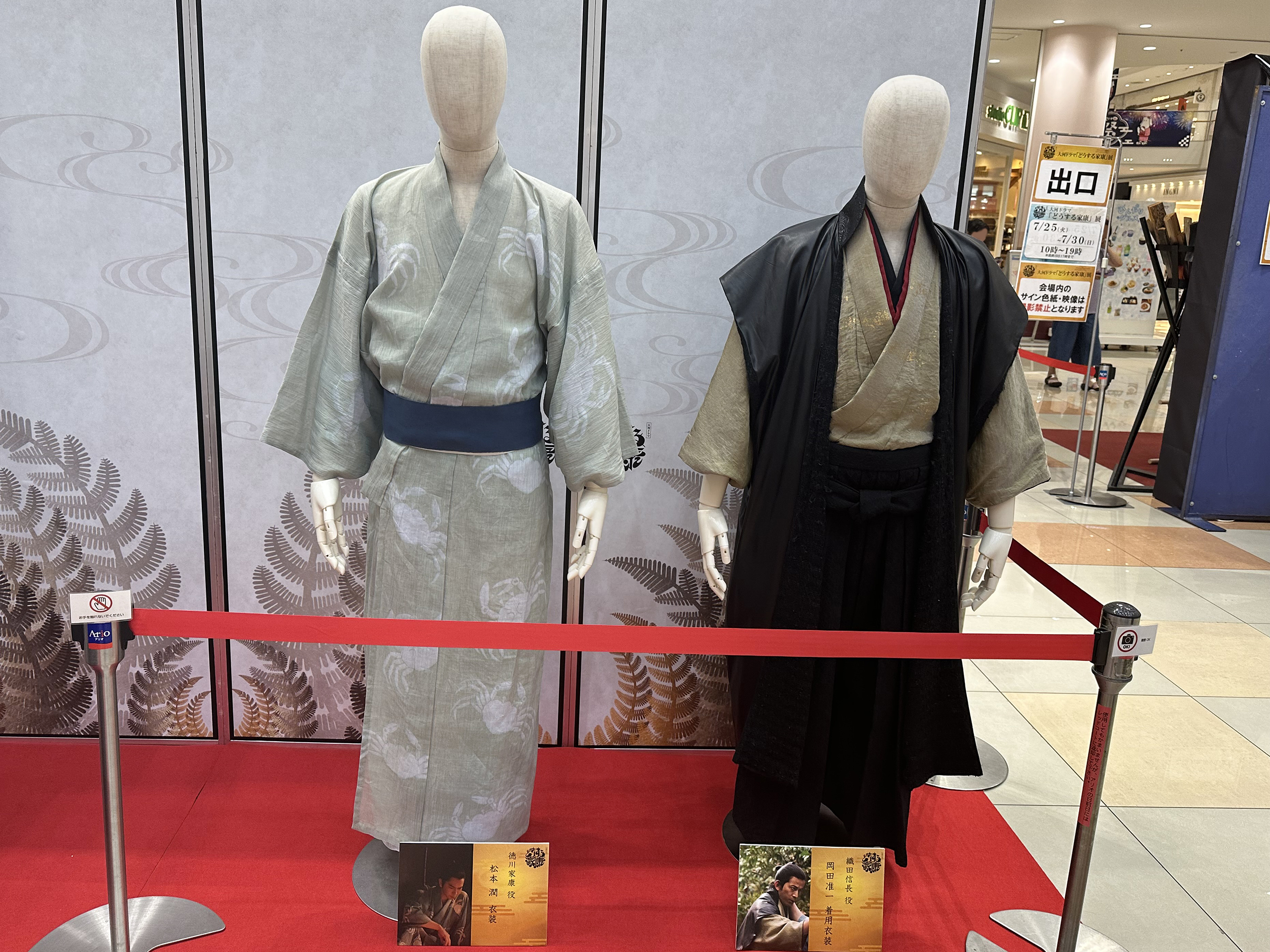
Tokumeigakarinoaoshima / Wikimedia Commons · CC BY-SA 4.0. Unmodified photograph; displayed at a smaller size.
The stage: Love in Action
In 2024, Matsumoto appeared with Masami Nagasawa and Eita Nagayama in NODA・MAP’s Seisankaku Kankei, presented in English as Love in Action. Hideki Noda wrote and directed the production. Its tour travelled through Tokyo, Kitakyushu and Osaka before London performances from October 31 to November 2.5
The distinction between those credits matters. Matsumoto’s concert-direction work does not mean he directed this play: here, he was a performer within Noda’s production. The official credits also identify the designers responsible for its set, lighting, costumes, sound and movement.
That makes the production an inviting next step for anyone interested in the craft around an actor. A theatre performance happens among other bodies and objects in a shared space. A camera cannot choose every detail for the audience, and a pause has to hold its own in the room.
19-banme no Karte: listening becomes the action
For the 2025 TBS drama 19-banme no Karte, Matsumoto took his first doctor role. He plays Akira Tokushige, a general medicine physician whose work depends on listening carefully to a patient’s circumstances as well as their symptoms.6
The premise offers a quieter point of entry than a school power struggle or a historical conflict. TBS presents the character through conversation and attention to a person’s daily life. This is a drama about the relationship between people, as much as the puzzle that brings someone to a hospital.
As a viewing comparison, place one scene from this series beside a scene from Hana Yori Dango. Notice who controls the conversation, how long a reply takes, and what an expression communicates while someone else is speaking. The contrast helps explain why a familiar face can lead an audience into a very different story.
The work behind a concert
Matsumoto’s creative credits extend beyond acting. One clear example is Johnny’s Festival — Thank you 2021 Hello 2022: its official event page credits him with overall direction. The page is an archive, and its January 2022 streaming window has ended.7
Concert direction provides another way of looking at a performance. A song’s place in the running order, the transition into the next number, and the balance between an individual and the wider group all affect the experience. Watching the stage means watching choices about time and space as well as the people standing there.
This is an interpretive lens for enjoying his concert work, rather than a claim that every visible detail was his personal decision. A large production depends on many specialists. The director’s credit identifies a responsibility within that collaboration.
On a second viewing of any officially released concert, try looking away from your favourite member for a moment. Follow how the full stage changes between songs. It can reveal an entirely new reason to enjoy a performance you already know.
Video still: Japanese Station, via Wikimedia Commons · CC BY 3.0. Video still from the version supplied on Wikimedia Commons; reduced in size.
MJC and the 2026 chapter
Matsumoto’s official company website, MJC, describes an interest in planning, production and direction alongside collaboration with other creators. It is a useful place to follow his professional work without relying on rumours or reposted announcements.8
In a July 17, 2026 notice, MJC announced MJ’s Membership with an August 8 opening date. The listed content included video, a gallery, behind-the-scenes material and live streaming. Overseas readers can follow the link from MJC to the official membership site and check its current registration and service conditions.9
A separate notice dated November 1, 2026 states that MJC’s agency agreement with Isshun to Eien had reached the end of its term and directs future enquiries to MJC. The announcement confirms a professional arrangement; it does not give a reason for the change, so there is no need to supply one.10
A simple way into his work
For his early detective work on screen, try The Scarf in Lucky Seven: How Jun Matsumoto Ends Up in a Detective Agency.
- For romance and heightened emotion: begin with Hana Yori Dango, then listen to “WISH” to hear the connection with ARASHI.
- For a mystery with comic texture: try the first season of 99.9 and watch how a case is repeatedly re-examined.
- For historical storytelling: choose Dosuru Ieyasu and give its relationships time to develop.
- For a quieter human drama: look for 19-banme no Karte and notice the attention paid to conversation.
- For the larger creative picture: explore official theatre material and concert credits alongside the screen roles.
Availability and English subtitles vary by territory and release. Check the official distributor in your country before subscribing or purchasing; an old Japanese broadcast page is useful production evidence, but it is not a promise of current access.
What connects these different worlds?
A romance asks an actor to make feelings visible. A mystery asks him to hold our interest in a detail. A long historical drama asks us to follow a person through changing relationships. A concert asks its creative team to shape an experience across an entire venue.
Matsumoto’s career becomes easier to enjoy when those differences remain visible. You can admire one role, discover another, and gradually become curious about the work surrounding the performer. The next layer may begin with a name in the end credits.
Sources and further reading
- MJC: Official profile — Birth date and official English name.
- TBS: Hana Yori Dango — 2005 production, characters, original manga and theme song.
- TBS: 99.9 — Season II introduction — 2016 and 2018 series, character and premise.
- NHK On Demand: Dosuru Ieyasu — 2023 broadcast, Matsumoto as Ieyasu and credited cast.
- NODA・MAP: Love in Action, English production page — Cast, creative team and 2024 tour.
- TBS: 19-banme no Karte — introduction — Role, premise and first doctor character.
- FAMILY CLUB online: Johnny’s Festival — Official overall-direction credit; historical stream is closed.
- MJC: Company website — Creative aims and official company information.
- MJC: MJ’s Membership announcement, July 17, 2026 — Announced August 8 opening and membership content.
- MJC: Agency agreement notice, November 1, 2026 — Completion of the agency agreement with Isshun to Eien.
- J-CAST News: ARASHI’s final concert, June 1, 2026 — May 31 Tokyo Dome concert and end of group activities.
Editorial overview checked November 15, 2026. Production facts and dated announcements are linked above; viewing observations are our interpretation. Image credits and reuse licences appear with each image.






Comments