Imagine a silent-film scene in which a traveller stops outside a closed door. A voice says that he has come home at last. Now run the identical image again and let the same voice suggest that he is afraid to knock. Nothing on the film has changed, but you are watching a different pause. That interpretive space helps explain the prominence of the benshi, a live performer in Japanese silent cinema.
Whose voice are you hearing?
A benshi could describe the setting, supply dialogue, shift between characters and give a scene its emotional shading. The voice came from the theatre, in time with the projection. Music could be another live element, supplied by accompanists. The person describing the traveller and the musician shaping the tension of the pause had distinct parts to play.
Those parts changed over time. Japan Society’s historical account describes early introductions given before projection, experiments with different performers voicing roles, and the eventual prominence of a solo benshi who combined narration and dialogue during the film. That history matters if you have heard one modern performance and wonder whether every silent screening in Japan sounded exactly like it.
A reason to choose one cinema over another
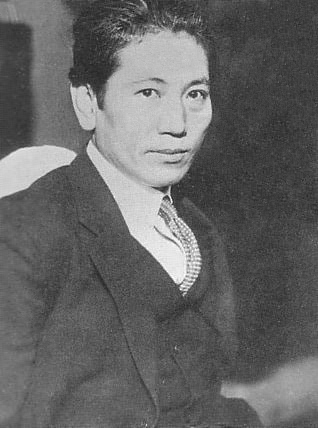
The performer in the cover portrait, Tokugawa Musei, was one of the stars of the profession. In the silent era an audience might want to see a particular film, then choose the theatre according to which benshi was performing. The image travelled on a reel. A particular person’s treatment of it belonged to a particular performance.
You can still encounter a programme that names both a benshi and a musician. On a Japanese listing, look for 弁士 for the narrator and 伴奏 for accompaniment, then check the language and any subtitle information separately. Once the film starts, listen through one complete exchange. When does the performer describe something visible? When do they give a character words? And when do they let a face on the screen hold the room without speaking?
Read next
Sources and photograph
- Japan Society on the history and styles of benshi
- UCLA Film & Television Archive on live benshi performance
- National Film Archive of Japan’s example programme (Japanese PDF)
Cover photograph: Portrait of Tokugawa Musei, a benshi of Japan’s silent-film era. Unknown photographer, via Mainichi Newspapers’ Shōwa History · Public domain



Comments