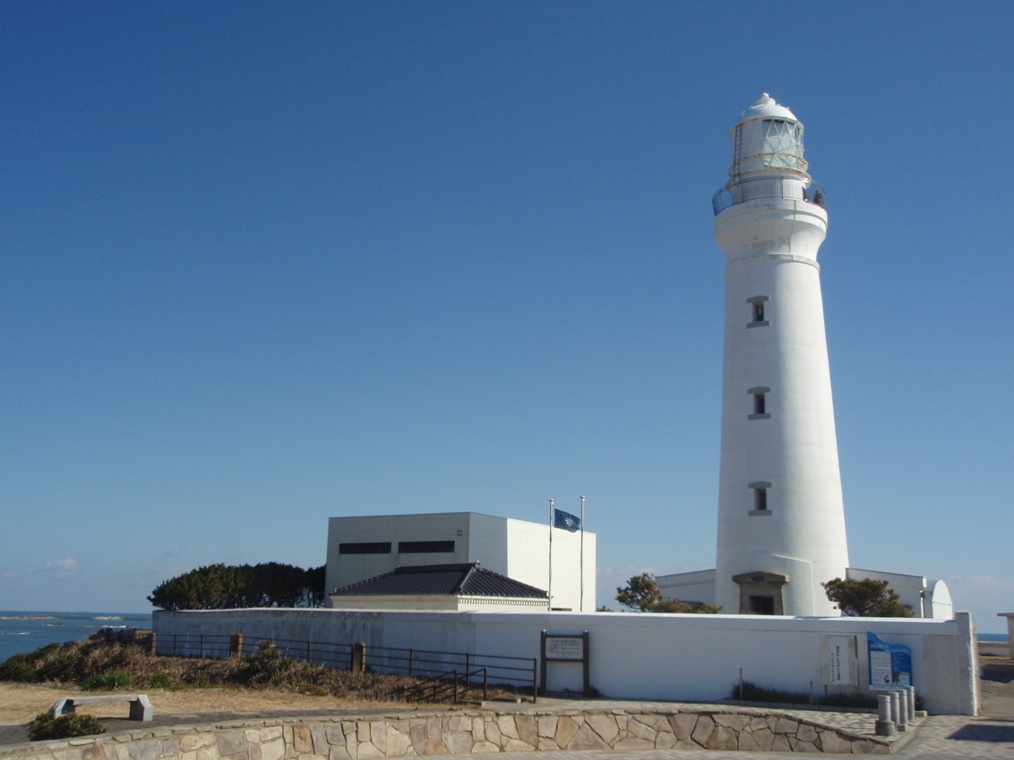
Photograph: Inubosaki Lighthouse in Chōshi, photographed in 2008. Soica2001 · Public domain
A photograph of Inubosaki Lighthouse tells you where it stands if you already recognise the cape. A mariner offshore at night needs a different clue. At this light on the Chōshi coast in Chiba Prefecture, the Japan Coast Guard lists one white flash every fifteen seconds. The interval is part of the lighthouse’s identity, as much as the white tower in a postcard.
Read the clock as well as the colour
Imagine starting a stopwatch at the instant of a flash. About fifteen seconds later comes the next one. The figure describes a repeating cycle. It does not mean that the lamp stays continuously bright for fifteen seconds. In daylight you can put that rhythm against the building you actually see: the lens belongs high up in the lantern, while the tall tower holds it above the cape.
Inubosaki was first lit on 15 November 1874. The Coast Guard identifies it as a brick lighthouse using a first-order lens. The smooth white exterior conceals a second local story. The bricks were made with material from Takaoka, now part of Narita in Chiba Prefecture. Chōshi’s heritage guide describes two brick walls built to improve resilience to earthquakes. Colour alone would tell you very little about what holds this tower up.
A sound for days when the light vanished
Look near the tower for a lower building with a rounded roof and a horn projecting from it. The former fog signal station dates from 1910. In the dense fog that can gather off Chōshi, it gave vessels a direction to listen for when the lighthouse was hard to see.
Those two buildings are worth finding in one view. The 1874 tower was made to be spotted at a distance. The later station addressed the days when even a distinctive light could disappear into clouded air. You can read that change in the design on a clear afternoon, without hearing the former horn or waiting until dark.


Comments