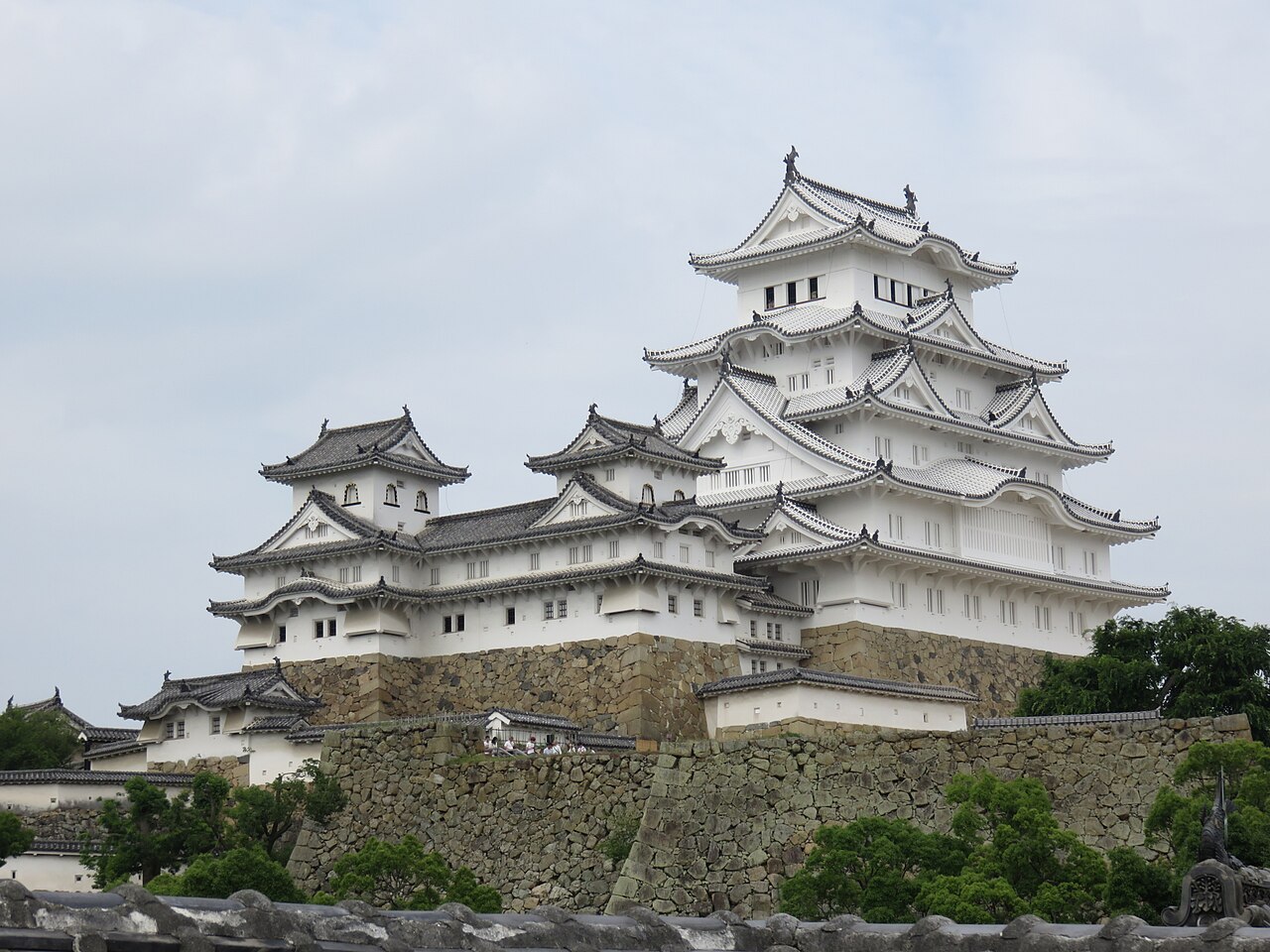
From outside, Himeji Castle and Osaka Castle each give you a white-walled tower above a deep moat. The moment you go indoors, the resemblance ends. At Himeji the building itself is the main thing to examine. At Osaka the tower houses a museum that helps explain the people who fought for the site.
Himeji: look back after the turn
On the approach to Himeji’s main keep, notice the turns between gates. A tower that looked straight ahead from the open ground slips to one side, then reappears above a wall. Give that approach time. Once indoors, timber posts, beams and steep stairs tell you something that a photograph of the white exterior cannot.
The main keep survives from the early seventeenth century. Look at how a post meets a beam, or how a small opening frames the grounds. The climb and descent are part of the visit. Check the castle’s visitor information if stairs are a concern.
Osaka: read the grounds and the museum separately
Osaka’s present main tower was rebuilt in 1931. The exhibitions indoors tell the story of Toyotomi Hideyoshi and the castle. Outside, the long walls and wide moats tell another chapter. The enormous stone fortifications visible today largely belong to the rebuilding under the Tokugawa shogunate. The castle has had more than one life on this spot.
Pick Himeji for time within a surviving wooden keep. Pick Osaka if the changing owners and layers of a castle city are what interest you. If you visit both, carry one question from the first to the second: which part of the story could you recognise from the building alone?
Read next · Himeji Castle: The White Heron Built for Beauty and Defense
Sources and visitor information
Lead image · Terumasa · Wikimedia Commons · CC BY-SA 4.0




Comments