Two rooms fit the budget. In the smaller one, a student can finish breakfast at 8:35 and walk to a nine o’clock class. The other has room for a desk by the window, but by 8:35 that same student needs to be on a train. Which would you choose? For someone leaving home to study in Tokyo, the answer depends as much on a Tuesday morning as on the number written next to “rent.”
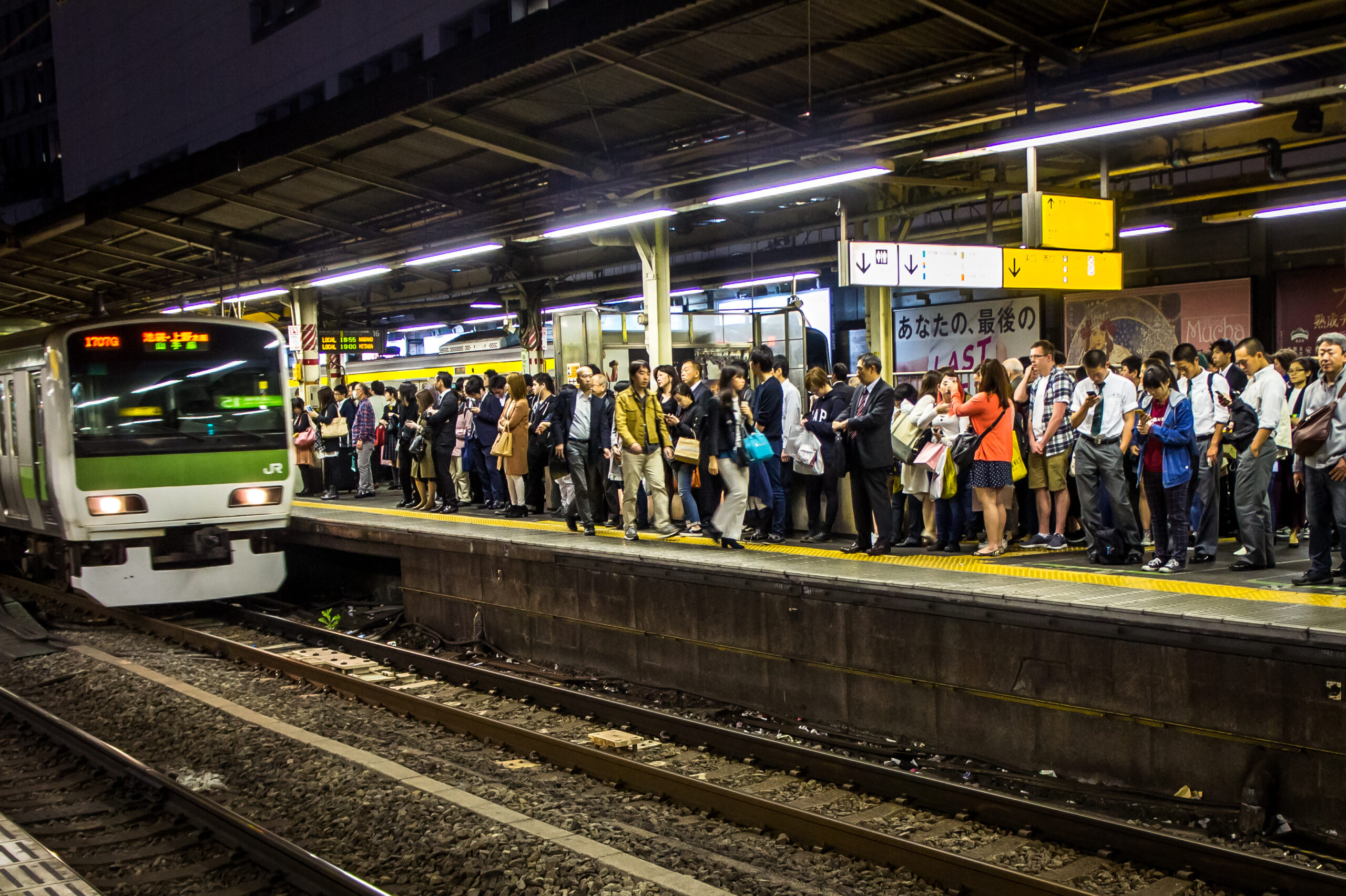
Cover photograph: the Yamanote Line platform at Shinjuku Station, April 2017. W & J (Los Paseos) / Wikimedia Commons · CC BY-SA 2.0. Resized.
Two rooms and one timetable
Here is an illustrative comparison for one student who goes to campus 16 days a month. The figures are invented to show the decision. For some local context, the housing centre serving Waseda students lists about ¥75,000–¥85,000 for a Waseda-area apartment in its manshon category with a combined bath and toilet. Its comparison covers homes at least 16 m² in size, no more than 30 years old and within a ten-minute walk of a station. Those figures are a local reference point for the two example rooms below.
| What the student compares | A · Walk to class | B · Ride the train |
|---|---|---|
| Floor plan | 18 m², 1R | 23 m², 1K |
| Monthly rent + building fee | ¥76,000 + ¥4,000 | ¥63,000 + ¥3,000 |
| Monthly commuting cost assumed | ¥0 | ¥6,000 |
| Monthly total for those items | ¥80,000 | ¥72,000 |
| Door to classroom, one way | 20 minutes | 45 minutes |
Room B saves ¥8,000 a month and gives the student five more square metres. Room A gives back 50 minutes each campus day, or 13 hours and 20 minutes over those 16 days. Change the timetable and the decision changes too. A student in a lab five days a week gets more use from the short walk. Someone with two teaching days and a part-time job near Room B might hardly notice the longer trip to class.
Read the door on the floor plan
On a Japanese listing, 1R means one room with the kitchen in the same space. In a 1K, the kitchen and living room are separated. Trace that dividing wall with a finger. Where does the kitchen door swing? Can the wardrobe open with a bed beside it? Is there somewhere to put a drying rack without moving the desk chair? Five extra square metres are valuable when they give a student somewhere to study while dinner cooks. A long entrance corridor may use up much of that extra area.
Walk the last ten minutes
For a viewing, put the actual campus building into the map. Walk from the station exit you would use on a wet morning, then from the campus gate to the lecture room. Try the route home as well. A perfectly good daytime shortcut may lose its appeal after an evening shift. Before leaving the apartment, measure the wall for the bed and check the position of the nearest socket. Those are details that listing photographs rarely settle.
Keep a separate move-in total
Ask for two written figures: the regular monthly payment, and the amount due before moving in. A listing can include a management or common-area fee on top of rent. The initial quote may also include a deposit (shikikin), key money (reikin), advance rent and other fees. The deposit can be settled against eligible charges at move-out, while key money is generally non-refundable. If Room B saves ¥8,000 a month but needs a much larger initial payment, a student still has to find that money before the first class.
The last question is personal. Given the same monthly budget, would you rather have a kitchen you can close off, or be able to walk home between lectures? Once you can name the part of your day you want to protect, the two floor plans become much easier to read.
Why young people leave their hometowns for Tokyo, and why some return





Comments