Trash Day in Japan: The Rules That Shape a Neighborhood
On a quiet street, collection morning is a lesson in how Japanese cities work—one bag, one timetable and one very local set of rules at a time.
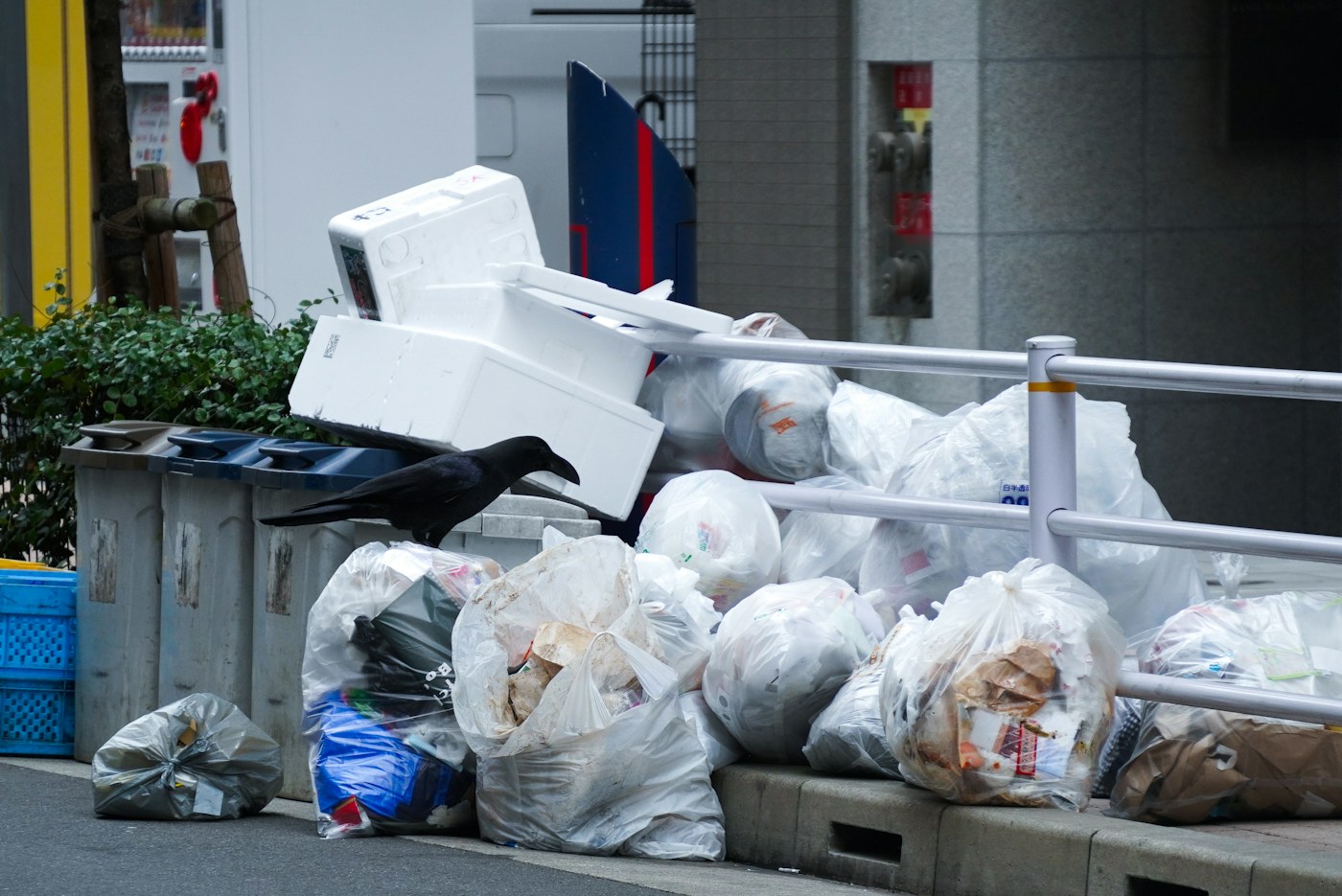
Early on a collection morning, the character of a residential street changes. Bags appear beside a wall or under a mesh net. Someone may stop to check a label, adjust the cover or move a bag away from the pavement. By late morning, the collection point can look ordinary again.
Visitors often notice how few public trash bins they encounter in Japan. Residents notice something else: the calendar on the refrigerator, the collection category for that morning and the risk of putting out the wrong bag. These two views of cleanliness are connected, but they are not the same story.
The surprising thing is that there is no single nationwide list telling every household which bag to use on every day. To understand a Japanese street, you often need to begin with its municipality.
The calendar matters as much as the bin
In Japan, household waste is generally collected according to categories and schedules administered locally. A resident may have separate days for burnable waste, recyclable bottles and cans, plastics or other materials. Large items can require a separate booking or payment. The exact categories and instructions depend on the city, ward and sometimes the neighborhood.
Consider Tokyo’s Shinjuku Ward. Its official guidance says burnable garbage is collected twice weekly and must be placed at the collection point by the designated morning time; collection weekdays vary by area. Kyoto City, meanwhile, provides guidance on city-designated bags, collection locations and the consequences when waste is left outside the rules. These are examples, not a universal schedule for Japan.
That local variation is why a leaflet from a landlord or neighborhood association can be more useful than a generic internet list.
A bottle is not always just ‘plastic’
A visitor looking at a drink bottle might naturally think of one category: plastic. The actual sorting can be more detailed. The bottle, its cap, its label and any remaining contents may be treated differently depending on municipal rules. Dirty packaging may not qualify as recyclable even when similar clean material does.
Rules also change. Shinjuku introduced a revised collection system for certain plastic items in April 2024, bringing specified plastic products together with plastic containers and packaging. A travel article written years earlier could therefore give a resident the wrong instructions today.
The practical lesson is to identify a material and consult the current local guide rather than treating the recycling symbol as the complete answer.
The collection point is a shared space
A collection point may serve several homes or apartments. The rules have a social side because one household’s bag can affect everyone who uses the spot. Bags left on the wrong day may remain outside, where they can obstruct a path, produce odor or attract animals. Kyoto’s official guide explicitly warns about uncollected bags and crows.
A mesh net, a handwritten sign or a neighbor’s reminder can look like a minor detail. Together, they reveal how public infrastructure and everyday cooperation meet. A tidy street is not simply the result of an invisible cleaning service.
Of course, not every street is immaculate. Litter, overflowing collection points and disagreements happen too. Understanding the system should not become a claim that Japanese residents are uniquely disciplined or that waste problems have somehow disappeared.
Five words that make the signs easier to read
Collection notices often use compact Japanese terms. Recognizing a few can make the first week in a new apartment much easier.
燃やすごみ / 可燃ごみ (moyasu gomi / kanen gomi) generally refers to burnable household waste. 燃やさないごみ / 不燃ごみ (moyasanai gomi / funen gomi) indicates non-burnable waste, but specific items vary. 資源 (shigen) means recyclable resources. ペットボトル (petto botoru) refers to PET beverage bottles. 粗大ごみ (sodai gomi) is a term used for bulky waste, often subject to separate procedures.
Treat these as vocabulary, not as instructions to place a specific item into a specific bag. The municipality’s current examples and illustrations are the deciding guide.
For visitors and new residents, two different habits
If you are staying in a hotel or short-term accommodation, follow the property’s waste instructions. Do not assume that a residential collection point on the street is a public bin. At a restaurant or shop, use the disposal facilities provided or ask staff where waste belongs.
If you have moved into a Japanese apartment, find the municipal guide for the exact address, ideally in the language you are most comfortable reading. Confirm the collection spot, timing, bag type and bulky-item procedure. Apartment rules can add another layer of instructions.
One small step makes a difference: keep a simple weekly list on your phone. ‘Tuesday: category A’ is easier to remember than an entire illustrated handbook.
Clean streets have a backstage
Japan’s streets often look orderly in travel photographs. But the most revealing scene may be one that tourists rarely photograph: a modest collection point early in the morning, where collection crews, local rules and residents’ routines overlap.
That scene does not explain all of Japanese society. It does remind us that what appears effortless from outside is usually maintained through very ordinary work.
Keep exploring
- Why Are Japanese Streets So Clean? The People Behind the Image
- Reading the Air: The Unspoken Rules of Everyday Japan
Further reading & sources
- Shinjuku Ward: How to Dispose of Burnable Waste (2026)
- Shinjuku Ward: Recyclables and Garbage Collection Calendar (2026)
- Kyoto City: Living Guide for Foreign Residents — Garbage
Local policies and practical rules can change. Consult the relevant official source for current requirements. All images are illustrative.




Comments