Entertainment & Celebrities · 11 minute read
Oshikatsu: Why Japan Turns Fandom Into a Way of Life
When admiration becomes routine, ritual, comfort, and identity: a closer look at Japan’s culture of supporting an “oshi.”
LAYERS OF JAPAN
Spend time in contemporary Japan, and you may encounter the same word in remarkably different places: social media posts, stationery shops, themed cafés, outside concert venues, and ordinary conversations among friends.
That word is oshikatsu.
At first glance, it can seem simple enough. The term combines oshi—a favorite person, performer, idol, athlete, voice actor, fictional character, or public figure you especially support—with katsu, short for katsudō, meaning activity. Put together, oshikatsu means the activities people do to support and enjoy their favorite.
But that basic definition does not explain why the idea has become so visible in Japanese life.
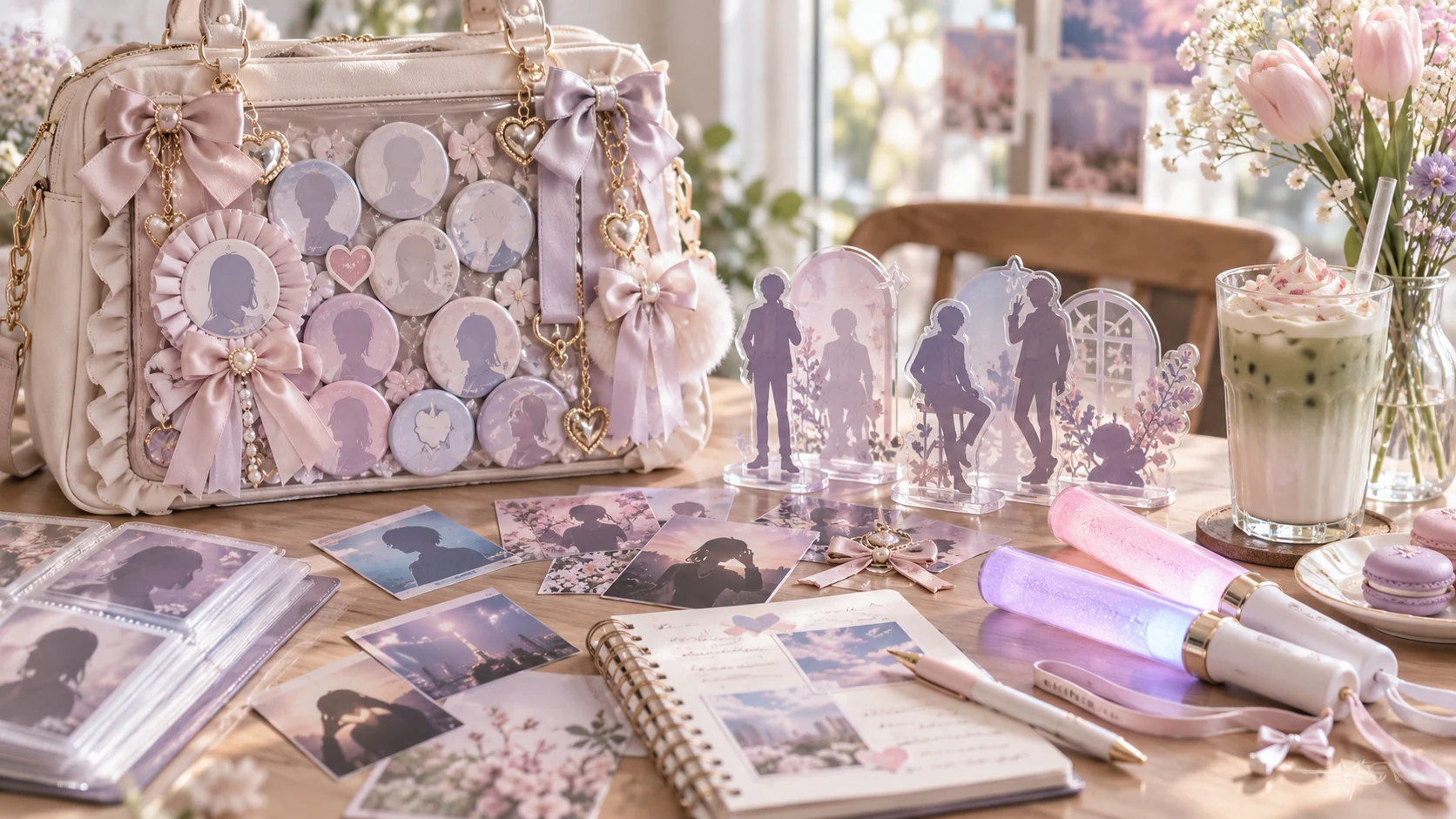
Oshikatsu is not only about liking someone. It is about building small rituals around that feeling. It can mean attending concerts, buying goods, collecting photo cards, decorating an ita bag, visiting a birthday café, traveling with acrylic stands, choosing accessories in an oshi color, or keeping a journal dedicated to memories and milestones. It can be loud and public, or quiet and private.
And that is exactly why it matters.
In Japan, fandom is often treated not just as entertainment, but as part of how people organize emotion, friendship, motivation, and everyday life.
1. More Than a Hobby
To say “I have an oshi” in Japan can reveal something deeper than a simple preference.
For some people, an oshi is a singer whose concert becomes the highlight of the year. For others, it is a Takarazuka star, an idol, an actor, a VTuber, an anime character, a member of a boy band, or a sports player whose effort feels inspiring. The object of support changes, but the emotional structure is often similar.
An oshi is someone—or sometimes a character—whose existence brightens ordinary time.
That may sound exaggerated to outsiders. Yet one reason oshikatsu resonates so strongly is that it gives shape to emotion. Admiration becomes something you can act on. Waiting for a performance, preparing for an event, collecting keepsakes, planning a trip, dressing in a favorite color, taking a standee to a café, or arranging your desk around a beloved theme—all of these become ways to say: “This feeling matters.”
In that sense, oshikatsu turns affection into practice.
2. A Culture Built from Small Rituals

One of the most distinctive things about Japanese oshikatsu is that it often unfolds through repeated, careful, almost domestic gestures.
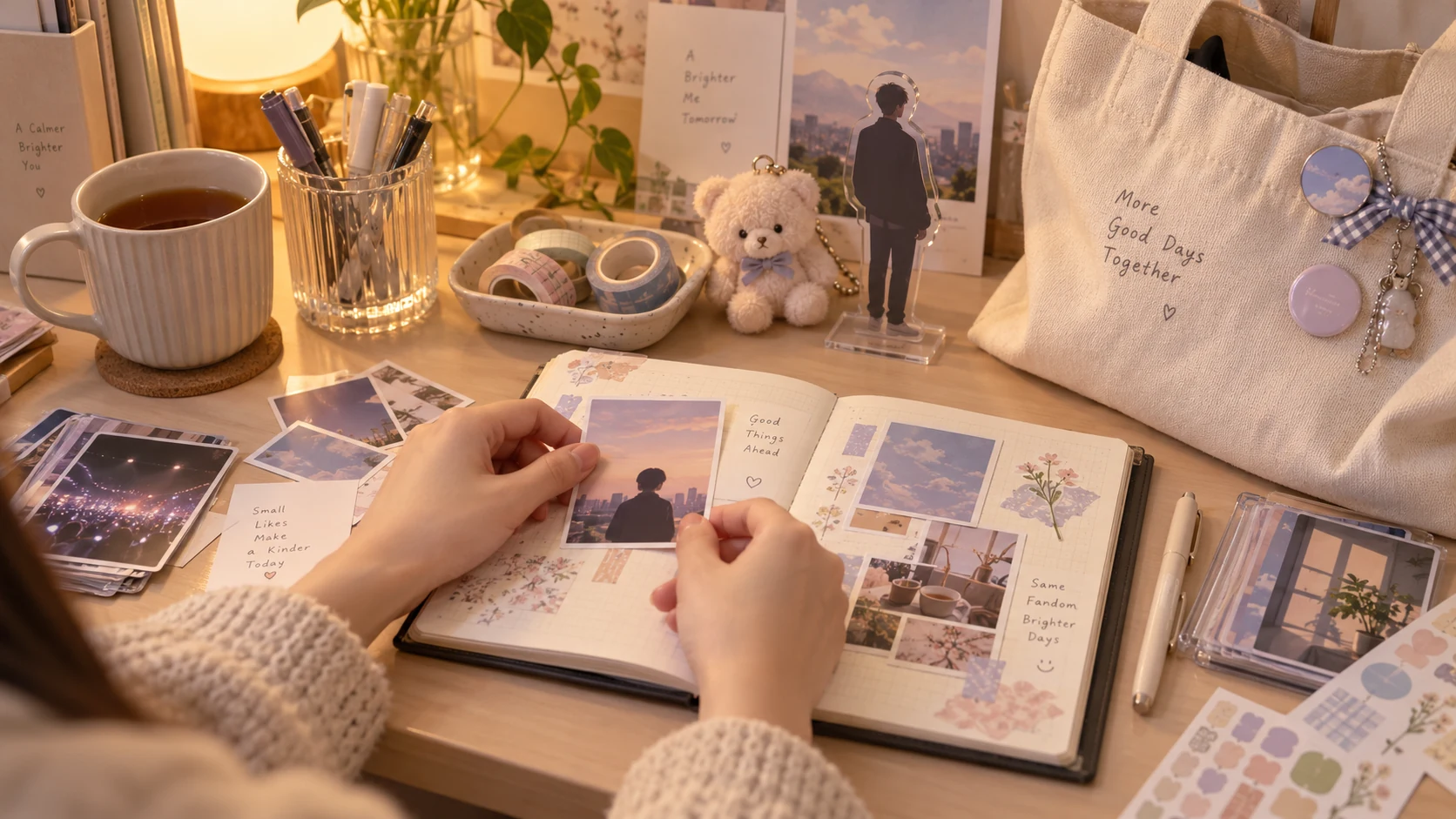
A fan may place a photocard in a protective sleeve. They may make a scrapbook page after a concert. They may order a drink that matches an oshi’s color. They may line up at a pop-up shop not only to buy merchandise, but to preserve the memory of having been there.
These details matter because oshikatsu thrives in the space between the spectacular and the ordinary.
Yes, there are dramatic moments: the live performance, the stage lights, the birthday event, the fan meeting, the release day. But much of oshikatsu happens outside those moments. It lives on desks, in tote bags, in phone cases, in notebooks, in café photos, and in careful arrangements of goods at home.
In its contemporary Japanese form, the culture is especially visible through this attention to presentation. The emotional commitment is real, and so is the care given to how it is expressed. Display becomes a form of care. Organization becomes a form of devotion. A collection is not just accumulated; it is curated.
That is why oshikatsu often looks beautiful from the outside. Pastel goods, ribbons, acrylic stands, character colors, carefully decorated bags, and themed desserts create a visual culture that is easy to photograph and share. But the visual charm is only the surface of something more personal.
3. Why “Oshi” Matters So Much
Why does supporting an oshi feel so meaningful?
Part of the answer is emotional.
Modern life can be tiring, repetitive, and uncertain. Work is demanding. Social expectations can be heavy. News cycles are exhausting. In that context, having an oshi can create a reliable source of anticipation. There is always a next song, a next match, a next stage performance, a next livestream, a next event, a next anniversary.
An oshi gives time structure.
People often say things like, “I work hard because I want to see my oshi,” or “My oshi gets me through difficult weeks.” Those statements are easy to dismiss as jokes, but they often contain real truth. Supporting someone can create momentum in your own life.
For some fans, there is comfort in the distance between themselves and their oshi. They can feel deeply inspired by a performer or fictional character without expecting a personal relationship in return. Yet one-sided attachment has its own vulnerabilities, and that distance can also bring sadness.
The beauty of oshikatsu often lies in that tension: deep attachment, carefully held within a one-way structure.
4. Community, Belonging, and Shared Language
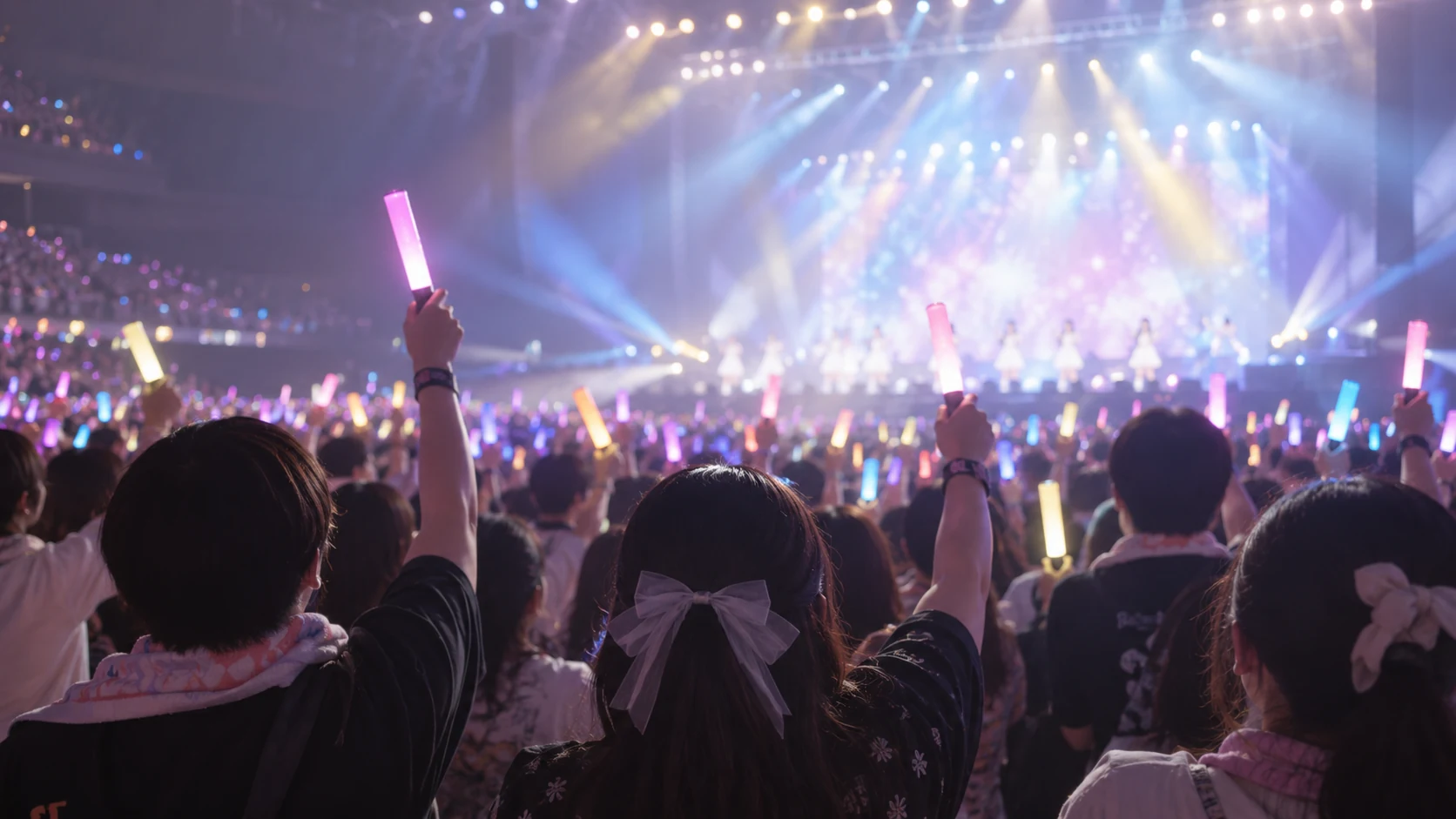
Oshikatsu is personal, but it is rarely isolated.
Fans meet through social media, concerts, cafés, conventions, fan events, trading spaces, and friendship networks. People who might never have spoken otherwise can bond through a shared oshi, a shared group, or even a shared “oshi color.”
This creates a powerful sense of belonging.
For a person who feels isolated, fandom can become a social bridge. It offers ready-made conversation, shared rituals, and a reason to gather. The act of saying, “Who is your oshi?” is not only a question about taste; it is also an invitation into someone’s emotional world.
The shared language around oshikatsu supports that connection. Terms such as tōtoi (an affectionate way of saying that someone or something is deeply precious), hako-oshi (supporting an entire group rather than only one member), and seichi junrei (visiting places associated with a beloved story or work) offer fans a vocabulary that can feel immediately familiar.
This vocabulary is one reason oshikatsu feels like a culture rather than just a pastime. It has customs, aesthetics, humor, etiquette, and mutual recognition.
5. Not Only for Teenagers
From outside Japan, it is easy to imagine fandom as something centered on youth. But one of the most interesting things about oshikatsu in Japan is how broad it has become.
Students participate, of course. So do office workers, parents, retired people, and fans who have followed the same performer or franchise for decades. Some people spend modestly and quietly. Others build major routines around their oshi, saving money for travel, collecting limited-edition goods, or organizing their schedules around events.
The culture also crosses genres. Idol fans, Takarazuka fans, anime fans, sports supporters, historical-drama fans, and many others may all describe what they do as oshikatsu, even when the details of their fandom differ.
That breadth matters. In an October 2025 online survey conducted by Mynavi among 20,165 full-time employees in their twenties through fifties, 49.2% of respondents in their twenties said they engaged in oshikatsu. Among respondents who practiced it, 79.4% said it enriched their private lives. Those findings represent the survey’s particular working population, not every person in Japan, but they illustrate how fandom can matter well beyond teenage years.
Oshikatsu has become one of the ways contemporary Japan talks about enthusiasm itself.
6. The Beautiful Side—and the Exhausting Side
It would be easy to stop here and present oshikatsu as a purely joyful culture of color, friendship, and motivation.
But that would leave out the pressure.
Oshikatsu can be expensive. Tickets, travel, themed food, membership fees, albums, goods, lottery systems, resale markets, collaboration events, and limited-edition products can quickly add up. Fans may feel they need to keep buying in order to prove loyalty, keep up with others, or avoid regret.
There is also emotional pressure.
The constant flow of content can make people feel they should always be paying attention. Social media can turn fandom into a performance, where the prettiest displays, largest collections, or most dedicated schedules receive the most attention. Comparison can creep in. A culture of joy can sometimes become a culture of self-measurement.
And then there is the vulnerability of the object itself. Idols graduate. Actors retire. Athletes decline. Groups disband. Fictional series end. Scandals happen. Companies change direction. What feels emotionally stable can also be unexpectedly fragile.
For some people, that fragility is part of the intensity. For others, it can be genuinely painful.
This does not make oshikatsu shallow or irrational. It makes it human.
Anything that gives life meaning can also create the possibility of disappointment.
7. Why Japan Turned Fandom into a Lifestyle
So why has Japan, in particular, developed such a visible culture around oshikatsu?
There is no single answer, but several conditions help explain it.
Japan has a long history of fandom built around idols, theater, manga, anime, character goods, and organized fan events. Businesses have developed many ways to support these communities through cafés, pop-up stores, collaborations, special packaging, collectibles, color-themed products, and carefully designed display items.
At the same time, oshikatsu can fit into the small intervals of daily life. It can happen in a bedroom corner, during a café visit, on a train ride spent exchanging messages with friends, or at a collaboration store after work. It does not require every fan to participate in the same way.
In other words, oshikatsu thrives because it can be both emotionally large and practically modular.
It does not require a stadium every day. It can survive in a keychain, a notebook page, a photo card case, or ten minutes spent rearranging a shelf.
8. What Outsiders Often Miss
Visitors sometimes see only the merchandise. They notice the ribbons, the acrylic stands, the color coordination, the decorated bags, the fan cafés.
But if they stop there, they miss the emotional logic.
Oshikatsu is not important because people buy things.
It is important because those things become containers for memory and feeling.
A lightstick is a concert night made tangible. A photo card is proof of a moment. A decorated tote is a portable declaration of care. A birthday café setup says: “Even if this relationship is one-sided, the joy it brings me is real enough to celebrate.”
That does not mean all forms of oshikatsu are healthy, or that every industry surrounding fandom is benevolent. Limited-edition releases and scarcity-driven promotions can also create pressure to spend. But the core impulse deserves a more generous reading.
People are trying to create brightness.
9. A Way of Supporting Yourself
Perhaps the most moving thing about oshikatsu is that it often occupies a space between devotion and self-preservation.
Fans say they support their oshi. That is true.
But many are also using that support to sustain themselves.
An oshi can help someone get out of bed on a difficult morning. It can make a lonely city feel less cold. It can turn an exhausting week into something survivable because a concert, stream, or event is waiting at the end of it. It can help people form friendships, rediscover creativity, or reconnect with parts of themselves that daily life tends to flatten.
This is why oshikatsu should not be dismissed as mere frivolity.
In a world that often asks people to be efficient, restrained, and emotionally contained, oshikatsu offers permission to care openly. It says that joy can be prepared for, documented, worn, displayed, and shared.
And perhaps that is why the culture feels so resilient.
It is not only about the person being admired.
It is about what admiration allows the fan to build around their own life.
10. Beyond the Goods
To understand modern Japan, it helps to look not only at institutions or traditions, but at the small emotional systems people create for themselves.
Oshikatsu is one of those systems.
It may appear playful, decorative, and consumer-driven—and sometimes it is all of those things. But it is also a language of hope, routine, beauty, discipline, belonging, longing, and care.
That is why it has become a way of life for so many people.
Not because every fan is the same. Not because every form of fandom is uncomplicated.
But because, in its best form, oshikatsu transforms admiration into something sustaining.
Sometimes, supporting someone else becomes a way of supporting yourself.
And in contemporary Japan, few cultural habits reveal that truth more clearly than the quiet, colorful, carefully arranged world of an oshi.