Japanese Pop · Naniwa Danshi
Naniwa Danshi: Where J-Pop Meets Japanese Screen Stories
First love, a teenage detective and a summer film: three songs that connect seven performers with the stories around them.
ENTERTAINMENT & CELEBRITIES · 5 MIN READ
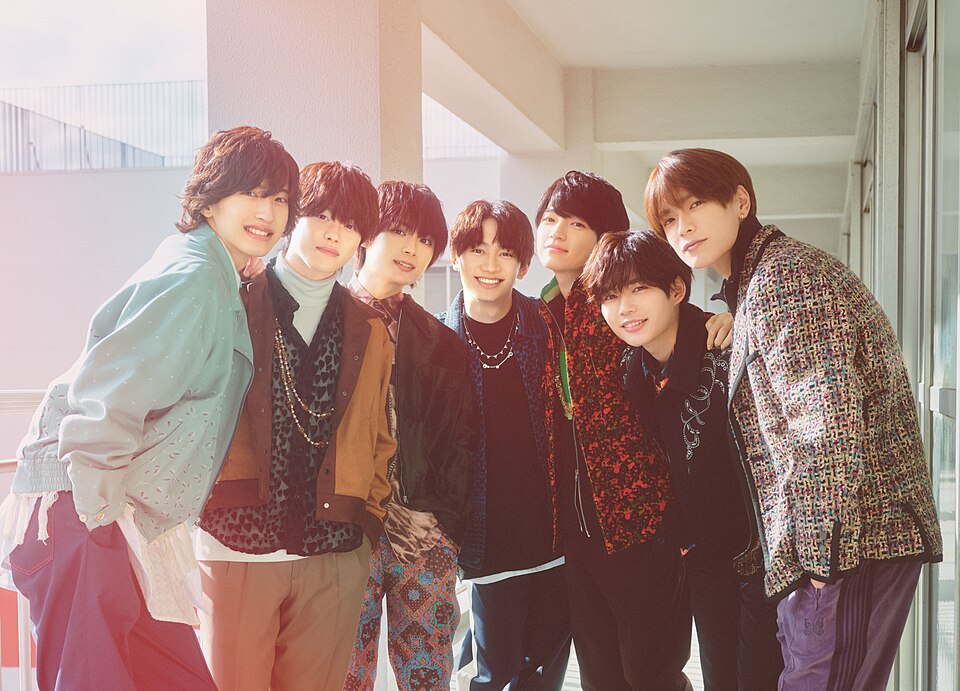
Photo: Johnny & Associates, Inc. (credited at the time), 2023, via Wikimedia Commons · CC BY-SA 4.0. Reduced-resolution version; no crop or retouching by LAYERS OF JAPAN.
Sometimes a Japanese pop group first reaches you through a television character.
You recognise an actor in a music video, look up the song that played in a drama, or discover that the face on a film poster belongs to a group of seven. With Naniwa Danshi, those connections offer an inviting place to begin.
Their debut song “Ubu Love” accompanied a school romance. “The Answer” took them into a detective drama. “Koisuru Hikari” later joined a film about friendship and unspoken feelings. Together, these releases provide a small tour of the group’s music and two members’ screen work.
Meet the seven members
Naniwa Danshi’s lineup is Daigo Nishihata, Ryusei Onishi, Shunsuke Michieda, Kyohei Takahashi, Kento Nagao, Joichiro Fujiwara and Kazuya Ohashi. Their official STARTO profiles pair the names with individual portraits, making a useful companion to a first music-video watch.
The group formed in 2018 and made its CD debut on November 12, 2021, with “初心LOVE(うぶらぶ)”, read as “Ubu Love.” Keeping the Japanese spelling nearby helps when searching official release pages, where the same song may appear differently from the title on your music service.
“Ubu Love”: a debut inside a love story
The 2021 drama Kieta Hatsukoi, also listed internationally as My Love Mix-Up!, starred Michieda alongside Snow Man’s Ren Meguro. A misunderstanding about who likes whom becomes the beginning of a school romance. It is an easy connection to follow if you already know one of the actors.
TV Asahi’s theme-song announcement pairs two groups with the series: Naniwa Danshi’s “Ubu Love” and Snow Man’s “Secret Touch.” The broadcaster describes the former through the excitement and uncertainty of first love, and the latter as a more wistful ballad.
That pairing gives an overseas listener something concrete to compare. Two songs can belong to the same story while offering different emotional colours. If you arrived here through our Snow Man introduction, this drama provides a direct connection to Naniwa Danshi.
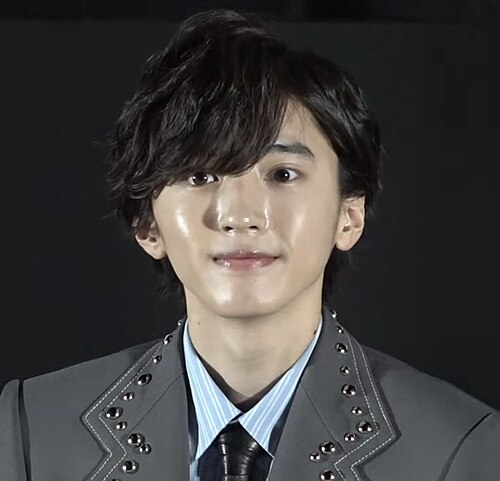
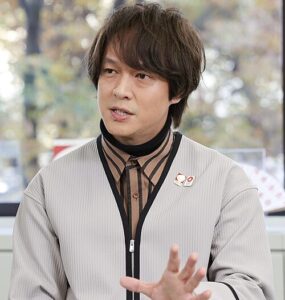
Video still: K-POPIT 케이팝잇, 2023, via Wikimedia Commons · CC BY 3.0. Still extracted by Egajaga; reduced-resolution version, with no further crop or retouching by LAYERS OF JAPAN.
“The Answer”: from romance to mystery
Michieda’s next connection leads to Kindaichi Shonen no Jikenbo. In the 2022 series, he played Hajime Kindaichi, a high-school student with a talent for solving mysteries.
Naniwa Danshi supplied “The Answer,” released on April 27, 2022, as part of the double A-side single “The Answer / Sachiare.” The label presents “The Answer” as a dramatic dance track with a darker, mysterious atmosphere. It offers a useful second stop after the brightness of the debut.
The single’s other side widens the contrast. “Sachiare” was written by Yujin Kitagawa of Yuzu and became a theme for the morning programme Mezamashi TV. One release therefore connects the group with both a mystery series and morning television.
For a first listening session, play “Ubu Love” followed by “The Answer,” then add “Sachiare” if you want to explore the other side of that second single. The release itself was built around contrasting moods; you can hear that range without working through a full discography.
“Koisuru Hikari”: Ryusei Onishi on the big screen
Ryusei Onishi offers another way into the group. He starred in the film Koi wo Shiranai Bokutachi wa(恋を知らない僕たちは), which opened in Japan on August 23, 2024.
Shochiku’s synopsis introduces him as Eiji, a high-school student whose feelings for a childhood friend complicate an existing friendship. The story follows six young people with intersecting affections, adapted from Minami Mizuno’s manga and directed by Mai Sakai.
The group’s theme song, “Koisuru Hikari”, followed as a single on August 28, 2024. Storm Labels describes it as an energetic rock song about youthful romantic feelings. Beside “Ubu Love” and “The Answer,” it gives this short route a third setting: an ensemble film about the difficulty of saying what you feel.
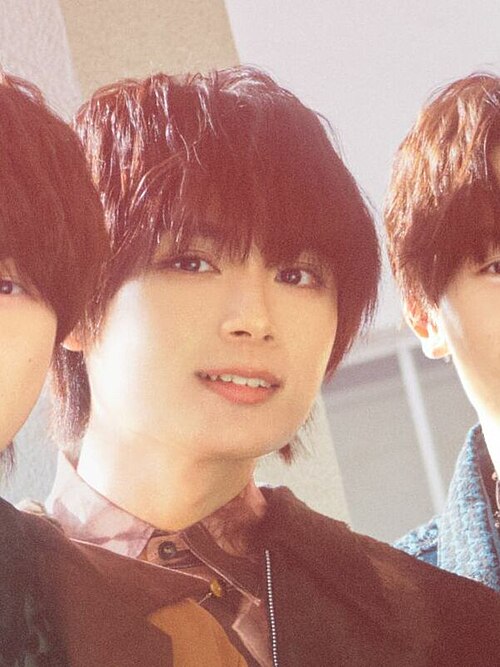
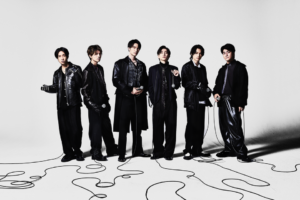
Photo: Johnny & Associates, Inc. (credited at the time), 2023, via Wikimedia Commons · CC BY-SA 4.0. Cropped and rotated from Naniwa Danshi.jpg by Manabu Yukawa. Reduced-resolution version; no further crop or retouching by LAYERS OF JAPAN.
A small map of the connections
| Song | Screen connection |
|---|---|
| Ubu Love | Kieta Hatsukoi / My Love Mix-Up! — Shunsuke Michieda and Snow Man’s Ren Meguro. |
| The Answer | The 2022 Kindaichi Shonen no Jikenbo — Michieda as Hajime Kindaichi. |
| Koisuru Hikari | Koi wo Shiranai Bokutachi wa — Ryusei Onishi as Eiji. |
Seen together, these examples suggest a useful way to explore Japanese pop culture: follow the credits across music and acting. A group song can introduce a drama; a character can make a performer’s name familiar before you see him on stage. Here, those connections lead from first love to mystery and back to a different kind of romance.
Where to listen and watch next
Begin with the group’s official YouTube channel and the linked Storm Labels release pages. Search for the three titles above, then follow whichever sound interests you. The Japanese titles in this guide can help distinguish a song from a drama clip or an unofficial upload.
If the screen stories appeal to you, check the official programme or film pages and licensed services in your region. Subtitle options and availability vary. These are historical releases, so an old broadcast announcement does not necessarily describe where a title can be watched today.
You do not need to start with every member’s biography. One song and one story are enough to give the next discovery a familiar face.
Sources & image notes
Factual references are linked throughout: STARTO for the member lineup, Storm Labels for releases and song connections, TV Asahi and Nippon TV for the dramas, and Shochiku for the film. The discussion of how to explore these connections is our editorial interpretation.
The images are an archival group publicity photograph, a licensed press-conference video still and a portrait cropped from the same group photograph. They are not images from the dramas or film. Full credits, licenses and changes appear below each image; their use does not imply endorsement.







Comments