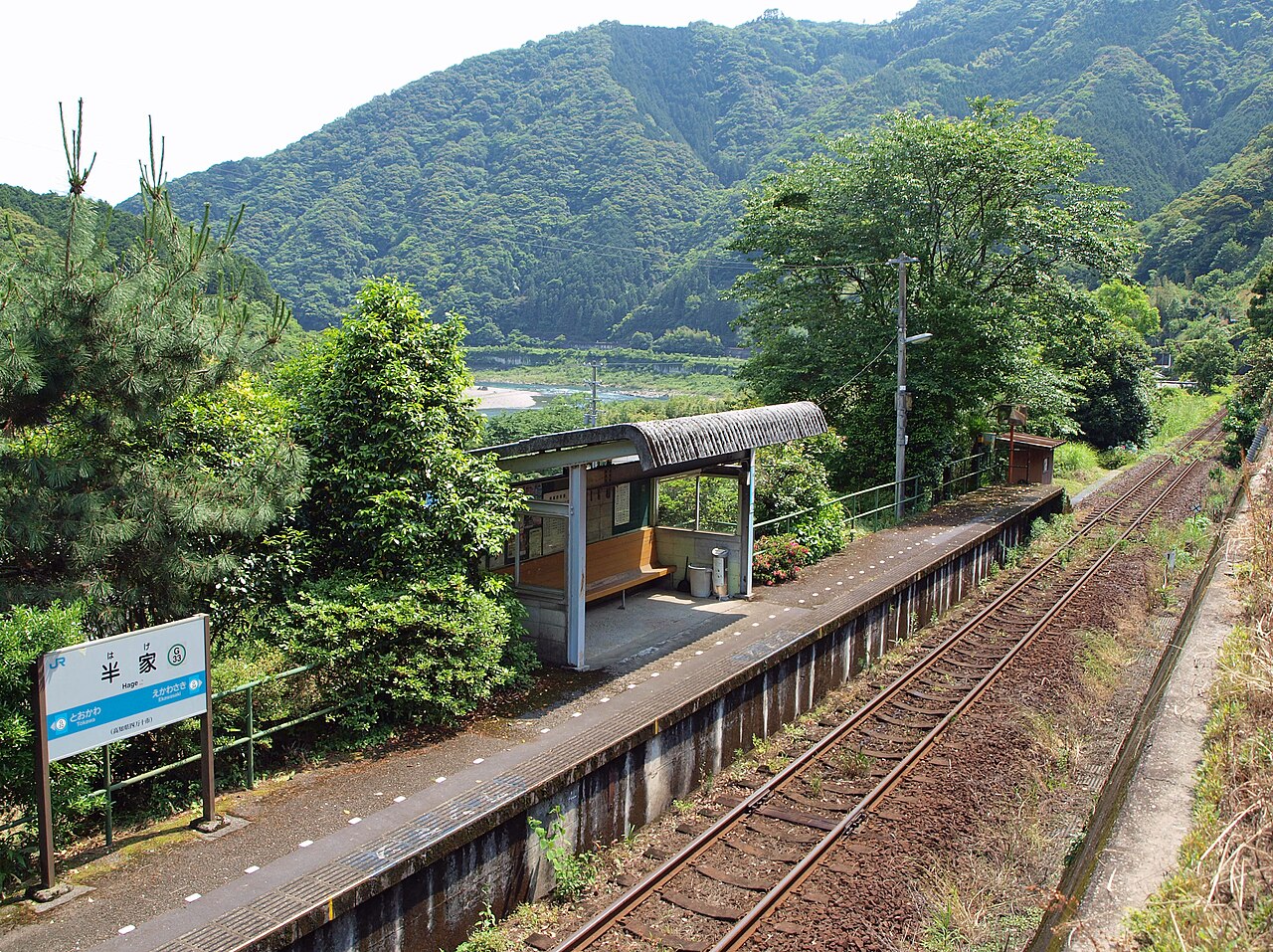
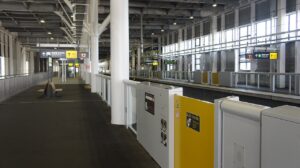
Photograph: Hage Station on the Yodo Line in Kōchi Prefecture. Navian · Public domain
At a small station on Shikoku, the train can arrive before you have seen either a ticket machine or a ticket gate. Where do you pay? First read the sign on the arriving train. JR Shikoku marks trains operated by the driver alone with ワンマン (wanman). On the local trains covered by its guide, a small slip of paper can do the job that the entry gate does in a city: it records where your journey began.
The number to take at the entrance
Suppose you are boarding at an unstaffed station and have no ticket. On a train marked for this procedure, use the designated rear entrance and take a slip from the dispenser by the door. The machine is labelled 整理券, seiriken. Keep the slip. Its number identifies your boarding point. It is neither a seat assignment nor proof that you have already paid.
Look toward the fare display as your stop approaches. Find the number that matches your slip and read the amount shown for it. If, for example, your slip says 3, look for the amount beside 3. You are reading the fare from your boarding point to this stop, so the amount you saw several stops earlier may no longer apply.
The front door is where the journey ends
At an unstaffed stop using onboard collection, leave by the front door near the driver, with your slip and fare ready. Follow the instructions for payment. Having small-denomination cash ready is helpful. If you already have a valid ticket or pass, have it ready to show when required. At a staffed station, follow its directions for the ticket gate.
A local with a conductor has a different arrangement. JR Shikoku says passengers without a ticket can buy one from the conductor. If you are unsure which situation you are in, show the name of your destination and ask when the train has stopped. Save the operator’s illustrated guide before setting out: the pictures of the dispenser and the door signs are particularly handy on a small platform.


Comments