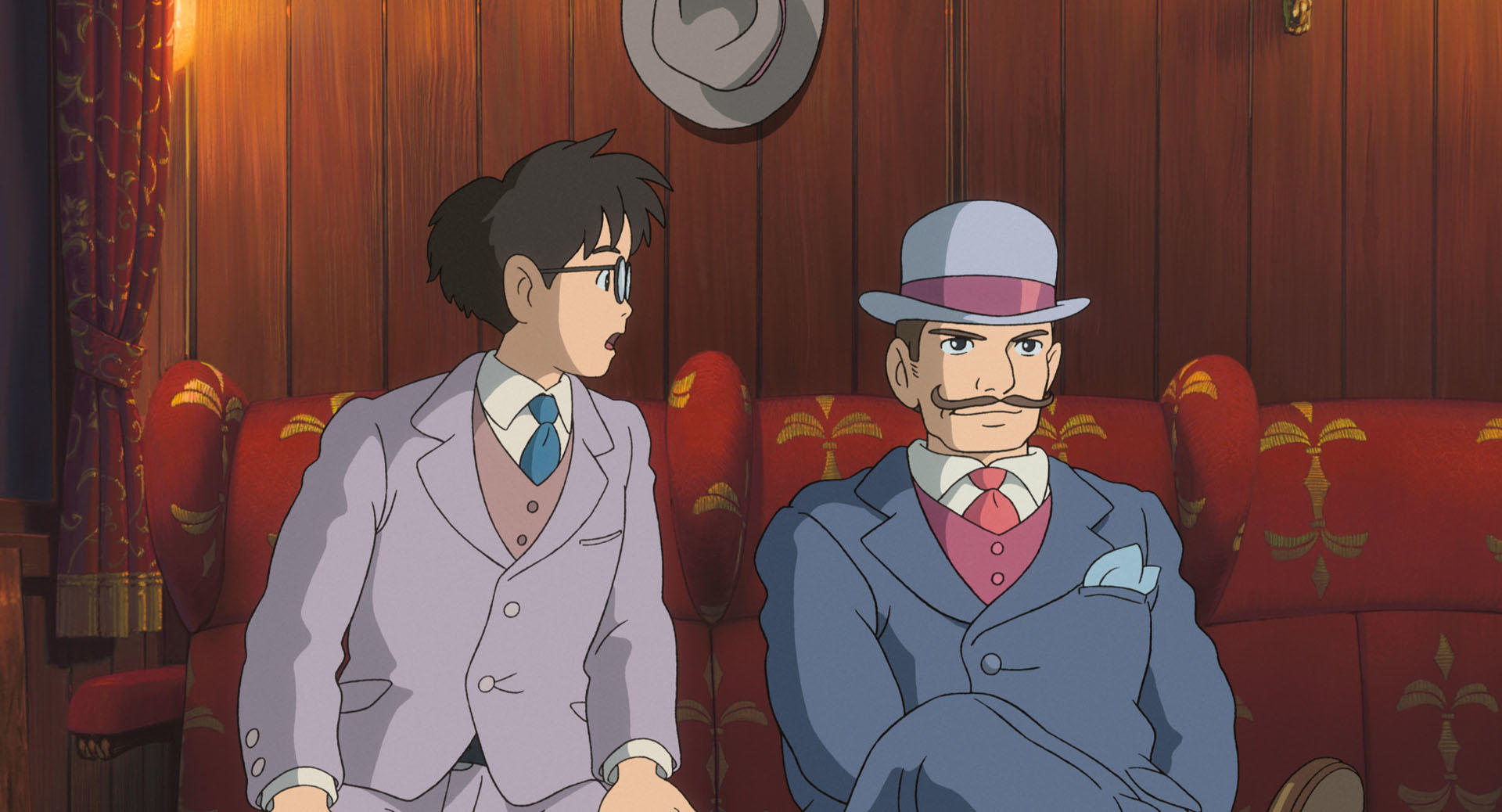
Film still from Studio Ghibli’s collection · © 2013 Hayao Miyazaki/Studio Ghibli, NDHDMTK
Jiro imagines machines that will need whole factories. Beside Nahoko, a scrap of folded paper is enough. Watch the little paper aircraft pass between them. Each attempt is small enough to fit into a few seconds and uncertain enough to make you lean forward. The designer who dreams on a national scale is trying to send one thing to one person.
Follow the person who has to catch it
A neat design on the ground offers no guarantee about the next gust. What makes the flight matter is that another pair of eyes has to follow it. Try watching Nahoko through a launch instead of tracking the paper. A drawing-room conversation might tell us the two people are attracted to each other. Waiting with her to see where the plane will come down lets us share the risk of showing it.
Where the comparison stops
Jiro’s professional work takes place in an industry whose aircraft will be used in war. A paper plane briefly makes the destination of his labour visible and personal. He knows who is at the other end. Remember that distinction when the film returns to drawing boards and factories. The delicacy of the courtship is part of what makes the much larger story difficult to watch.
Film notes and further reading
The Wind Rises (2013) · Directed by Hayao Miyazaki · About 126 minutes




Comments