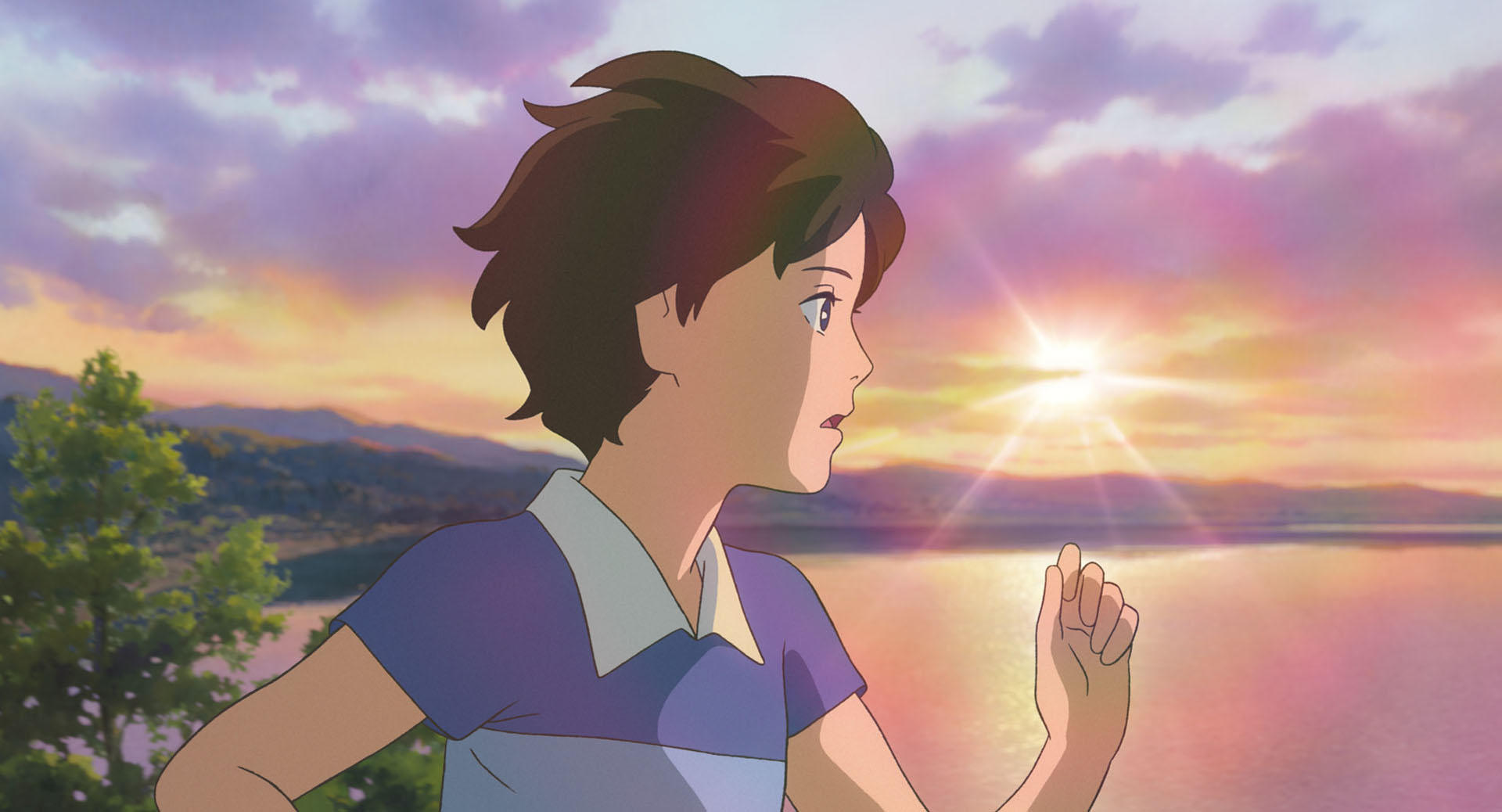
Film still from Studio Ghibli’s collection · © 2014 Joan G. Robinson/Keiko Niwa/Studio Ghibli, NDHDMTK
Anna likes to draw. On a summer stay with relatives in Hokkaido she encounters a subject that cannot quite be fixed on paper: a house across the marsh. The walls have not moved when she looks again, but the water has. A route that seemed open can disappear. Meeting the girl in the house means learning to read the landscape as well as studying a face.
Draw the same house twice
Imagine making two sketches from Anna’s side of the marsh, one at low water and one at high. In the second drawing, would you add only water, or would the house itself look more remote? Anna is used to looking at people from the edge of a group. The marsh gives that habit a physical shape. We can see what attracts her long before we know whether she can reach it.
Who chooses when a visit ends?
In many childhood stories a friend lives a doorbell away. Here daylight, water and the availability of a boat intrude on the simplest plan to meet again. Pay attention to the journey home as well as the arrival. It is possible to feel entirely at ease with someone on one shore and quite uncertain of them from the other. The film lets the crossing do much of the talking.
Film notes and further reading
When Marnie Was There (2014) · Directed by Hiromasa Yonebayashi · About 103 minutes




Comments