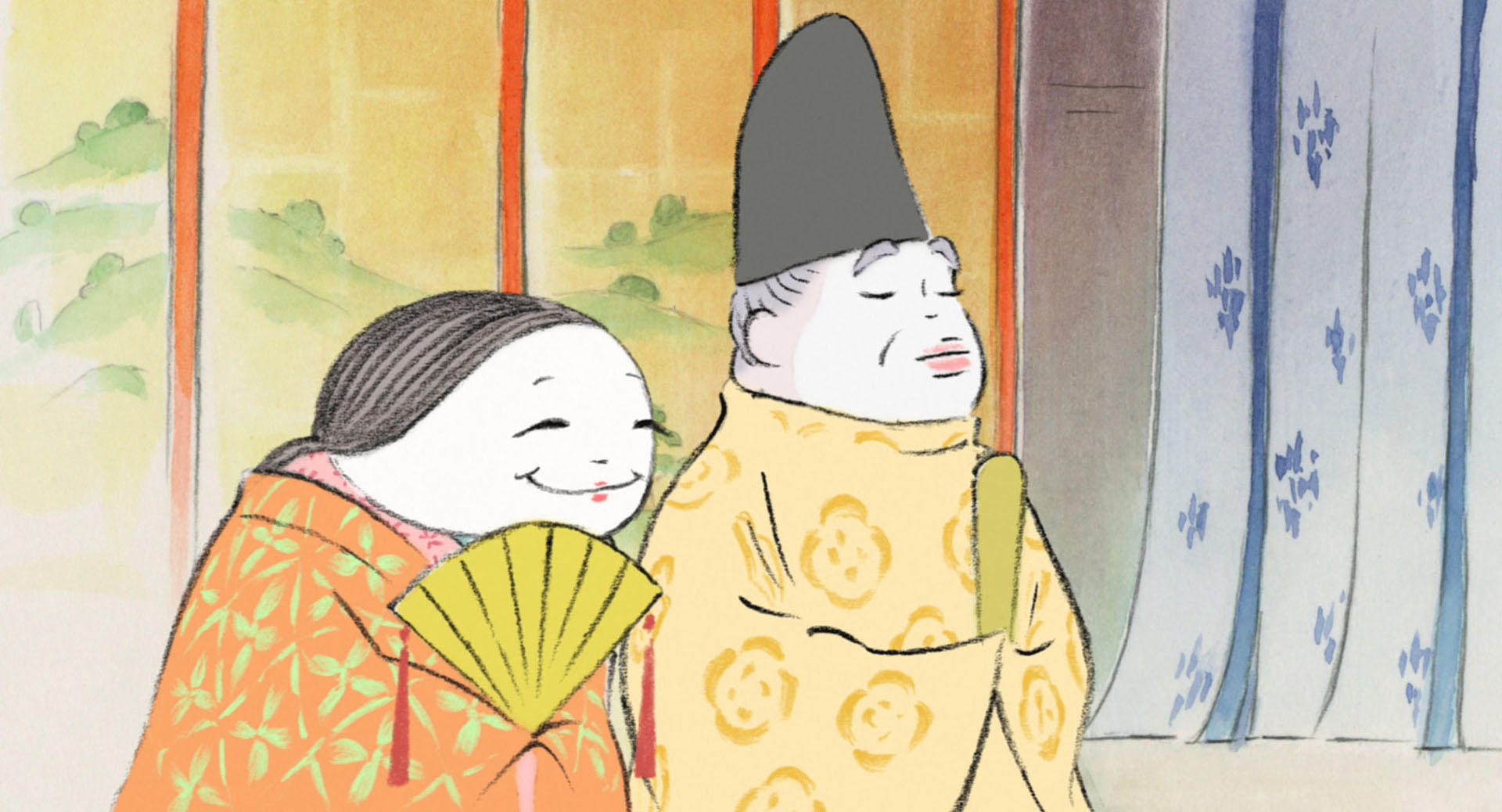
Film still from Studio Ghibli’s collection · © 2013 Isao Takahata, Riko Sakaguchi/Studio Ghibli, NDHDMTK
At the capital, a great deal of effort goes into teaching Kaguya to occupy less space. Sleeves must fall correctly, movements must be measured, a young woman must be seen on the proper terms. The most startling flight in Isao Takahata’s film starts when those rules have become almost unbearable. Look at what happens to the marks on the screen as she runs.
Follow the outline of a sleeve
In a composed room the edge of a robe can describe the weight and finish of costly cloth. In the rush out into the night, edges fray into streaks. Hair and garments seem barely able to keep up with the body. You can feel her speed without counting trees going past. The drawing has shed its good manners alongside the princess.
The eye remembers another kind of movement
Think back to the small child scrambling and learning how to use her limbs in the countryside. Those scenes have lightness and comedy. The later run has an urgency that makes the earlier freedom ache. Play the two passages in your mind without trying to settle how much of the escape literally occurs. A person can be sitting perfectly still in a house and desperately need to run.
Film notes and further reading
The Tale of the Princess Kaguya (2013) · Directed by Isao Takahata · About 137 minutes




Comments