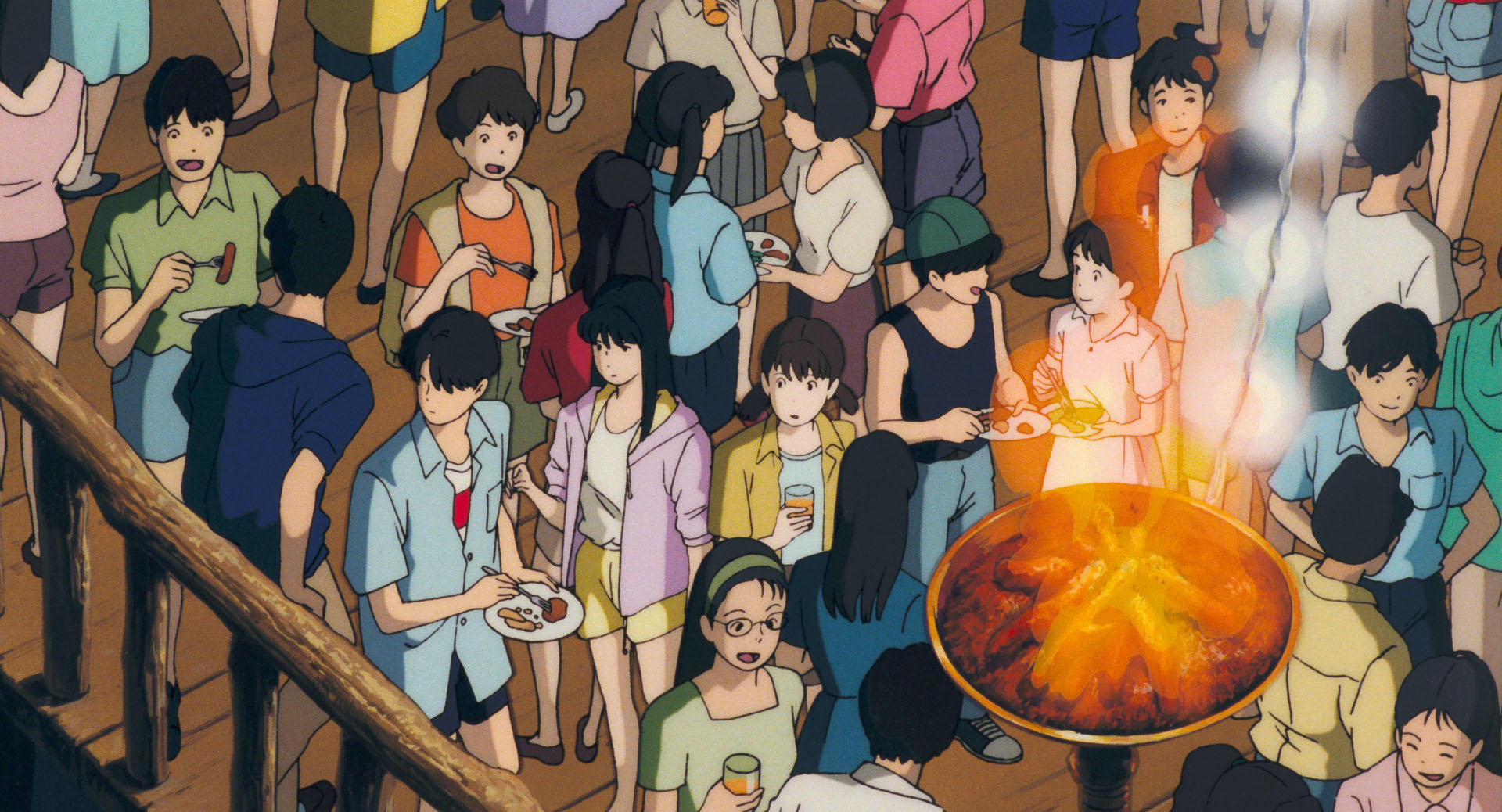
Film still from Studio Ghibli’s collection · © 1993 Saeko Himuro/Keiko Niwa/Studio Ghibli, N
Ocean Waves looks back from a Tokyo railway platform toward school days in Kochi. The teenager at the centre of the recollection, Taku, once had to make sense of a transfer student named Rikako. It is worth asking whose memory you are entering. Rikako was new to the school. Taku was new to her. Those are very different kinds of uncertainty.
Money makes a friendship visible
Follow the question of money on the school trip. A request that sounds private to the person making it can rapidly become somebody else’s business among classmates. Taku wants to behave decently, but his account has access chiefly to his own embarrassment and the parts of Rikako’s situation he happens to witness. Pause before deciding which of the two has been unreasonable. What information would the other one need to tell the scene differently?
Two cities in the same memory
Tokyo is a place Rikako has left and a place Taku will eventually reach. Kochi can be home to one and an involuntary destination for the other. That reversibility matters more than the mileage between them. Back on a station platform, an adult can suddenly recognise an outline that once bewildered a schoolboy. The interval between noticing and understanding is the real journey of this short film.
Film notes and further reading
Ocean Waves (1993) · Directed by Tomomi Mochizuki · About 72 minutes





Comments