Singapore Edit · Kitchen & Craft
Japanese Kitchen Knives: A First Guide for Singapore Home Cooks
Santoku, gyuto or petty? Choose around your cooking, your chopping board and the care you are willing to give a blade.
LAYERS OF JAPAN · 17 NOVEMBER 2026
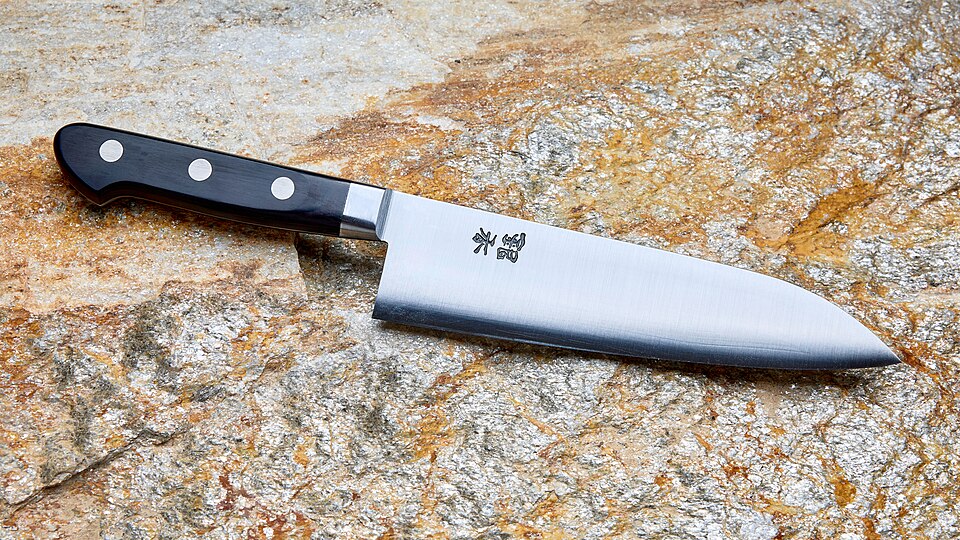

A beautiful knife can make you want to cook. Choosing one well begins with a less glamorous question: what do you actually cut on a normal weeknight?
Before comparing steel names or decorative finishes, think about your usual preparation. Are you mostly chopping vegetables, portioning boneless meat, or preparing small amounts of fruit? Then measure your chopping board and check where the knife will live. For a first purchase in Singapore, we would put everyday fit and a manageable care routine ahead of building a collection.
Three names worth understanding
KAI describes the santoku as a versatile knife for meat, fish and vegetables, the gyuto as a generally longer all-purpose chef’s knife, and the petty as a smaller knife for fine work. Exact lengths and shapes vary between products.[1]
| Knife | Why you might try it |
|---|---|
| Santoku | A candidate for varied everyday preparation when you prefer a relatively compact main knife. |
| Gyuto | Worth trying if you want more blade length and have room on your board. |
| Petty | A possible second knife for smaller ingredients and detailed preparation. |
Our suggestion is to choose one main knife first. Add a smaller one only after you know which tasks still feel awkward. Buying all three together can leave you with overlapping tools and less money for a suitable board, storage or sharpening.
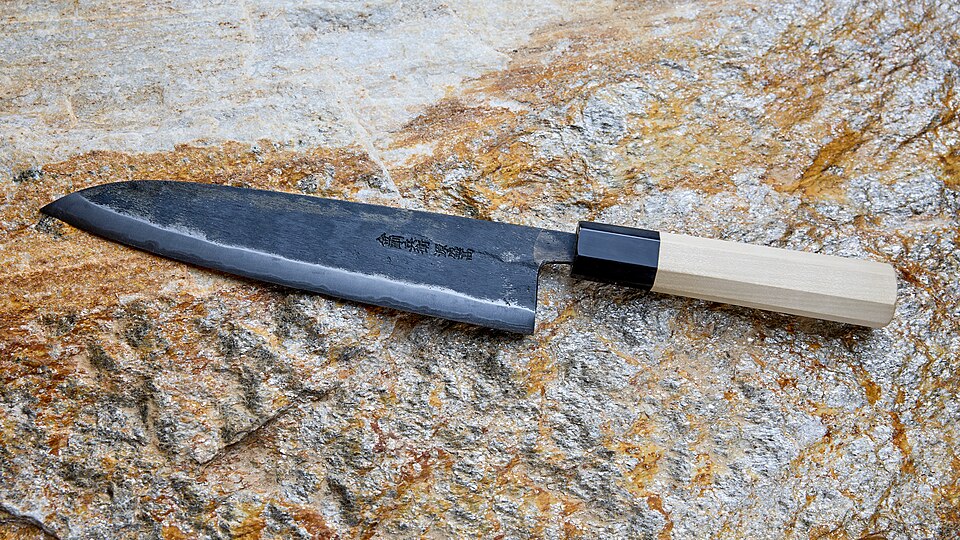

Try the handle, not just the headline specification
If a retailer allows it, hold the knife safely and notice the weight, grip and balance. Does it feel controlled, or are you already adjusting your wrist to accommodate it? Check the total length, including the handle, against your working space.
Ask whether the blade and handle suit your dominant hand. KAI notes that santoku and gyuto are generally double-bevel knives, while some handles have a right- or left-handed design.[2] Do not assume every knife with a Japanese name has the same construction.
For online shopping, save the exact model number, blade material, dimensions and return conditions. A description such as “Japanese steel” does not, on its own, answer where a knife was made or who will service it.
Make the care routine realistic
Stainless steel resists rust; it is not a promise that rust can never occur. KAI’s care guidance highlights the role of moisture and residues, and recommends prompt washing and thorough drying before storage.[3] Carbon-steel knives deserve particular attention: choose one because you want that tool and accept its care needs, rather than assuming it is automatically the right first purchase.
Singapore’s humid climate makes the storage question especially relevant.[5] Plan a place where a clean, dry knife can sit securely without its edge colliding with other utensils. Do not put a damp blade straight into a closed cover.
Check the exact manufacturer’s instructions before using a dishwasher. Blade material alone does not tell you whether the handle, joints and finish tolerate that treatment.
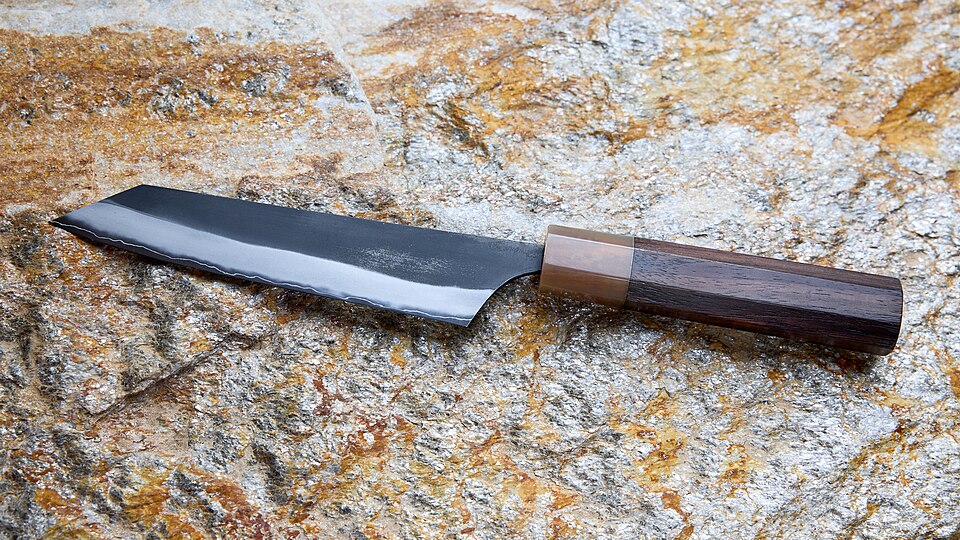

Ask about sharpening before checkout
A knife is a tool you maintain. Ask the seller what sharpening approach suits that blade and whether a suitable service is available to you. KAI publishes different sharpening guidance for different blade constructions; a single generic angle or gadget should not be treated as universal advice.[4]
It is reasonable to use a professional while learning. Include that cost in your budget alongside any storage and board you need. Also ask about the intended cutting tasks and exclusions. An everyday kitchen knife should not be treated as a chopping tool for bones or frozen blocks, or as something to pry with.
A useful five-question shopping note
- Which recurring kitchen task is this knife meant to improve?
- Does its size fit my hand, board and storage?
- What are the blade material and care instructions?
- How will I sharpen it, and who can help?
- What is the full cost of owning and maintaining it?
You do not need to become a steel specialist to make a thoughtful choice. Start with a knife you can use comfortably, care for consistently and reach for again tomorrow.
Sources & editorial note
- KAI: Western-style knife types
- KAI: knife questions, blade types and handedness
- KAI: cleaning and storage
- KAI: sharpening guidance
- Meteorological Service Singapore: climate of Singapore
Based on official and manufacturer information, with practical editorial suggestions. Sources checked 17 November 2026. Photographs are illustrative; this guide does not report hands-on product testing or current Singapore stock.