There is a good reason to turn around halfway up the steps at Jojuin in Kamakura. The sea you have just walked away from suddenly comes back into view. On a walk devised by the city’s Kawakita Film Museum, it helped explain why the four sisters in Hirokazu Kore-eda’s Our Little Sister live in a place the Japanese title calls a “sea town.”
Begin with an invitation
At their father’s funeral, three grown sisters meet their younger half-sister Suzu and invite her to live with them in Kamakura. The film, adapted from Akimi Yoshida’s manga, lets the new household emerge in small increments: a meal shared, an errand, another person expected home. A neighbourhood walk suits that sort of story. You need not locate a private house to get close to it.
A walk between two stations
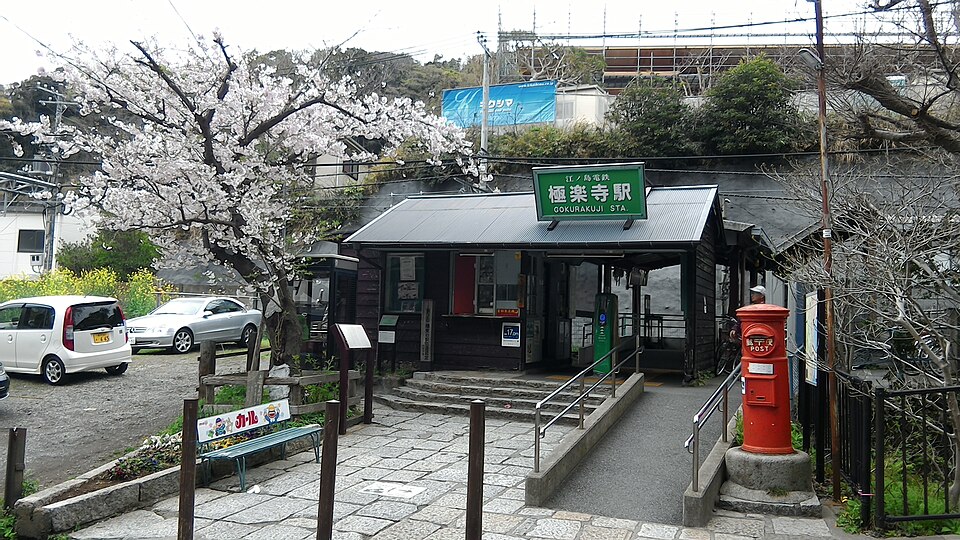
Take the Enoden from Kamakura to Hase, where the museum’s walking tour left the train. Head towards Jojuin (成就院), an identifiable place in the film. Pause after the climb and look back for the coastline. Continue towards Gokurakuji Station. Taking the train back from this second stop saves retracing your steps. Anyone who would rather skip the climb can ride straight to Gokurakuji and enjoy the station area instead.
Keep the distinction the museum makes
Kawakita’s account picks out both screen locations and neighbourhood places the sisters might plausibly have known, including the local sweet shop Chikaramochiya. That is a lovely distinction to take on the walk. Save a picture of the station or the sea. Then choose one ordinary thing the film did not tell you to notice, perhaps what somebody has stopped to buy on the way home. It is probably the photograph you will remember.
Sources and further information
- Fuji TV · the film and the four sisters
- Kamakura City Kawakita Film Museum · route through Gokurakuji
- Kamakura City · Gokurakuji Station





Comments